Step by step
What not to do
- Do not raise your voice or show alarm. This signals danger to the person and can escalate their fear and agitation.Instead, speak softly and slowly, using a calm tone.
- Do not argue, criticize, or try to reason with them. Their brain cannot process logic in that moment. Arguing only increases frustration.Instead, validate their feeling and redirect to a calming activity.
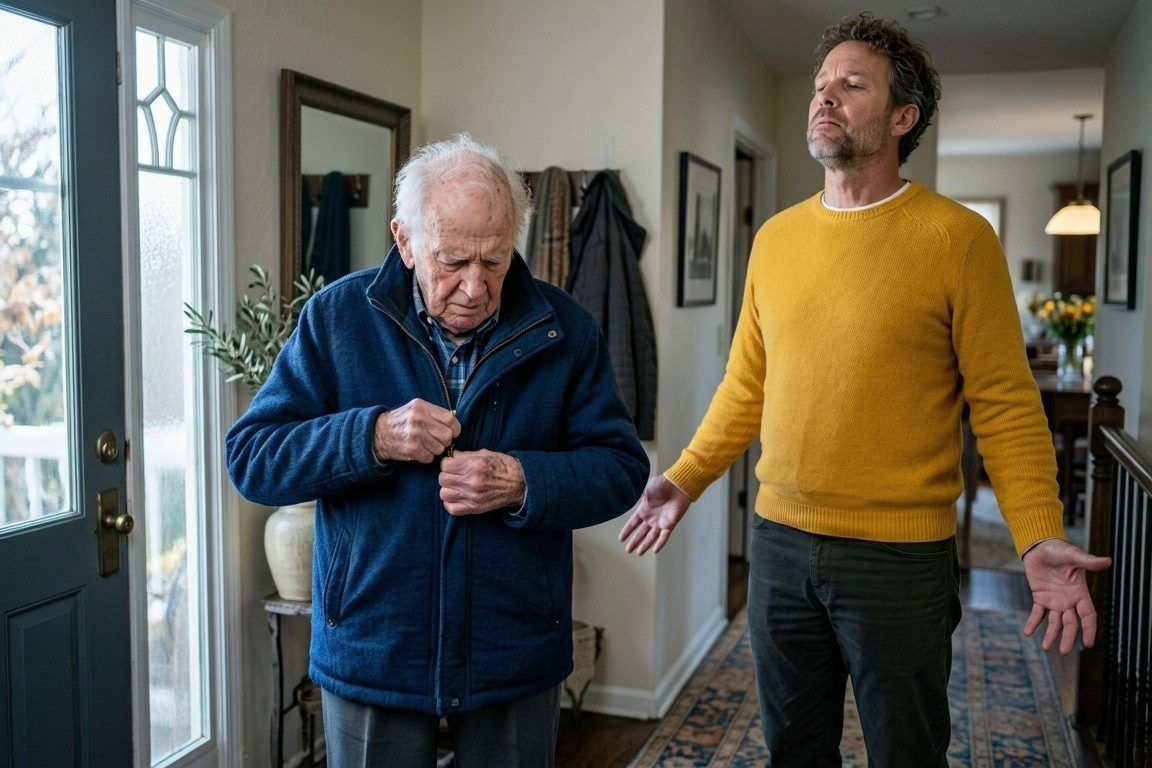
- Do not corner, crowd, or restrain them. This can feel threatening and trigger a defensive reaction. Give them space and approach from the front, at eye level, with open body language.
- Do not take the behavior personally. It is a symptom of the disease, not a personal attack. Remind yourself: 'This is not about me.' This helps you stay calm and compassionate.
- Do not ignore signs of pain or discomfort. Agitation can be a cry for help. Always check for physical needs first, hunger, thirst, bathroom, pain, or temperature discomfort.
- Do not leave them alone if they are at risk of falling or harming themselves. If you need to step away, ensure they are in a safe space and can be monitored from a distance.
Key points
- Your calm presence is the most powerful tool. Breathe, soften your body, and lower your voice before you act.
- Agitation is a symptom of unmet needs or confusion, not intentional behavior. Do not take it personally.
- Always check for physical causes first: pain, hunger, thirst, bathroom, temperature, or overstimulation.
- Use simple, soothing phrases and avoid arguing, criticizing, or reasoning.
- Give the person space if needed, and step away if you feel unsafe. You can return later when both of you are calmer.
- Keep a journal to identify patterns, and seek support from groups, friends, or professionals. You are not alone.
Videos
 What is Sundowning in Dementia?Explains the phenomenon of late-day agitation and offers practical strategies for prevention and response.
 Aggressive Behavior in People with Dementia | Linda Ercoli, PhD | UCLAMDChatProvides expert insight into the neurological and environmental triggers of aggression, and how caregivers can de-escalate.
 What Stage of Alzheimer's is Anger?Helps caregivers understand when anger typically appears and how to adjust strategies by stage.
 Caregiver stress related to dementia (Subtitles in Spanish)Addresses the caregiver's own stress cycle and offers self-care tips to prevent burnout.
2 more videos
 How To Manage Caregiver Stress Effectively? - Dementia Help HubProvides actionable steps for managing caregiver stress, including empathy and patience techniques.
 Caregiver Strategies How to Deal with Dementia Care Challenges Sundowning, Anxiety, and RestlessnessOffers specific strategies for sundowning and restlessness, including activity-based interventions.
Practical tools
6
The 'Calm Voice' Script
Memorize a few simple phrases to use in the moment. Say them slowly, with a low pitch: 'I am here with you.' 'You are safe.' 'Let's take a deep breath together.' 'I can see you are upset. Let's find a quiet spot.' Avoid questions that require explanation.
The 'Sensory Soother' Kit
Prepare a small bag or box with items that can calm:
Keep it nearby for quick access.
The 'Environment Check' Checklist
A short mental or written list to run through when agitation starts:
Address each quickly.
The 'Journal for Patterns' Template
Keep a simple notebook or note on your phone. After an episode, jot down: Date, time, what happened just before, what you tried, what helped, what didn't. Over a week, look for patterns (e.g., always after 4 PM, or after a bath). This helps you anticipate and prevent future agitation.
The 'Respite Card' for Yourself
Write down three things you can do to reset after an episode: take a 5-minute walk, drink a glass of water, call a friend. Keep this card in your pocket or on the fridge. After the person is calm, take your own break, even 5 minutes helps prevent caregiver burnout.
The 'Redirect Activity' Menu
Have a short list of activities that usually work for your person. Examples: 'Let's look at the birds outside,' 'Let's fold these towels,' 'Let's listen to this song.' Offer one at a time, without pressure. If they refuse, try another or just sit quietly together.
Different situations
For Lewy body dementia (LBD)
Agitation in LBD can be more intense and fluctuate rapidly. Visual hallucinations may be present. Avoid arguing about what they see; instead, say 'That must be frightening for you.' Check for medication side effects, as LBD patients are very sensitive to certain drugs. Always discuss any new agitation with a clinician, as it could be a sign of a medical issue.
For late-stage dementia
The person may be nonverbal and unable to communicate needs. Agitation may be the only sign of pain or discomfort. Use the 'Environment Check' checklist thoroughly. Offer gentle touch (holding a hand, a light back rub) if they tolerate it. Speak in a very soft, slow voice. Do not expect them to engage in activities; just being present calmly can help.
For a spouse vs. adult child caregiver
Spouses may feel more personally hurt by agitation, as they remember the person's former self. Remind yourself: 'This is the disease, not my partner.' Adult children may feel guilt or resentment. Use the 'Respite Card' and seek support from siblings or a caregiver group. Both roles benefit from taking a step back and not taking the behavior personally.
In a facility setting
If you are a family member visiting, inform staff about the agitation episode. They can check for medical causes and adjust the care plan. If you are a staff member, use the same steps but also document the episode. Involve the person's primary care provider if agitation is new or worsening. Ensure the environment is calm and consistent.
For sundowning (late afternoon/evening agitation)
Plan ahead: reduce stimulation in the late afternoon. Offer a small snack, turn on soft lighting, play calming music. Avoid caffeine and sugar after 3 PM. If they want to 'go home,' do not correct them; instead, say 'We will go home soon. Let's sit here for a bit.' A short walk earlier in the day can help regulate their internal clock.
For the doctor
5
- If agitation appears suddenly or worsens, discuss with the person's doctor to rule out a urinary tract infection, pain, or medication side effects. Do not assume it is just the dementia.
- Ask the doctor about a medication reconciliation, some drugs can cause or worsen agitation. Never stop or change medications without professional guidance.
- If the person has delusions (e.g., 'my daughter is trying to poison me') that lead to aggression, discuss with a geriatric psychiatrist. Do not argue with the delusion.
- If you are considering using melatonin or other supplements for sleep or sundowning, always consult the doctor first, as interactions are possible.
- If you feel overwhelmed, depressed, or unable to cope, speak to your own healthcare provider. Caregiver burnout is real and treatable.