Step by step
What not to do
- Do not use black-and-white checkerboard floors or busy patterns. The brain may interpret the pattern as moving or as holes, causing fear or falls.Instead, use solid, neutral floor colors with a matte finish to reduce glare and confusion.
- Do not rearrange furniture or change the layout of rooms. Familiarity is key; moving the couch or table can cause the person to bump into things or get lost. Keep furniture in the same place, and only add items that are clearly needed.
- Do not rely solely on overhead lighting. Overhead lights can create harsh shadows. Use multiple lamps at eye level to create even, shadow-free light. Place a night light in the bathroom and hallway, and consider a motion-activated light for the path to the bathroom.
- Do not leave mirrors uncovered if the person is distressed by their reflection. They may think a stranger is in the room, leading to agitation or fear. Cover mirrors with a cloth or shade, or remove them entirely from the bathroom and bedroom.
- Do not use dark-colored rugs or mats that blend into the floor. A dark rug on a dark floor can look like a hole. Use rugs with a contrasting border or a light color, and secure them with non-slip backing. Better yet, remove rugs altogether to reduce tripping hazards.
- Do not ignore the person's complaints about what they see. If they say 'there's a hole in the floor' or 'someone is in the corner,' validate their feeling and then modify the environment. Don't argue, just adjust the lighting, cover the mirror, or move the object. Their brain is telling them something real.
Key points
- Dementia vision problems are brain-based, not eye-based, eye exams may be normal but the brain can't process what it sees.
- Good lighting is the single most important modification: eliminate shadows, use night lights, and maximize natural light during the day.
- High-contrast colors help the brain see where things are: use contrasting tape on steps, grab bars, and toilet seats.
- Remove clutter, loose rugs, and reflective surfaces to reduce confusion and fall risk.
- Use verbal cues when handing objects or guiding movement to help the brain connect sight with action.
- Adapt the environment as the disease progresses, what works today may need adjustment tomorrow.
Videos
 Steady Steps: Practical Strategies for Managing Falls in DementiaThis video provides concrete strategies for preventing falls, which is a key concern when vision and spatial deficits are present.
 How Dementia Changes What They SeeDirectly explains the brain-based vision changes in dementia, helping caregivers understand why their loved one sees things differently.
 Designing a Safe Living Space For a Loved One With Dementia | LiveTalk | Being PatientOffers expert advice on home design modifications, including contrast and lighting, specifically for dementia.
 Shocking Symptom: Proprioception and DementiaCovers the often-overlooked issue of body awareness (proprioception) and how it affects movement and safety.
2 more videos
 Coping with Sundowning & Sleep Issues as a Dementia CaregiverSundowning can be worsened by poor lighting and shadows; this video offers strategies to manage evening confusion.
 Creating a Dementia-Proof HomeA practical guide to overall home safety, with tips that directly apply to vision and spatial deficits.
Background
Why Vision and Spatial Problems Happen in Dementia
Dementia doesn't just affect memory, it changes how the brain processes visual information. Even if an eye exam says vision is fine, the brain may struggle to make sense of what it sees. This is because dementia narrows the visual field, reduces depth perception, and makes it harder to distinguish between similar colors or shades. For example, a person may see a dark rug as a hole in the floor, or a shadow as a person standing in the corner. They may not be able to tell where the toilet ends and the floor begins if both are the same color. These changes can cause falls, confusion, and even hallucinations, especially in low light or cluttered spaces.
How the Brain Misinterprets the Environment
The brain in dementia has a harder time filtering out irrelevant information. Patterns like black-and-white checkerboard floors can look like moving or shifting surfaces, which can be terrifying. Deep shadows, especially on the way to the bathroom at night, can look like holes or obstacles. The person may also lose the ability to see in three dimensions, so stairs, curbs, or even a change in floor texture can become invisible hazards. This is why good lighting and high-contrast colors are so important, they help the brain 'see' what is actually there. Without these cues, the person may refuse to walk into a room, become agitated, or try to step over something that isn't there.
The Role of Proprioception and Body Awareness
Proprioception is the sense of where your body is in space. Dementia can impair this, making it hard for the person to know where their feet are or how to position their body to sit down safely. This is why they may miss a chair, trip over a threshold, or lean too far forward when standing. Exercises that improve balance and body awareness, like chair yoga or supervised walking, can help, but the environment must also be adapted. Non-slip shoes, clear pathways, and stable furniture to hold onto can compensate for these losses. The goal is to reduce the cognitive load so the person can focus on one thing at a time, like stepping over a threshold or reaching for a grab bar.
Practical tools
6
High-Contrast Color Tape
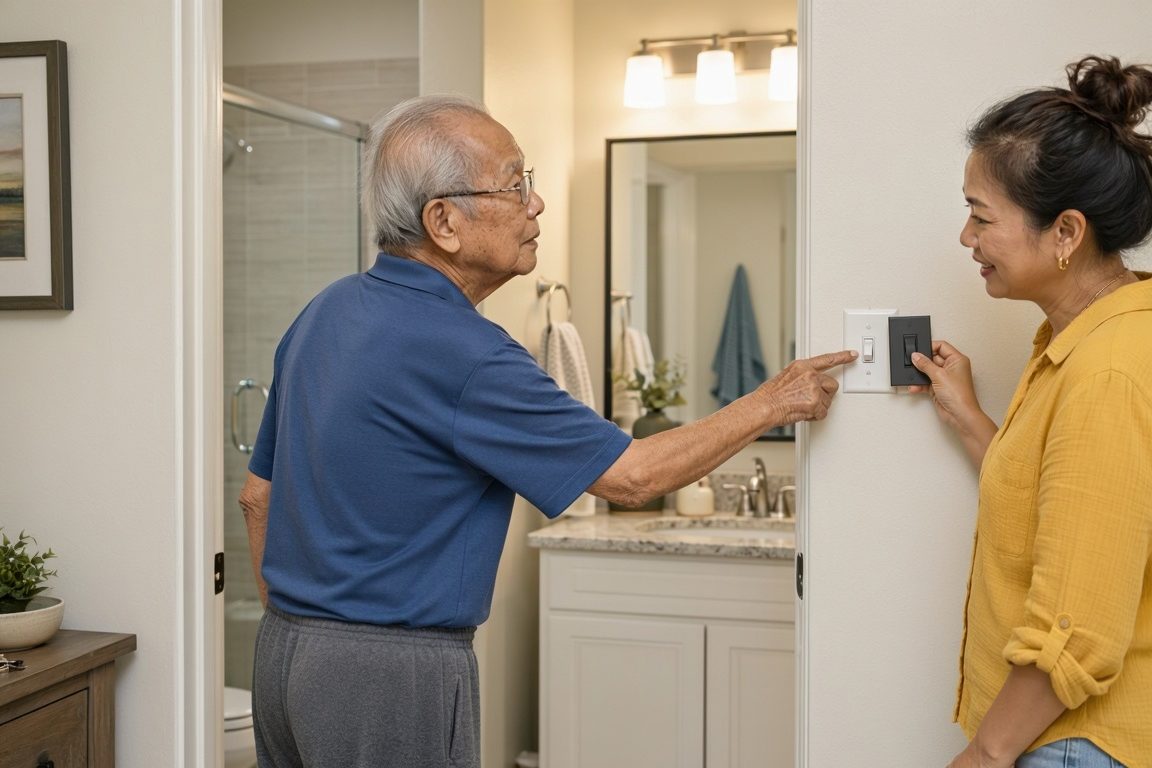
Use brightly colored tape (like red, yellow, or blue) to mark the edges of steps, door thresholds, and the edge of the bathtub. This helps the brain see where one surface ends and another begins. You can also use tape to outline light switches, grab bars, and the toilet seat. Available at hardware stores.
Night Lights with Motion Sensors
Place motion-activated night lights in the hallway, bathroom, and bedroom. They turn on automatically when someone walks by, providing light without needing to find a switch. Choose lights that emit a warm, soft glow, not harsh blue light, which can disrupt sleep. Great for preventing falls during nighttime trips to the bathroom.
Cover for Mirrors
A simple pull-down shade or a piece of fabric can cover a mirror when not in use. This prevents the person from seeing their reflection and thinking it's a stranger. Some caregivers use removable window film that makes the mirror opaque. You can also buy a mirror cover specifically designed for dementia care.
Grab Bars with Contrasting Color
Install grab bars near the toilet, in the shower, and by the bed. Choose bars that are a different color than the wall (e.g., white on a dark wall, or chrome on a light wall). This makes them easy to see and grab. Ensure they are securely anchored to wall studs. Discuss with an occupational therapist for proper placement.
Non-Slip Shoes or Socks
Shoes with non-slip soles or socks with gripper dots on the bottom help prevent falls on smooth floors. Look for shoes that are easy to put on (Velcro or slip-on) and have a wide toe box. Avoid slippers that can slide off. This is especially important for people with poor proprioception.
Verbal Cueing Script
When handing an object, say: 'Here is your [item].' When approaching a step, say: 'Step up now.' When entering a room, say: 'We are going into the kitchen.' This helps the brain connect what it sees with what is happening. Keep it simple and calm. Avoid asking 'Do you see that?', instead, describe what you are doing.
Different situations
Lewy body dementia
People with Lewy body dementia often have more severe visual hallucinations and may be very sensitive to light. Use dimmable, warm-toned lights to reduce glare. Cover mirrors and shiny surfaces completely. Avoid patterns that could be misinterpreted. Also, be aware that they may have fluctuating vision, what works one day may not work the next. Keep the environment as simple and calm as possible.
Late-stage dementia
In late stages, the person may have a very narrow visual field (like looking through a straw) and may not see anything outside that small area. Place important items (like a cup or a call bell) directly in their line of sight. Use very high contrast, black on white or white on black. Reduce all clutter to a minimum. Provide hand-over-hand guidance for tasks. The environment should be almost sterile in its simplicity.
Spouse caregiver in a shared home
You may need to balance your own comfort with your spouse's needs. Start with the most used rooms: the bathroom and bedroom. Add night lights and contrast tape without making the home feel like a hospital. Use removable solutions (like temporary grab bars or mirror covers) so you can adjust as needed. Communicate with your spouse about changes, they may feel more in control if they are involved in decisions.
Person with dementia living alone (early stage)
Focus on safety without removing independence. Install automatic night lights and label rooms with simple signs. Remove trip hazards like loose rugs. Use a contrasting toilet seat and grab bars. Consider a medical alert system. The goal is to make the home safe enough that the person can continue living alone for as long as possible, but with regular check-ins.
In a facility or memory care unit
Advocate for the same principles: good lighting, high-contrast colors, and clear pathways. Ask the facility to cover mirrors in the person's room if they are distressed. Request a night light and a contrasting toilet seat. If the person is in a shared room, use a brightly colored towel or blanket to mark their personal space. The environment should feel familiar, bring in a favorite lamp or a familiar chair if possible.
For the doctor
5
- Discuss with an occupational therapist about the best placement for grab bars and other adaptive equipment to ensure safety and proper use.
- Ask the doctor or a physical therapist about exercises to improve balance and proprioception, such as chair yoga or supervised walking.
- If the person is having frequent falls, ask the clinician about a fall risk assessment and whether a walker or other mobility aid would be helpful.
- If visual hallucinations are causing distress, discuss with the doctor whether medication adjustments or non-pharmacological strategies are appropriate.
- Ask about a home safety evaluation from a local aging services agency or occupational therapist to identify specific hazards in your home.