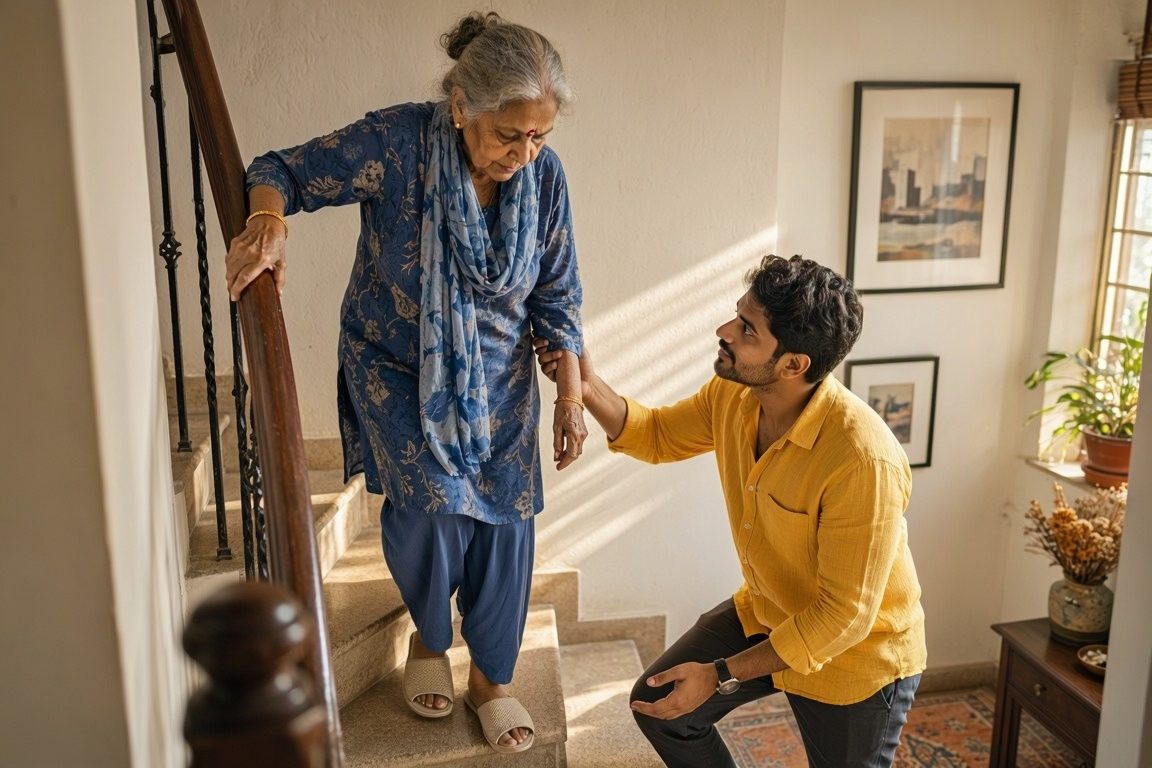
Step by step
What not to do
- Don't assume clumsiness is intentional or that they're "not trying", it's a physical symptom of brain change, not a choice.
- Don't rush them; hurrying raises anxiety and fall risk. Allow extra time and give calm, one-step instructions.
- Don't strip the home of furniture to "open it up", familiar pieces serve as landmarks and support. Keep furniture in consistent spots with clear paths around it.
- Don't introduce a walker, cane, or wheelchair without training from a physical therapist, improper use can cause serious injury.
- Don't ignore sudden changes in walking, balance, or alertness, these may signal medication issues, infection, or disease progression and require a prompt call to the doctor.
- Don't argue about how their body feels, if they say a leg feels "heavy" or "not there," offer practical help like "let me help lift it over the step."
- Don't dismiss or push through fear of falling, anxiety itself raises fall risk. Slow down, offer reassurance, and respect their need to rest.
Key points
- Proprioception loss is a real, physical symptom of dementia caused by brain damage, not a behavioral issue.
- It leads to clumsiness, shuffling gait, tripping, and falls because the brain loses its sense of where the body is in space.
- Prevention is the number one strategy: remove tripping hazards, secure rugs, install grab bars, and ensure good lighting.
- Adaptive equipment like non-slip shoes, grab bars, and shower chairs can significantly reduce fall risk.
- Supervised exercise, such as chair yoga or physical therapy, can help maintain strength and balance.
- Always involve the healthcare team to rule out medication side effects, delirium, or other medical causes of falls.
Videos
 Shocking Symptom: Proprioception and DementiaThis video directly explains what proprioception is, how dementia affects it, and gives six signs to watch for, plus practical home safety tips and adaptive equipment recommendations.
 Steady Steps: Practical Strategies for Managing Falls in DementiaThis video covers fall prevention strategies, the role of medication side effects, gait changes, and the importance of working with healthcare providers to manage fall risk.
 Why does Dementia Sometimes Cause Hallucinations, Delusions, and Paranoia w/ Lucy Barylak Dec 14 23This video helps distinguish between dementia-related symptoms and delirium, and explains how delusions can affect a person's perception of their own abilities, which can impact fall risk.
 Mixed DementiaThis video explains that many people have more than one type of dementia, which can complicate motor symptoms and fall risk, emphasizing the need for individualized care.
2 more videos
 Answering Common Dementia Questions w/ Tam Cummings, PhD July 7This video addresses common caregiver questions about dementia progression, including physical changes and fall risk, and offers reassurance that these are part of the disease process.
 Dementia is MORE than Memory Loss...6 Changes that Lurk Inside the BrainThis video highlights that dementia involves many physical changes beyond memory loss, including motor symptoms like those affecting proprioception, and encourages a holistic approach to care.
Background
What Is Proprioception and Why Does Dementia Affect It?
Proprioception is often called the 'sixth sense.' It is the unconscious ability of your brain to know where your limbs are in space without you having to look. For example, when you walk up stairs in the dark, your brain knows exactly how high to lift your foot because of proprioceptive signals from your muscles and joints. This system relies on a complex network of nerves, the spinal cord, and specific areas of the brain, including the motor cortex, premotor cortex, basal ganglia, and cerebellum. In dementia, these brain regions are progressively damaged by diseases like Alzheimer's, Lewy body dementia, frontotemporal dementia, and vascular dementia. As the source from the Dementia Careblazers video explains, many people with dementia struggle with proprioception, which shows up as clumsiness, bumping into things, tripping, and falling. The brain is literally losing its map of the body, so movements that used to be automatic become uncertain and risky.
How Does This Lead to Clumsiness and Falls?
When proprioception is impaired, a person may not realize their foot is only partially lifted, so they trip over a threshold or a rug. They might misjudge the distance to a chair and sit down too early or too late, missing the seat entirely. The gait often changes to a shuffling walk, where the feet barely leave the ground, increasing the risk of stumbling over even small obstacles. As the James L. West Center for Dementia Care video notes, slower processing speed compounds the problem: a person may stumble over a crack in the sidewalk and be on the ground before they can process what happened. Additionally, muscle weakness from reduced physical activity and side effects from medications can further destabilize balance. This is not a matter of 'not trying hard enough', it is a direct result of brain damage affecting the motor and sensory systems. The Teepa Snow video emphasizes that people with dementia may also forget how to use mobility aids correctly, such as mistaking a walker for a chair and trying to sit on it, leading to a fall they would not have had without the device.
Practical tools
5
Home Safety Walk-Through Checklist
Walk every room:
Non-Slip Footwear Guide
Choose shoes labeled non-slip with rubber soles (e.g., Skechers, New Balance, Propet). Avoid backless slippers, flip-flops, and socks on bare floors. Indoor grip socks with rubber dots are acceptable only on dry, hard floors.
Verbal Cueing Scripts for Transitions
Standing from a chair: "Both feet flat. Hands on armrests. On three, push up. One, two, three." Walking: "Eyes on the path. Small, slow steps. I'm right here." Over a threshold: "See that line? Step over it like a little hurdle."
Grab Bar and Bath Safety Kit
Mount grab bars (not suction-cup models) beside the toilet and in the shower; have them professionally installed to hold full body weight. Add a shower chair or transfer bench and a raised toilet seat to reduce balancing demands.
Daily Movement and Falls Log
Record the time, what the person was doing, and what happened each time clumsiness, a near-miss, or a fall occurs. Look for patterns (certain shoes, times of day, activities) and share the log with the doctor at appointments.
Different situations
Lewy body dementia (LBD) or Parkinson's disease dementia
In LBD, movement problems like rigidity, shuffling gait, and tremors are often more pronounced and appear earlier. The Mayo Clinic and AlzOrangeCounty sources note that LBD can cause Parkinson-like symptoms, including slowness of movement and difficulty with balance, leading to repeated falls. Additionally, LBD often involves visual hallucinations and REM sleep behavior disorder (acting out dreams), which can increase fall risk during the night. For LBD, ensure the bedroom is clear of obstacles, consider a bed alarm if the person gets up during sleep, and work closely with a neurologist familiar with LBD. The WellMed Charitable Foundation video notes that delusions are more common in LBD, which may affect cooperation with safety measures.
Late-stage dementia (wheelchair or bedbound)
Even if your loved one is in a wheelchair or bedbound, they can still experience falls from transfers or from leaning too far. The Bambu Care video reminds us that being non-verbal does not mean non-communicative. Focus on safe transfer techniques: lock wheelchair brakes before standing, use a gait belt for support, and keep the bed at a low height with fall mats on the floor. For bedbound individuals, use side rails (if approved by the care team) and keep call bells within reach. Prevent pressure injuries by repositioning every two hours, as immobility increases fall risk during transfers.
Spouse vs. adult child caregiver
Spouse caregivers may be older themselves and at risk of injury when trying to catch a falling partner. Use a gait belt to share the load, and consider hiring a home health aide for transfers. Adult children may need to balance caregiving with work and their own family; prioritize home safety modifications early to reduce the need for constant supervision. Both roles benefit from joining a support group (like the Dementia Caregiver Support For Christians video suggests) to share strategies and reduce isolation.
Living in a facility (assisted living or nursing home)
Advocate for a fall risk assessment upon admission. Request a room near the nurses' station for closer monitoring. Ensure the facility uses non-slip flooring, grab bars, and bed alarms. Visit during different times of day to observe staffing levels and how staff respond to call lights. The James L. West Center video emphasizes that prevention is key, so ask about the facility's fall prevention program and how they adapt to individual needs.
Early-stage dementia (still living at home alone or with minimal support)
In early stages, your loved one may still be aware of their clumsiness and feel frustrated or embarrassed. Have an open conversation about safety without shaming them. Say something like: 'I notice you've been tripping a bit more. Let's work together to make the house safer so you can stay independent longer.' Introduce adaptive tools gradually, such as non-slip shoes and a shower chair, before falls become frequent. The Dementia Careblazers video suggests bringing up signs with the healthcare provider early.
For the doctor
6
- Ask the doctor: 'Could my loved one's recent increase in falls be related to a medication side effect, such as dizziness or drowsiness? Can we review all current medications to minimize fall risk?'
- Ask the physical therapist: 'Can you evaluate my loved one's gait and balance and recommend specific exercises to improve proprioception and strength?'
- Ask the neurologist: 'Given my loved one's type of dementia, what specific motor symptoms should I expect, and how can we best manage fall risk as the disease progresses?'
- Ask the pharmacist: 'Are any of my loved one's medications known to cause orthostatic hypotension (a drop in blood pressure when standing) or affect balance?'
- Ask the occupational therapist: 'Can you do a home safety assessment and recommend specific grab bar placements, adaptive equipment, and environmental modifications?'
- If sudden changes in mobility or confusion occur, seek immediate medical evaluation for possible delirium, infection (especially urinary tract infection), or stroke.