Step by step
What not to do
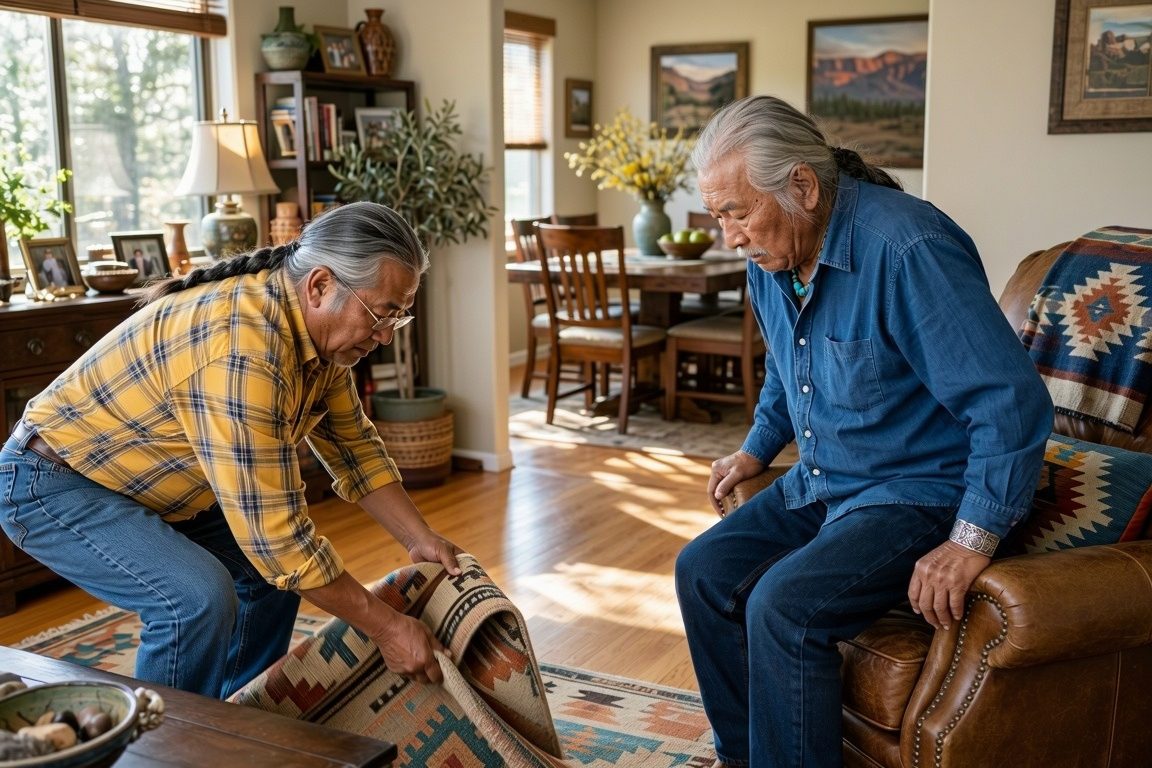
- Do not leave throw rugs, extension cords, or clutter on floors.
- Do not rely on mirrors in areas where the person may mistake their reflection for a stranger.
- Do not use lighting that creates deep shadows or sudden changes in light levels.
- Do not use towel racks as grab bars.
- Do not set water heater above 120°F.
Key points
- Start with a room-by-room safety audit, focusing on fall hazards, wandering risks, and kitchen/bathroom dangers.
- Improve lighting throughout the home to reduce confusion and falls, use nightlights, motion-sensor lights, and even, shadow-free lighting.
- Secure doors and windows with alarms or locks to prevent unsupervised exits, and consider a GPS tracker for wandering.
- Adapt activities and routines to match current abilities, use simple, familiar tasks and break them into small steps.
- Make changes gradually to avoid overwhelming the person, and involve them in the process when possible.
- Don't forget your own safety and well-being as a caregiver, use home modifications to reduce your stress and take breaks when needed.
Videos
 Creating a Dementia-Proof HomeThis video provides 11 practical tips for making the home safer and more supportive for someone with dementia, covering everything from lighting to bathroom safety.
 Steady Steps: Practical Strategies for Managing Falls in DementiaFalls are a major risk for people with dementia. This video offers concrete strategies to prevent falls, including home modifications and caregiver techniques.
 How to keep a dementia patient busyKeeping a person with dementia engaged in meaningful activities reduces agitation and wandering. This video shares 9 simple activities that can be adapted to different stages.
 DEMENTIA NURSING HOME TRANSITIONIf home modifications are no longer enough, this video helps you understand the transition to a memory care facility and how to prepare for it.
Background
Why Home Modifications Matter for Dementia
Dementia changes how a person sees, moves, and thinks. Their sense of balance, depth perception, judgment, and problem-solving skills all become impaired, which increases the risk of injury during daily activities like walking, bathing, or cooking. A familiar home environment can actually help them function better because it's already stored in long-term memory, they don't have to learn a new space. When you move someone with dementia out of their home into a facility, they often decline rapidly because they cannot re-adapt and learn a new environment due to short-term memory problems. Keeping them at home, when safe, preserves their abilities and sense of security.
How the Environment Affects Behavior and Safety
The physical environment can either support or confuse a person with dementia. Poor lighting, deep shadows, and high-contrast patterns (like black-and-white checkerboard floors) can be misinterpreted by the brain as holes or obstacles, causing falls or agitation. Clutter, throw rugs, and extension cords are tripping hazards. Wandering is a common concern, unsecured doors and windows can lead to unsupervised exits. But the same environment can be made safe and calming: familiar items, clear pathways, and simple labels help the person feel oriented and reduce anxiety. The goal is to create a space that is familiar, functional, easy to navigate, and safe.
The Role of the Caregiver in Adapting the Home
As a caregiver, you are the eyes and ears for what works and what doesn't. You may notice that your loved one gets confused in certain rooms or at certain times of day. Use those observations to guide your modifications. For example, if they repeatedly try to leave through a back door at dusk, that's a sign to add a lock or alarm there. If they struggle to find the bathroom at night, add a nightlight or a sign. The adaptations you make should evolve as the disease progresses. What works in early stages (like simple labels) may need to become more robust (like locks and alarms) later on. You don't have to do it all at once, start with the highest-risk areas: bathroom, kitchen, and exits.
Practical tools
5
Grab bars
Install near toilet and in shower or bathtub. Use bars that bolt into wall studs or blocking, not suction cups or towel racks.
Non-slip mats
Place inside and outside the tub or shower to prevent slips on wet surfaces.
Motion-sensor lights
Use in bathrooms so the person does not need to find a switch in the dark.
Nightlights
Place in bedrooms, bathrooms, and hallways to prevent disorientation at night.
Red and blue tape or stickers
Label hot faucets with red and cold faucets with blue for clear identification.
Different situations
Early-stage dementia (still living alone or with minimal supervision)
Focus on subtle safety upgrades that don't feel intrusive. Install grab bars in the bathroom, add nightlights, and remove tripping hazards. Use a pill organizer and a simple medication checklist. Consider a medical alert pendant or bracelet. Do not make drastic changes to the home layout. Instead, use signs and labels to help with orientation. The goal is to maintain independence while reducing risk.
Middle-stage dementia (needs more supervision, may wander)
Add door and window alarms, secure the stove, and lock away dangerous items. Use a GPS tracker or a medical alert system. Create a calming environment with familiar objects and limited mirrors. Consider a baby monitor or a nanny cam to keep an eye on the person from another room. If wandering is a concern, consider a 'wandering alert' system that notifies you if the person leaves a designated area.
Late-stage dementia (bedridden or very limited mobility)
Focus on comfort and fall prevention. Use a hospital bed with side rails, a pressure-relieving mattress, and a bedside commode. Ensure the room is warm, quiet, and free of hazards. Use a call bell or a simple intercom system so the person can summon help. If they are in a wheelchair, make sure doorways are wide enough and ramps are available. The goal is to prevent pressure sores, falls, and discomfort.
Lewy body dementia (fluctuating cognition, visual hallucinations, movement issues)
Be extra cautious with lighting and shadows, as visual hallucinations are common. Use soft, even lighting and avoid patterns that could be misinterpreted. Remove mirrors if they cause distress. Install grab bars and non-slip mats everywhere, as movement issues (like stiffness or tremors) increase fall risk. Keep a consistent routine and avoid sudden changes to the environment, which can trigger confusion or agitation.
Frontotemporal dementia (behavioral changes, impulsivity, loss of empathy)
Focus on safety from impulsive actions. Lock away dangerous items (knives, tools, medications) and secure doors and windows. Use door alarms and consider a GPS tracker. Create a calm, low-stimulation environment to reduce agitation. Avoid confrontations about behavior; instead, redirect to a safe activity. If the person is prone to leaving the house, consider a 'wandering' alert system and a medical ID bracelet.
For the doctor
5
- Ask your doctor or occupational therapist about the best type of grab bars and where to install them for your loved one's specific mobility needs.
- Discuss with the clinician whether a medical alert system or GPS tracker is appropriate, especially if the person has a history of wandering or falls.
- If the person has trouble swallowing or managing medications, ask the pharmacist about liquid or crushable forms, and discuss a medication management plan with the doctor.
- For any concerns about the person's ability to safely use the stove or other appliances, consult with an occupational therapist for a home safety evaluation.
- If the person is on blood thinners or other medications that increase fall risk, discuss fall prevention strategies with the doctor, including the use of hip protectors or a fall alert system.