Step by step
What not to do
- Don't argue, correct, or try to convince them they need a bath, reasoning only deepens fear and resistance. If they insist 'I already showered,' say 'Oh, I must have missed that, let's just freshen up a little.'
- Don't surprise them with water or touch; always announce what you are about to do, because sudden sensations can feel like an attack.
- Don't use a commanding tone, frustrated face, or shaming words, your calm voice and relaxed body set the whole tone.
- Don't insist on a daily full shower; once or twice a week is plenty, with sponge baths in between.
- Don't leave them alone in the bathroom, stay within arm's reach in case of dizziness or a fall.
- Don't mention the bath more than 5–10 minutes ahead, which only fuels anticipatory anxiety.
- Don't take refusal personally, it is their brain signaling fear, confusion, or pain, not stubbornness or ingratitude.
Key points
- Bathing resistance is usually sensory and emotional, not deliberate, water can feel painful and the bathroom can look confusing.
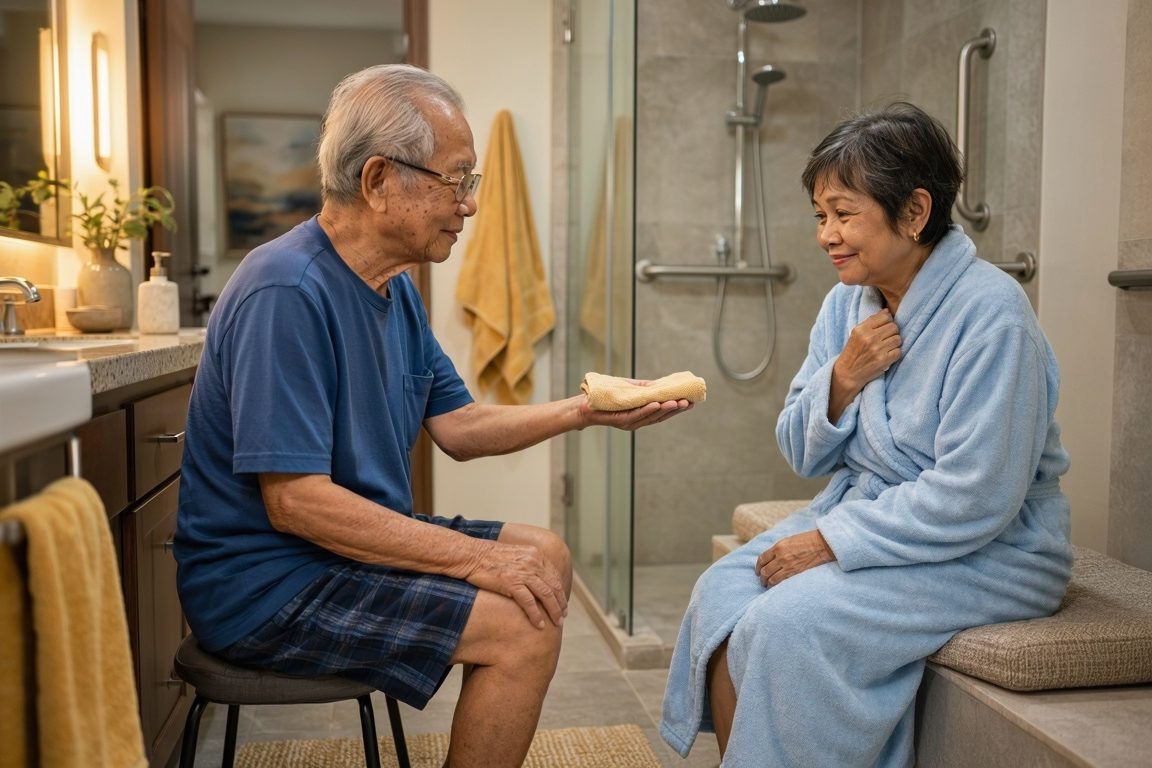
- Prepare the environment first: warm room, non-slip mats, grab bars, padded shower chair, soft lighting, color contrast, and every supply within reach.
- Replace yes/no questions with choice illusions and swap trigger words like 'bath' or 'shower' for 'freshen up' or 'spa time.'
- Limit full baths to once or twice a week; use no-rinse wipes or sponge baths the rest of the time.
- Never argue or force, if they become upset, stop and try later. Your relationship matters more than a daily bath.
- Guard dignity always: towels for modesty, undress one section at a time, and consider a same-gender helper.
- Track patterns with a log to find their personal 'best window' for cooperation.
Videos
 Secrets for How to BATHE A Person with Dementia Without a FIGHT! The ABC's of FAQ's for DementiaThis video offers practical, step-by-step strategies and product recommendations from a dementia care expert, directly addressing the most common bathing struggles.
 How Do You Persuade Someone With Dementia To Bathe?A gentle, real-world approach to persuasion without confrontation, including specific phrases and timing tips.
 Caregiver Training: Refusal to Bathe | UCLA Alzheimer's and Dementia CareA professional training video that demonstrates how to handle refusal with dignity and safety, including what to do when the person becomes upset.
 When Someone With Dementia REFUSES to Bathe: Do This!Offers 10 surprising reasons for refusal and actionable solutions, including sensory and environmental adjustments.
6 more videos
 The Baffled Brain: Demystifying Dementia Episode 21 April 17 ,2021Explains the brain changes behind bathing resistance, helping caregivers understand why their loved one reacts the way they do.
 Why Elderly Parents Refuse to BatheCovers emotional and practical reasons for refusal, with tips on how to reduce fear and create a positive bathing routine.
 Why Dementia Patients HATE Bathing (11 Shocking Reasons!)Explains the sensory, environmental, and psychological reasons behind bathing resistance, with practical solutions.
 Alzheimer's LA Caregiver Tips - Ep. 5 'Bathing'Covers common fears (water, slipping, vulnerability) and how to address them with empathy.
 Refuses to Shower? Dementia Bathing Tips That Work | Dr. Khushboo VermaProvides a medical perspective on why bathing is difficult and offers actionable tips.
 Caregiver Training: Refusal to BatheA concise training video for caregivers on how to respond to bathing refusal without escalating conflict.
Background
Understanding the situation
Dementia doesn't just erase memory, it rewires how a person senses the world. When the insula (which interprets touch and temperature) misfires, a gentle warm stream can register as sharp needles or stabbing pain. Damage to the parietal lobe distorts spatial awareness, so the bathroom becomes a depthless space where the edge of the tub, the floor, and where to step all blur together, especially when white tile, white tub, and white toilet have no color contrast. Layered on top of this are powerful emotions: undressing can feel like losing your armor; being helped with an intimate task feels exposing and shameful; and many older adults grew up bathing weekly, so daily bathing seems foreign and unnecessary. They may genuinely believe they already washed, fear falling or drowning, or simply run cold and dread a chilly room. Often resistance is really about control, being told what to do triggers agitation, particularly from a spouse or adult child. Your tone, pace, and the environment matter more than any argument: you cannot reason someone into cooperation when the cognitive skill for persuasion is gone, so the goal is to adapt the setting and your approach, not to win a battle.
Practical tools
8
The Warm-Towel Trick
Tumble a large towel in the dryer for a few minutes right before you start, then wrap it around their shoulders as you undress them. The warmth soothes a body that runs cold, and the gentle weight feels like a reassuring hug, easing fear and tension.
The Bath-Day Log
Keep a small notebook or phone note and jot down each attempt: the day, the time, what worked, and what didn't. Within two to three weeks, clear patterns emerge that reveal your loved one's personal 'best window' for cooperation, so you can schedule baths when success is most likely.
The Same-Sex Helper Strategy
Use a same-gender helper as a deliberate intervention when embarrassment or modesty drives the resistance, a same-sex spouse, adult child, or aide. Matching gender often dissolves much of the shame and refusal. If an opposite-gender family member is causing discomfort, arrange a same-gender professional caregiver for bath days.
The 'Choice Illusion' Script
Offer two options that both lead to bathing so they feel in control while the outcome is guaranteed: 'Shower or sponge bath in your chair?', 'Lavender soap or unscented?', 'Stool or bench?', 'Blue towel or green towel?' Never ask 'Do you want a bath?'
Exact Phrases to Say
Open with 'Let's get you ready for the day' or 'Let's get you comfortable' instead of 'Time for your shower.' If they resist: 'I know this feels strange, let's just do a little bit.' If they claim they already washed: 'Oh, I must have missed that, let's just freshen up a little.' When you must stop: 'You're not ready, and that's okay, we'll try later.' Always keep the tone warm and unhurried.
Bathroom Setup Checklist
Before you begin, confirm:
No-Rinse Bathing Wipes
Large pre-moistened wipes (e.g., Comfort Bath) clean without water and don't require full undressing. Use them for a sponge bath at the sink, in a recliner, or in bed when a full shower isn't possible. Keep one pack in the bathroom and another in the living room for quick freshen-ups, and pair with a warm-water basin and dry towel for a more thorough wash.
Shower Chair and Hand-Held Shower Head
A padded shower chair or transfer bench (with a back and armrests) cuts fall risk and the fear of standing on a slippery surface. A hand-held shower head lets you control exactly where water goes, always start at the feet or back, never the face, and announce before you spray.
Different situations
Lewy body or Parkinson's disease dementia: These individuals are often extremely temperature-sensitive and can have sudden shifts in alertness, rigidity, or freezing. Keep water lukewarm, never hot, use a shower chair with a back and armrests, allow extra time for transitions, and avoid sudden movements. Keep the bathroom well-lit and shadow-free since visual hallucinations are common; if they fear water, begin with a sponge bath.
Frontotemporal dementia (behavioral variant): Impulsivity and reduced awareness of social norms mean hygiene may not matter to them and emotional appeals fall flat. Use very simple, direct language ('It's time to get clean. Let's go.'), lean hard on routine and consistency, and if agitation flares, which can escalate fast, stop and try again later.
Late-stage or bedbound: Full baths are often unsafe. Use bed baths with no-rinse wipes or a basin of warm water and washcloths, protect the mattress with a waterproof pad, and keep them covered with a sheet or towel for warmth and dignity. Work in sections, wash and dry one limb at a time, focus on face, underarms, and perineal area, check skin for breakdown each time, and ask a clinician about a Hoyer lift or transfer board if needed.
Spouse vs. adult-child caregiver: Spouses may feel more at ease with intimacy but more emotionally drained as the role shifts from partner to caregiver; bathing together (if safe) can reduce the feeling of being 'cared for.' Adult children may feel awkward and need firmer boundaries, humor, and distraction. For heavy resistance, either may benefit from hiring a professional for bath days to protect the relationship.
In a care facility: Advocate for consistency: same-gender aide, same time of day, familiar music, a warm room, and privacy. Ask staff to use the same calm, choice-based approach every time and to never force, document the refusal and retry later. Request 'spa bath' or sponge-bath days when your loved one is agitated, and bring their favorite towel or robe from home.
Medicaid or limited resources: Many state Medicaid programs cover home health aides for bathing assistance. Ask the doctor for a home health or occupational therapy order so a professional can assess safety and teach you techniques in your home. Local Area Agencies on Aging may offer free or low-cost equipment like shower chairs and grab bars.
Common questions
15
How do sensory sensitivities and apathy affect a person's willingness to bathe?
Why is my loved one at higher risk for skin tears, bruises, and burns, and how do I protect thin, fragile skin?
Why is bathing so frightening, and what helps when the person fears the shower or water?
Why is my loved one having bathroom problems, and is the resistance deliberate (the role of interoception)?
What specific techniques make bathing easier and more dignified?
Why is intimate hygiene care so difficult, and how can I approach it sensitively?
What should I do after bathing to maintain skin health and dignity?
What adaptive product can help someone with limited movement dry themselves after bathing?
What safety equipment makes bathing less frightening for a fearful elderly parent?
How can I set up the bathroom to make bathing easier for someone with dementia?
5 more questions
What safety measures should I take during bathing?
How do I assist with bathing, dressing, and oral hygiene for a person with dementia?
How do I clean the face of a person who resists having it washed?
How can I help my loved one accept help with bathing, dressing, and toileting?
How can I motivate a person with dementia to shower when they flatly refuse?
For the doctor
6
- Confirm any medical or medication concern with your loved one's clinician, never adjust treatment on your own. Specifically: ask about safe bathing frequency, gentle moisturizing cleansers, and avoiding scrubbing if they have a skin condition, open sores, fragile skin, or take blood thinners
- request a urine test if confusion and resistance suddenly worsen, since a UTI often drives both and treating it can restore cooperation
- ask for a physical or occupational therapy referral if there's a fall history or if you're unsure about safe transfers (equipment may be insurance-covered)
- consult a doctor or wound care nurse for rashes, infections, or skin breakdown from infrequent bathing
- ask a urologist or geriatrician about briefs, barrier creams, and toileting schedules for severe incontinence
- and only as a last resort after non-drug strategies fail, discuss whether a short-term medication adjustment could ease extreme agitation or aggression before bath time. If you feel overwhelmed, ask your doctor or a social worker about respite care, home health aides, or adult day programs.