Step by step
What not to do
- Do not argue or try to convince them they need to bathe. This will only escalate frustration because their brain cannot process the logic.Instead, redirect to a simple, positive statement like 'Let's just freshen up your face.'
- Do not use a cold bathroom or turn on the shower without warning. The shock of cold air or sudden water can trigger fear and aggression. Always warm the room and let them see the water first.
- Do not force them to undress fully in front of you if they are uncomfortable. Cover them with a towel and respect their privacy. If same-sex caregiver helps, that may reduce anxiety.
- Do not ask 'Do you want to take a shower?', this invites a 'no' response.Instead, use a calm, matter-of-fact statement: 'It's time to get ready for the day. Let's wash up.'
- Do not rush or show frustration. Your tone and body language matter immensely. If you are anxious or hurried, they will pick up on it and resist more. Take a deep breath and approach with patience.
- Do not assume they remember they bathed yesterday. They may genuinely believe they already did. Instead of correcting, say, 'Let's just do a quick rinse to feel fresh.'
Key points
- Resistance to bathing is usually fear, discomfort, or confusion, not stubbornness. Address the unmet need, not the behavior.
- Warm the room to a hot temperature for you; cold air is a major trigger for resistance.
- Use a calm, positive approach: state what you are going to do, don't ask permission, and avoid arguing.
- Let the person have control: hold a washcloth, start the water, or choose the music.
- If full bathing fails, use no-rinse wipes or sponge baths, hygiene can be maintained without a full shower.
- You are not alone: one in three people with dementia resist bathing. Small changes can make a big difference.
Videos
 Caregiver Training: Refusal to BatheDemonstrates step-by-step techniques for handling resistance in real time, including how to approach and redirect.
 How Do You Persuade Someone With Dementia To Bathe?Offers practical persuasion strategies that respect the person's dignity and reduce power struggles.
 Why Dementia Patients HATE Bathing (11 Shocking Reasons!)Explains the hidden reasons behind resistance, helping you understand and address the root causes.
 Senior Won't Bathe? 9 Tips For How To Get Your Elderly Parent To ShowerProvides actionable tips for adult children caregivers, including environmental adjustments and communication techniques.
2 more videos
 Refuses to Shower? Dementia Bathing Tips That Work | Dr. Khushboo VermaA medical professional shares evidence-based tips for reducing resistance, including sensory and pain management.
 Caregiver Training: Refusal to Bathe | UCLA Alzheimer's and Dementia CareUCLA experts demonstrate a calm, respectful approach that can be adapted to home settings.
Background
The brain's changed perception of bathing
Alzheimer's damages the brain's ability to process sensory information and understand the purpose of bathing. Your loved one may no longer recognize why they need to wash, or they may genuinely believe they already showered today. This isn't denial, it's a real memory gap. Trying to convince them with logic or facts will only escalate frustration because the brain can no longer reason that way. Instead, the resistance is a symptom of an unmet need, not a personal rejection of you or your care.
Fear is the hidden driver
Many people with Alzheimer's resist bathing because they are afraid, of falling, of the water, of being cold, or of feeling vulnerable. The sound of rushing water can be overwhelming, and the bathroom's bright lights and hard surfaces can feel threatening. They may also have a past fear of water or a history of trauma that resurfaces. Anger often masks fear: 'fear's bodyguard,' as one expert puts it. When they lash out, they are really saying, 'I am scared and I don't know how to tell you.' Your calm, reassuring presence can help them feel safe.
Physical discomfort and loss of control
Arthritis, neuropathy, or general pain can make undressing and standing in a shower genuinely painful. The cold air on bare skin can be shocking for someone who already struggles to regulate body temperature, they often run cold. Additionally, the person may feel a loss of dignity and control when someone else directs such a private activity. They may resist to assert the only control they have left. Recognizing these physical and emotional discomforts allows you to adapt the environment and your approach, rather than forcing the person to adapt to a world that no longer makes sense to them.
Practical tools
6
Warm-up routine
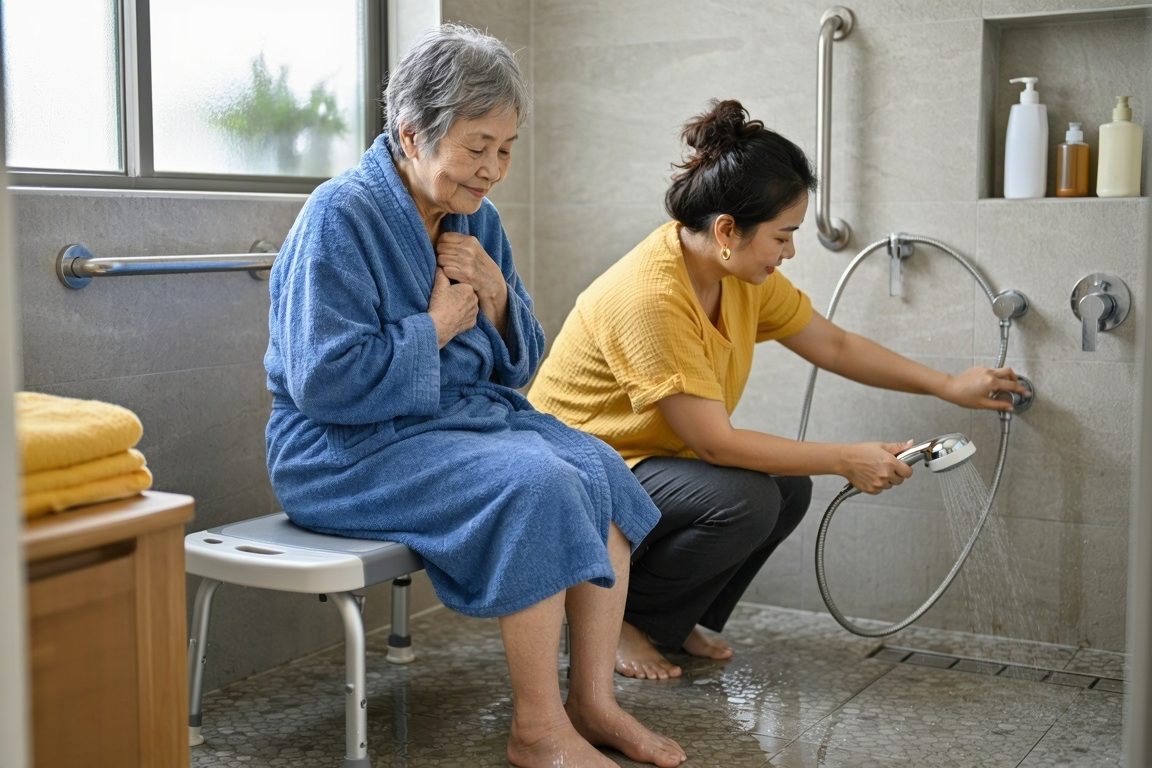
Before bath time, run the shower on hot for a few minutes with the door closed to steam the room. Turn off the water, then bring the person in. This eliminates the scary sound of rushing water and makes the space warm and inviting.
Handheld showerhead
A handheld showerhead allows you to control the water direction and avoid spraying the face. Let the person hold it if they want, or at least see it before use. This reduces fear of water and gives them a sense of control.
No-rinse cleansing wipes
Products like 'Comfort Bath' or 'Rinse-Free Shampoo Caps' allow you to clean without water. Keep a pack in the bathroom for quick freshen-ups between full baths. This is especially useful for late-stage Alzheimer's when full bathing is too overwhelming.
Shower chair and non-slip mats
A sturdy shower chair reduces fear of falling and makes the process safer. Add non-slip mats inside and outside the tub. This simple setup can transform a scary experience into a manageable one.
Calming music playlist
Create a short playlist of their favorite soothing songs (e.g., old hymns, classical, or nature sounds). Play it on a waterproof speaker in the bathroom before and during bathing. Music can mask startling sounds and create a familiar, comforting atmosphere.
Towel warmer or heated blanket
A towel warmer or a heated blanket (used before bath) can keep the person warm during undressing and after bathing. This addresses the common fear of being cold and makes the experience more pleasant.
Different situations
Late-stage Alzheimer's (bedbound or very frail)
Focus on sponge baths or no-rinse wipes. Use a basin of warm water and wash one area at a time, keeping the rest covered. Avoid full immersion. Use a waterproof pad under the person. Always prioritize comfort and safety over a full bath.
Lewy body dementia (sensory sensitivity and depth perception issues)
Be extra gentle with water temperature and sound. Use a handheld showerhead at low pressure. Avoid bright lights, use dim lighting. The person may have visual hallucinations or depth perception problems, so keep the bathroom clutter-free and use a shower chair. Expect more resistance and plan for shorter, more frequent washes.
Adult child caregiver vs. spouse caregiver
Adult children may face more resistance due to role reversal and loss of dignity. Use a same-sex caregiver if possible, or hire a professional aide for bathing. Spouses may have an easier time with intimacy but should still respect privacy. In both cases, use calm, positive language and avoid power struggles.
In a facility or with home health aide
Coordinate with the care team to ensure consistent approach. Provide a written list of the person's preferences (e.g., warm room, music, no face washing). Ask for the same caregiver each time to build trust. If the person resists, the aide should stop and try later, not force.
Person has history of trauma or abuse
This is a high-risk situation. Never force undressing or bathing. Use a trauma-informed approach: let the person keep clothes on as much as possible, use a towel to cover, and explain every step. Consider a same-sex caregiver. If resistance is extreme, consult a geriatric psychiatrist or social worker for guidance.
For the doctor
4
- If the person has pain that seems to worsen during bathing, ask the doctor about pain management strategies and the best timing for medication around bath time.
- If the person has a history of falls or is at high risk, discuss with the doctor whether a shower chair, grab bars, or a transfer bench is appropriate for their specific needs.
- If the person has severe anxiety or aggression during bathing that does not respond to environmental changes, ask the doctor about non-pharmacological interventions or, as a last resort, medication options to reduce distress.
- If the person has swallowing difficulties or is at risk of aspiration during bathing (e.g., from water in mouth), discuss safety precautions with the doctor or occupational therapist.