Step by step
What not to do
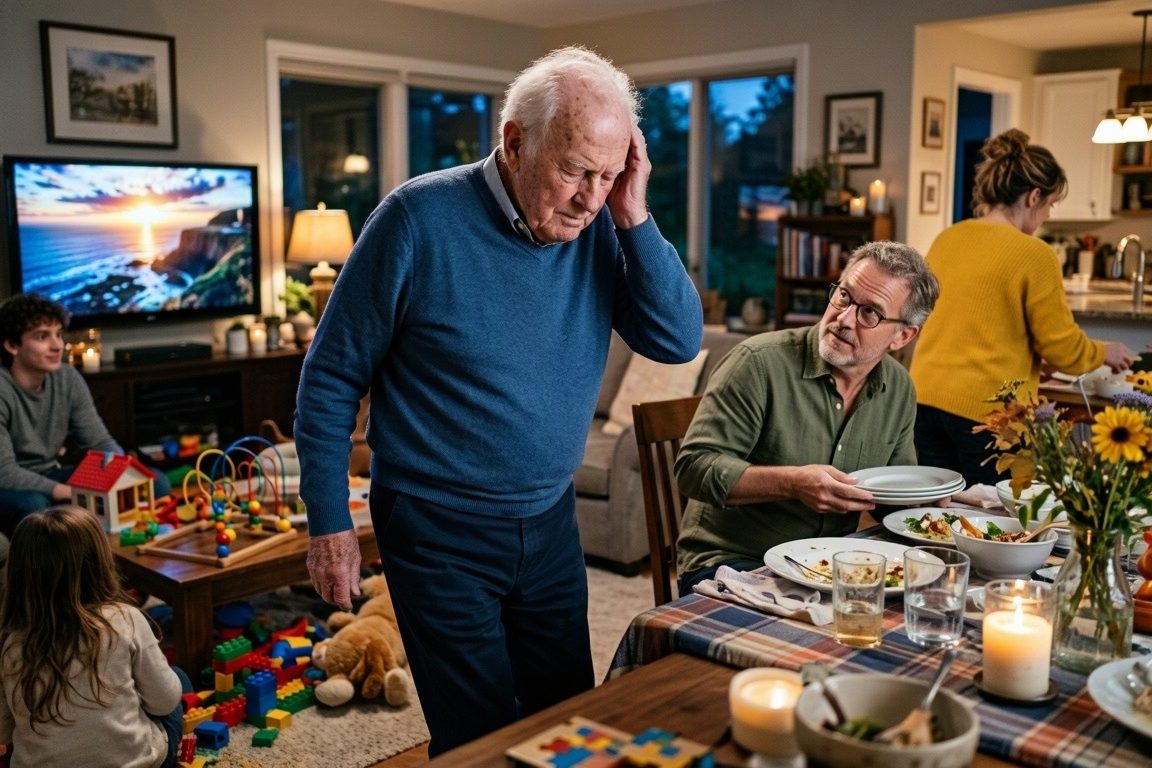
- Do not turn on the TV or radio as ‘background noise’ in the evening. This is a common mistake because caregivers think it’s calming. But for a brain that can’t filter, background noise is just more sensory input that adds to the overload.Instead, keep the environment quiet or use very soft, intentional music.
- Do not try to engage your loved one in a complex conversation or ask them to make decisions in the late afternoon. Their brain is already exhausted. Asking ‘What do you want for dinner?’ or ‘Do you want to take a shower now?’ can trigger confusion and agitation.Instead, offer simple choices or just guide them gently.
- Do not suddenly turn on bright lights when it gets dark. A sudden change from dim to bright light can be startling and disorienting. It can feel like a flash of lightning to a brain that’s already struggling.Instead, use a nightlight or a lamp with a dimmer switch, and turn it on gradually.
- Do not assume that a quiet environment means no sensory overload. Clutter in the room, piles of papers, stacks of boxes, too many decorations, can also be overwhelming. The brain has to process all that visual information. Keep the room tidy and simple, especially in the areas where your loved one spends the most time.
- Do not skip naps or push your loved one to stay awake during the day in the hope that they will sleep better at night. Fatigue is a major contributor to sensory overload. A short, early-afternoon nap can actually reduce the severity of sundowning. The goal is to prevent the brain from becoming too tired, not to exhaust it further.
- Do not use scented candles, air fresheners, or strong-smelling cleaning products in the late afternoon. Strong smells can be overwhelming for a dementia-affected brain. Stick to unscented products or very mild, familiar smells like a hint of lavender (if they like it). Always check their reaction first.
Key points
- Sensory overload is the buildup of sounds, lights, smells, and visual clutter throughout the day, by evening, the brain is overwhelmed and sundowning erupts.
- Start a wind-down routine 60–90 minutes before sundowning usually begins: dim lights, reduce noise, limit visitors, and offer a small snack.
- Do not use background TV or radio, they add to the overload. Use quiet or very soft, intentional music instead.
- Physical discomfort (hunger, thirst, pain, needing the bathroom) adds to the sensory load, check for these before the evening hours.
- A consistent daily routine and bright light exposure in the morning can help prevent the buildup of sensory overload.
- Each person is unique, observe what triggers your loved one and adjust the environment accordingly. Consult a doctor for personalized strategies.
Videos
 How Does Sensory Overload Affect Sundowning In Dementia Patients? - Dementia Help HubThis video directly explains the link between sensory overload and sundowning, using the sponge metaphor to show how the brain gets overwhelmed by evening.
 Why Does Sensory Overload Trigger Sundowning In People With Dementia? - Dementia Help HubA companion video that dives deeper into the brain’s impaired filtering system and why even ordinary sounds and lights become overwhelming.
 Is Sundowning A Sign Dementia Is Getting WorseHelps caregivers understand that sundowning is not necessarily a sign of rapid decline, but often a result of daily fatigue and sensory buildup.
 Managing Sundowning in Dementia (The Science No One Explains)Covers the science behind sundowning triggers, including sensory overload, and offers practical management strategies.
2 more videos
 Sundowning in Dementia: Why Evenings Get SO Hard (and How to Help)A caregiver-focused video that explains why evenings are difficult and gives step-by-step calming techniques.
 Podcast Ep: Understanding Sundowning [What the Dementia]An in-depth podcast episode that discusses multiple triggers for sundowning, including sensory overload, and offers real-world caregiver advice.
Background
The Brain’s Broken Filter
In a healthy brain, we have a natural filtering system that helps us ignore irrelevant sounds, sights, and smells. For example, you can have a conversation in a busy café because your brain tunes out the background noise. In dementia, this filtering system becomes impaired. The brain can no longer decide what’s important and what’s not. As a result, everyday sounds like a ticking clock, a refrigerator hum, or a neighbor’s TV can feel as loud and urgent as a fire alarm. Bright lights, especially flickering fluorescent ones, can feel like strobe lights. Strong smells from cooking or air fresheners can become overwhelming. This isn’t just uncomfortable, it’s exhausting and confusing for the person with dementia. Their brain is working overtime just to process the environment, leaving them with less energy for the rest of the day.
The Sponge That Overflows at Sundown
Sensory input doesn’t just happen all at once, it builds up over the course of the day. Think of it like a sponge soaking up water. Every conversation, every change in lighting, every meal, every trip to the bathroom adds a little more water to that sponge. By late afternoon or early evening, the sponge is completely saturated. The brain is exhausted from processing all that input. At this point, even a tiny extra stimulus, a door closing, a question asked one too many times, a change in the angle of the sun, can be the drop that makes the sponge overflow. This overflow is what we call sundowning. It may look like it comes on suddenly, a sudden outburst of rage, restlessness, or confusion, but it’s not sudden at all. It’s the result of a brain that has been working hard all day and has simply run out of capacity.
Why Evening Is the Breaking Point
The evening hours add their own unique challenges. As the sun goes down, the lighting in the room changes, which can be disorienting for a brain that’s already struggling. Shadows appear, and the person may have trouble distinguishing objects or people. This is the same feeling you get when you drive home in twilight and everything looks a little blurry, except for someone with dementia, it’s happening on a much larger scale. At the same time, the person is likely tired from the day’s activities, and they may be hungry or thirsty. Their body is also dealing with natural hormonal changes that affect their internal clock. When you add all of this to an already overloaded sensory system, the result is a perfect storm. The brain simply cannot cope, and the person may become anxious, agitated, or even hallucinate (for example, seeing ‘kids in the back room’ that aren’t there). This is not a sign that the dementia is getting worse overnight, it’s a sign that the brain has hit its limit for the day.
Practical tools
6
The ‘Sponge’ Metaphor Script
Use this simple explanation to help other family members or aides understand why the evening is hard. Say: ‘Think of Mom’s brain like a sponge. All day long, every sound, sight, and smell adds a drop of water. By evening, the sponge is full. Even one more drop, like a loud TV or a question, makes it overflow. That overflow is the agitation you see. So we need to stop adding drops in the afternoon.’ This helps everyone get on the same page about reducing stimulation.
The 5-Senses Evening Checklist
Print this checklist and post it near the living area. Before 4 PM, run through it:
Checking off each sense ensures you’ve addressed the main sources of overload.
The ‘One Question’ Rule
During the wind-down period, limit yourself to one simple question or statement at a time. For example, instead of saying ‘Do you want to sit here or over there?’, just say ‘Let’s sit here.’ If you must ask something, keep it to a yes/no question like ‘Are you thirsty?’ This reduces the cognitive load on the brain. If they don’t answer, don’t repeat the question, just offer a drink anyway.
Noise-Canceling Headphones with Calming Playlist
If your loved one tolerates headphones, use a pair of comfortable, over-ear noise-canceling headphones. Play a playlist of gentle, familiar music from their youth, or nature sounds like ocean waves or rain. Start with the volume very low and increase slowly. This can block out overwhelming environmental sounds and provide a soothing sensory anchor. Test it during a calm time first, not during an episode.
The ‘Light Box’ Routine
Use a 10,000-lux light box for 30–60 minutes in the morning (ideally between 8–10 AM). Place it on a table about 16–24 inches away from your loved one, off to the side so they aren’t staring directly into it. This helps reset the circadian rhythm and can reduce the severity of sundowning. Consult with a doctor before starting, especially if they have eye conditions or are taking medications that increase light sensitivity.
The ‘Clutter Scan’ Before 3 PM
Every day by 3 PM, do a quick scan of the main living area.
Visual clutter adds to sensory overload. Keep the room simple and organized. If you have a lot of stuff, consider using storage bins or baskets to keep it out of sight.
Different situations
Lewy Body Dementia (LBD)
People with LBD are especially sensitive to visual and auditory stimuli. They may have visual hallucinations even without sundowning, and sensory overload can make these much worse. Avoid any flickering lights (including ceiling fans with lights) and high-contrast patterns (like busy wallpaper or striped rugs). Use very soft, even lighting. Also, be aware that LBD can cause extreme sensitivity to medications, so always consult the doctor before trying melatonin or any supplement.
Late-Stage Dementia
In late stages, the person may have very limited ability to communicate. Sensory overload may show up as moaning, crying, or physical stiffness rather than pacing or yelling. Focus on gentle touch and a very quiet environment. Use a single, soft light source. Avoid moving them from room to room. Keep the routine extremely simple, just sitting quietly together can be enough. Watch for signs of pain, as they may not be able to tell you.
Spouse vs. Adult Child Caregiver
If you are the spouse, you may have decades of shared routines and emotional history. Use that to your advantage, play ‘your song’ or look at a wedding album. But be careful: your own fatigue and frustration can be picked up by your loved one, adding to their overload. If you are an adult child, you may need to be more directive. It’s okay to say ‘Dad, let’s sit down now’ in a calm, firm voice. Both roles benefit from taking a 5-minute break if you feel your own stress rising.
In a Facility (Assisted Living or Nursing Home)
You have less control over the environment, but you can still advocate. Ask staff to dim the lights in your loved one’s room in the late afternoon. Request that meals be served in a quiet area, away from the dining room noise. Bring in a personal lamp with a warm bulb. Use noise-canceling headphones during busy times. If the facility has a ‘sundowning’ protocol, ask to be included in the care plan meeting to discuss sensory triggers.
Medicaid or Low-Income Settings
You don’t need expensive equipment. Use a cardboard box to block light from a window if the blinds are broken. Use a free white noise app on an old smartphone. Borrow a light box from a local library or senior center. Focus on what you can control: reducing clutter, turning off the TV, and using a calm voice. The most powerful tool is your presence and a predictable routine, which costs nothing.
For the doctor
5
- Ask the doctor if a low dose of melatonin (0.5–3 mg) might help regulate the sleep-wake cycle and reduce sundowning. Do not start melatonin without medical guidance, as it can interact with other medications.
- If sundowning comes on suddenly or worsens dramatically, ask the doctor to check for a urinary tract infection (UTI), which can cause delirium-like symptoms that mimic or worsen sundowning.
- Ask about checking for sleep apnea, dehydration, or pain (e.g., from arthritis or an undiagnosed injury) that could be adding to the sensory overload and evening agitation.
- If your loved one is on medications that cause drowsiness or confusion (like anticholinergics or benzodiazepines), ask the doctor if a review or adjustment is possible to reduce side effects that contribute to sundowning.
- Ask about a referral to an occupational therapist who can do a home safety and sensory assessment to identify specific triggers you might have missed.