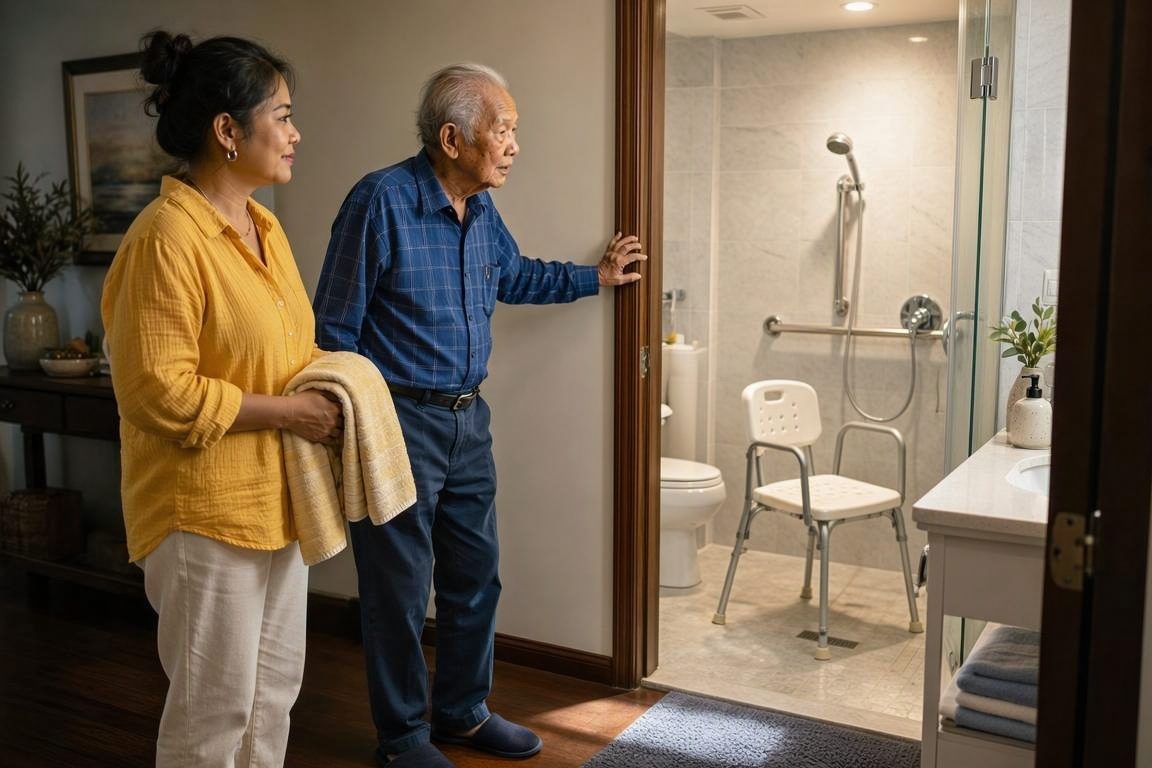
What not to do
- Do not argue or insist on bathing when the person is highly anxious or agitated; wait and try again later.
- Do not force undressing or touch; allow them to maintain as much modesty and autonomy as possible.
- Do not use cold water, harsh lighting, or sudden movements that can trigger fear or discomfort.
- Do not treat resistance as defiance; remember it is driven by brain changes, not choice.
Key points
- Bathing resistance is caused by brain changes that make water feel painful, the bathroom feel scary, and the activity feel like a loss of control.
- Never argue, force, or scold. Your approach and the environment are the two things you can change to reduce resistance.
- Make the bathroom very warm, use non-slip mats and grab bars, and have all supplies ready before you start.
- Offer small choices to give the person a sense of control, but use statements rather than open-ended questions.
- A full bath is not needed every day. Twice a week plus sink baths or no-rinse wipes is often sufficient.
- If the person says they already bathed, do not argue. Redirect with a gentle 'let's just freshen up' approach.
Videos
 Alzheimer's LA Caregiver Tips - Ep. 5 'Bathing'This video directly addresses a caregiver's question about a loved one who refuses showers and gets anxious. It offers practical tips on understanding the person's fears and choosing the right time of day.
 Caregiver Training: Refusal to BatheThis training video shows real-life scenarios and demonstrates how to respond to bathing refusal with calm, effective techniques. It is excellent for visual learners.
 How Do You Persuade Someone With Dementia To Bathe?This video provides a step-by-step persuasion strategy that avoids confrontation and respects the person's dignity. It is very practical for daily use.
 Why Dementia Patients HATE Bathing (11 Shocking Reasons!)This video breaks down 11 specific reasons for resistance, including fear of cold, pain, and memory loss, and offers solutions for each. It is comprehensive and eye-opening.
2 more videos
 Quick Tips: Bathing Tips for DementiaA short, focused video with quick, actionable tips that can be implemented immediately. Great for when you need a fast refresher.
 Tips To Help You Get Your Elderly Loved One To ShowerThis video offers general tips for elderly bathing resistance, many of which apply directly to dementia care. It is a good supplement to the more dementia-specific videos.
Background
The Brain Has Changed: What Feels Normal to You May Feel Terrifying to Them
When a person with Alzheimer's resists bathing, it is not because they are being difficult or lazy. The disease has damaged parts of the brain that process sensation, depth perception, and memory. The insula, which normally helps us feel a gentle warm stream of water as pleasant, can misfire and make that same water feel like stabbing pains against the skin. The parietal lobe, which helps us navigate space, can distort how they see the tub or shower, making it look like a deep, dangerous hole or a slippery ice rink. They may not recognize the purpose of bathing at all, because the brain cells that understand hygiene and its benefits have been lost. You cannot convince someone who lacks the cognitive ability to be persuaded; you must adapt the environment and your approach to meet their changed reality.
Fear, Vulnerability, and Loss of Control Are at the Root
Beyond the physical sensations, bathing triggers deep emotional fears. The person may feel vulnerable and exposed, especially if they need help undressing or being touched by a caregiver. They may be afraid of falling, of drowning, or of the cold. They may not remember which faucet is hot and which is cold, and the sound of running water can be disorienting. For someone who already feels they have lost so much control over their life, being told to undress and step into water can feel like an attack on their dignity and autonomy. Resistance is often their only way to say, 'I am scared, I am confused, I need to feel safe.' Respecting that fear, rather than arguing with it, is the key to finding a way forward.
Memory Loss Means They May Truly Believe They Already Bathed
Another common reason for refusal is that the person genuinely believes they have already showered today, even if it has been weeks. Dementia damages the brain's ability to form and retrieve recent memories. When you say, 'It's time for a shower,' and they say, 'I already did that,' they are not lying. They are filling a memory gap with a plausible story because it is frightening to admit they cannot remember. Arguing with them about what 'really' happened will only increase their confusion and distress. Instead, you must work around the memory loss by using gentle cues, routines, and environmental prompts rather than relying on their recall.
Practical tools
4
Hand-held showerhead
Allows direct, gentle control of water flow and direction, reducing the sensation of being sprayed unexpectedly.
Shower chair or stool
Provides stability and reduces fear of falling, making the process feel safer for the person with Alzheimer's.
Non-slip bath mat
Placed both inside and outside the shower to prevent slipping and increase confidence during entry and exit.
Soothing music or familiar audio
Can calm anxiety and create a more pleasant atmosphere, helping to distract from the bathing task.
Different situations
Early Stage (Mild Cognitive Impairment)
In early stages, the person may only need a gentle reminder and a little help with setup. They can still do much of the bathing themselves. Use the 'Choice Sandwich' to give them control. Avoid making them feel infantilized. A simple, 'Hey Mom, I'm going to run your bath now, the water will be warm' may be enough. They may still be able to bathe independently with supervision.
Middle Stage (Moderate Alzheimer's)
This is when resistance often peaks. The person may need full assistance and may be very fearful. Use the 'Warm Room Checklist' and 'No-Rinse Rescue Kit' liberally. Do not expect daily baths. Focus on twice a week plus sink baths. Use distraction and redirection heavily. If they become aggressive, stop and try later. Your safety and theirs come first.
Late Stage (Severe Alzheimer's)
In late stages, the person is often bed-bound and fully dependent. Full baths may be impossible. Use bed baths with no-rinse wipes and a basin of warm water. Focus on preventing skin breakdown and infections. Keep the room very warm. Use a waterproof pad under them. Be extremely gentle and slow. The goal is comfort and dignity, not a thorough scrub. Discuss with a hospice nurse if needed.
Adult Child Caregiver vs. Spouse Caregiver
Adult children may find that their parent resists more because of the role reversal and loss of dignity. Use a respectful, deferential tone: 'Dad, I know you can do this, but I'm here to help if you need me.' Spouses may have an easier time with intimacy but may also face more resistance due to a lifetime of power dynamics. Spouses should avoid a commanding tone and instead use teamwork: 'Let's get this done together.'
If the Person Has Incontinence
Incontinence increases the need for frequent cleaning, but also increases resistance because of shame and discomfort. Use no-rinse wipes for quick cleanups between baths. Consider using adult briefs that are easy to change. If the person refuses a full bath, a sink bath focused on the perineal area may be more acceptable. Always maintain their dignity by keeping them covered as much as possible.
For the doctor
5
- If the person has arthritis or joint pain, ask their doctor about the best timing for bathing around pain medication. Some pain meds cause drowsiness and increase fall risk.
- If the person has a history of falls, ask about a physical therapy evaluation for balance and strength, and whether a transfer bench or shower chair is appropriate.
- If the person has skin breakdown, wounds, or signs of infection (redness, odor, fever), consult a doctor or wound care nurse immediately.
- If the person becomes aggressive during bathing and you are unable to safely provide care, discuss with a social worker or dementia care specialist about in-home support or respite care options.
- If the person has difficulty swallowing or is at risk for aspiration, ask about a swallowing evaluation before using any products that might be ingested accidentally.