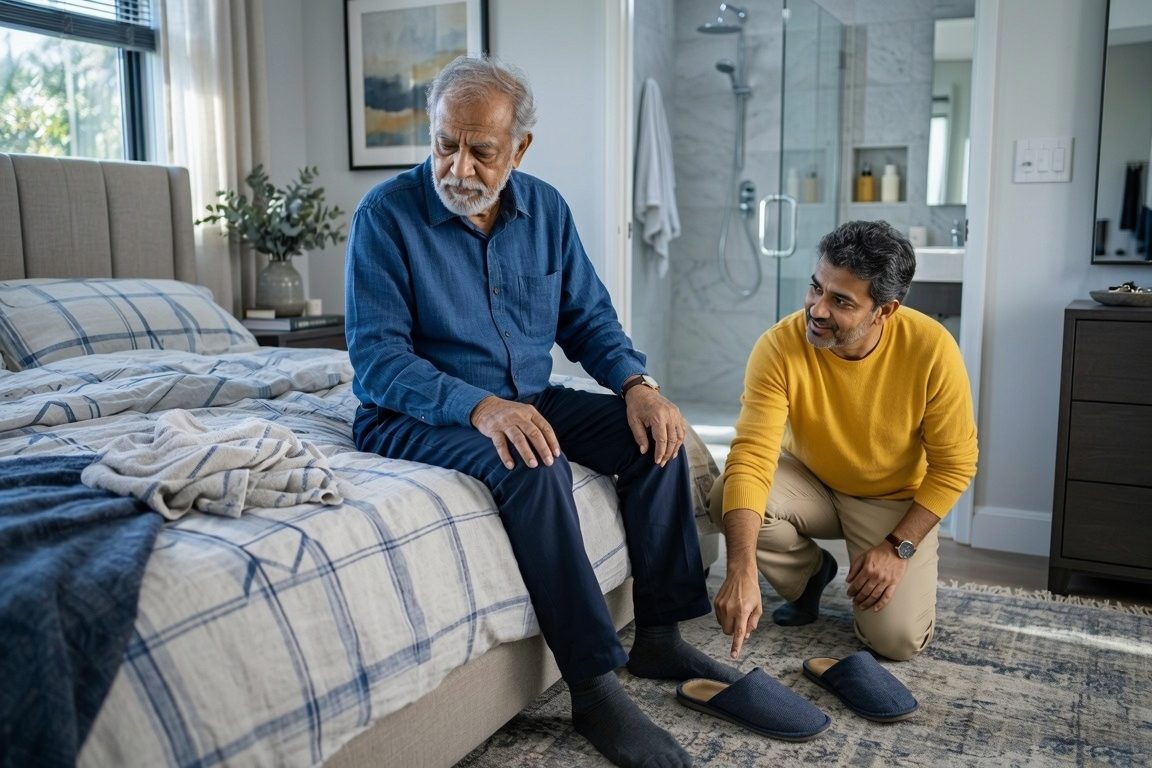
Step by step
What not to do
- Don't argue or try to convince them. Saying 'You haven't showered in a week' will only make them defensive and angry.Instead, use a gentle redirection or a lead-in activity.
- Don't rush or show frustration. If you are tense, they will feel it and resist more. Take a deep breath, slow down, and use a calm tone. If you feel frustrated, step away for 10 minutes and try again.
- Don't force them to undress in front of you without warning. Loss of clothing feels like losing armor. Offer a towel to cover them, or let them keep a robe on until they are in the water. Respect their privacy as much as possible.
- Don't assume they remember the last shower. They may genuinely believe they showered yesterday because their brain confuses time. Don't correct them; just gently guide them toward the bathroom with a neutral phrase like 'Let's freshen up.'
- Don't make the bathroom scary. Remove clutter, use a non-slip mat, install grab bars, and ensure good lighting. If the room is too bright or too dark, it can increase fear. Use color contrast (e.g., a dark towel on a light wall) to help them see where to step.
- Don't do everything for them if they can do parts themselves. Let them hold the washcloth, wash their own face, or step into the tub with your support. This preserves their dignity and sense of control.
Key points
- Initiation failure is a brain issue, not stubbornness. Your loved one literally cannot start the task.
- Use a 'lead-in' activity (like breakfast) to make showering feel like their idea.
- Get everything ready before you ask, reduce the time they feel vulnerable.
- Offer a sponge bath or no-rinse wipes as a less stressful alternative.
- Never argue or correct them about when they last showered.
- Your relationship matters more than a daily shower. A good enough clean is fine.
Videos
 3 Steps to Helping Your Parent with Dementia That Refuses HelpThis video gives a simple three-step framework for reducing resistance and getting cooperation without arguments.
 Caregiver Training: Refusal to Bathe | UCLA Alzheimer's and Dementia CareA realistic demonstration of how to handle a shower refusal with calm, respectful techniques.
 Refuses to Shower? Dementia Bathing Tips That Work | Dr. Khushboo VermaA doctor explains the reasons behind refusal and offers practical, science-backed tips.
 Ask Teepa Anything! Live on YouTubeTeepa Snow answers real caregiver questions about bathing resistance, including sensory issues and trust-building.
2 more videos


Background
The Brain's 'Start Button' Is Broken
In dementia, especially when the frontal lobe is affected, the brain loses its ability to initiate actions. Your loved one may still have the physical ability to shower, they can lift their arms, step into the tub, and wash, but the signal to start never fires. This is not laziness or defiance; it's a neurological change. They might even say they've already showered because their brain confuses the memory of a past shower with the present. This is called 'apraxia of initiation' and is a core reason they don't start tasks like showering on their own.
Sensory Overload and Fear
The insula, a part of the brain that processes how things feel against the skin, degrades with dementia. A gentle stream of warm water can feel like stabbing pain. The parietal lobe, which helps navigate space, also misfires, making the bathroom feel confusing and dangerous. They may fear falling, feel embarrassed about being undressed, or be overwhelmed by the many steps involved. When they say 'I don't want to,' they are often saying 'I'm scared' or 'This hurts.'
Loss of Insight and the Need for Control
As dementia progresses, your loved one loses the ability to monitor their own hygiene. They don't realize they haven't showered in days. When you bring it up, it feels like a violation of their personhood, like being told they are dirty or wrong. Nobody likes being told what to do, and for someone with dementia, this can trigger anger or withdrawal. The key is to make showering feel like their idea, not your demand.
Practical tools
6
The 'Lead-In' Script
Instead of saying 'Time to shower,' say something like 'Let's get ready for breakfast. I need your help in the kitchen, first, let's wash up.' Or 'I spilled something on my shirt, can you help me? Let's go to the bathroom.' This makes the shower a secondary step in a pleasant activity.
No-Rinse Bath Wipes
Products like 'Comfort Bath' or 'Rinse-Free Shampoo Caps' are warm, soapy wipes that require no water. They are perfect for a quick clean without the stress of a shower. Warm them in the microwave for 30 seconds for comfort.
The 'Spill' Technique
If they resist undressing, use a cup of warm water and 'accidentally' spill a little on their arm or lap. Apologize and offer to help dry them. This can lead to them accepting help with undressing and washing without feeling forced.
Visual Cue: Lay Out Clothes in Order
Lay out clean clothes in the order they go on:
Use a visual cue like a picture of a person dressed. This reduces confusion and helps them initiate dressing after the shower.
Shower Chair and Handheld Sprayer
A shower chair reduces fear of falling. A handheld sprayer lets you control the water direction and pressure, avoiding the scary overhead stream. Use a gentle flow and warm (not hot) water.
The 'Top and Tail' Checklist
If a full shower is impossible, use this checklist:
Follow with lotion. This covers hygiene without a full bath.
Different situations
Lewy body dementia or Parkinson's dementia
These types often involve depth perception issues and sensitivity to water temperature. Use a handheld sprayer with a very gentle flow. Keep the water lukewarm, not hot. Be extra patient with transitions, they may need more time to process. Also, they may have visual hallucinations that make the bathroom scary; keep the door open and use a nightlight.
Late-stage dementia (unable to stand or communicate)
Use a bed bath with no-rinse wipes or a sponge bath in bed. Keep them warm with a blanket. Use a waterproof pad under them. Talk them through each step in a soothing voice. Focus on comfort and dignity, not perfection. You may need two people for safety.
Adult child caregiver vs. spouse caregiver
Adult children may have less authority and more emotional baggage. Consider hiring a bath aide to reduce conflict. Spouses may have more success with gentle touch and familiar routines. Both should avoid power struggles and use the 'lead-in' technique.
In a facility or with home health aide
Coordinate with staff to use the same techniques. Provide a list of what works (e.g., 'He responds to a male aide with a firm but kind tone'). Ask for the same aide each time for consistency. If the facility insists on daily showers, negotiate for sponge baths on resistant days.
Depression is a factor
If your loved one seems sad, withdrawn, or has lost interest in appearance, they may be depressed. Discuss with their doctor about treatment. Use positive reinforcement and small rewards. Sometimes just sitting with them and talking about happy memories can help them feel safe enough to accept care.
For the doctor
5
- Ask the doctor if depression or anxiety medication might help reduce resistance to bathing.
- Discuss any signs of urinary tract infection (UTI), which can cause sudden confusion and refusal to bathe.
- Ask about physical therapy to address fear of falling or balance issues that make showering scary.
- If your loved one has skin breakdown or rashes from infrequent bathing, ask the doctor or a wound care nurse for a safe cleaning routine.
- Discuss whether a medication adjustment might help with sensory issues (e.g., pain from water).