Step by step
What not to do
- Do not turn on a regular TV show or movie: Regular television often has fast-paced editing, loud commercials, and complex plots that can overwhelm a person with dementia and may worsen hallucinations.
- Do not force the resident to watch: If they push the tablet away or turn their head, gently try again later or switch films. Forcing engagement almost always increases agitation.
- Do not use Memory Lane TV as a replacement for your presence: The therapeutic benefit comes from the film and your calming voice and attention together. Walking away can leave the resident feeling abandoned.
- Do not play the same film on repeat without variation: Rotate between three to five films the resident responds well to, and consider pairing them with gentle aromas for added sensory engagement.
- Do not reach for Memory Lane TV before checking for physical needs: Rule out pain, hunger, thirst, or discomfort first. If distress has a sudden or unexplained cause, consult the nurse.
Key points
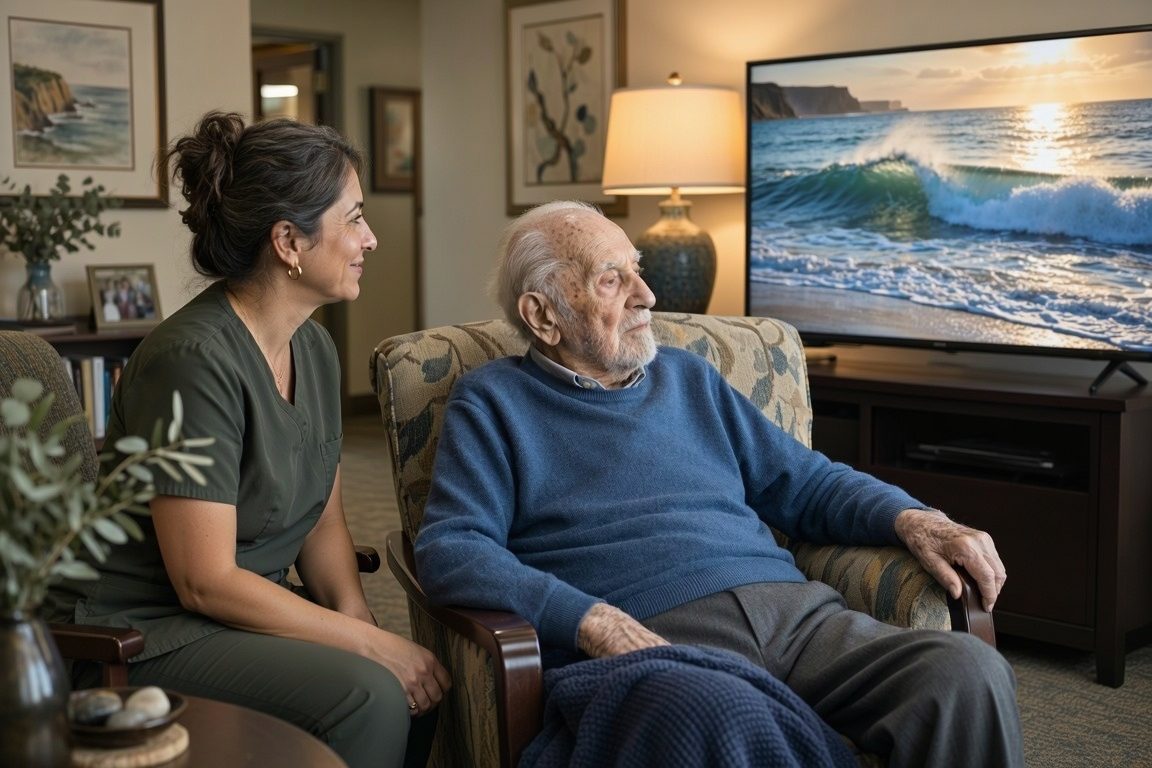
- Memory Lane TV is a non-pharmacological, multi-sensory tool designed specifically for people with memory loss, it is not regular television.
- The emotional brain (amygdala) remains intact longer than short-term memory, so a calming film can create a lasting positive feeling even if the resident doesn't remember watching it.
- Always pair the film with your calming presence and soft narration, never leave the resident alone with the screen.
- Choose films without plots or characters to avoid confusion; nature scenes with slow movement work best for agitation.
- Personalize the approach based on the resident's dementia type, stage, and known preferences, what works for one person may not work for another.
- Document which films and settings work for each resident so the whole care team can provide consistent, effective support.
Videos
 Laura Helman on Memory Lane TVLaura Helman, a care partner specializing in dementia care, shares her firsthand experience using Memory Lane TV to calm agitated residents. Her practical tips are directly applicable for CNA and nursing staff in memory care.
 Dr. Ethelle Lord on Memory Lane TV for Her HusbandDr. Ethelle Lord, president of the International Caregivers Association, describes how Memory Lane TV improved her husband's mood, reduced anxiety, and enhanced emotional comfort across multiple care settings. Her personal story underscores the tool's effectiveness.
 Memory Lane TV Overview: Interactive Media CollectionThis video provides a clear overview of Memory Lane TV's features, including the types of films available and how they are designed for multi-sensory engagement. Useful for staff training and understanding the product's range.
 Kristin Nelson, Founder & CEO of Audivi Memory BanksKristin Nelson discusses the science behind memory-focused media and how tools like Memory Lane TV can be integrated into daily care routines. Offers insights on implementation for facility staff.
2 more videos
 Memory and Dementia: Moving a Mom with DementiaWhile focused on moving, this video illustrates the importance of calming techniques during transitions, applicable to using Memory Lane TV to ease agitation during care tasks like bathing or dressing.
 The Baffled Brain: Demystifying Dementia Episode 23This episode discusses behavioral symptoms in dementia and non-pharmacological interventions, providing context for why tools like Memory Lane TV are effective for calming agitation.
Background
Why Agitation Happens and How Memory Lane TV Helps
Agitation in dementia often stems from overstimulation, confusion, or an inability to communicate needs. The environment itself, noise, unfamiliar faces, or even the wrong kind of TV show, can trigger a fight-or-flight response. As one former activity coordinator in a memory care community noted, stressful stimulation directly affects a resident's mood, behavior, and ability to think or function. Setting a calming tone is essential, but it's not always easy to do on the fly. Memory Lane TV was developed and tested in clinical settings, leveraging over 50 years of research on multi-sensory stimulation and mind-body medicine. Each film is a medley of images and soundscapes designed to promote relaxation, redirect attention, or induce a calming response, without relying on plot or characters that could confuse or frustrate a resident.
The Emotional Brain Remembers Even When Short-Term Memory Fades
A key reason Memory Lane TV works so well is that it taps into the emotional center of the brain, the amygdala, which tends to remain intact longer than the parts of the brain responsible for short-term memory. Research shows that people with Alzheimer's may not remember what just happened, but their emotional response lingers. For example, after watching a stressful movie, both people with and without dementia showed lingering anxiety during a subsequent test. This means that if you can create a positive, calming emotional experience with Memory Lane TV, that feeling of comfort can last well beyond the film itself. Dr. Ethelle Lord, who cared for her husband for 21 years, found that Memory Lane TV improved his mood, reduced his anxiety, and enhanced his emotional comfort, even as he moved through independent living, assisted living, and skilled nursing.
It's Not Just a TV Show: It's a Therapeutic Intervention
Memory Lane TV is different from regular television or streaming services. It's a multimedia and multi-sensory intervention designed specifically for people with memory loss. The films are not plot-driven, so there's no need to follow a story, remember characters, or keep up with dialogue. This reduces cognitive load and makes the experience accessible even for those in moderate to late stages of dementia. Some films can also be paired with specific aromas to add another dimension of sensory engagement, which can be especially grounding. For staff, this means you don't have to worry about a resident becoming confused or frustrated by a complex narrative. Instead, you can focus on the moment, using the sights and sounds to gently guide them back to a calm state.
Practical tools
4
Exact Phrases to Say When Starting Memory Lane TV
Use these in a soft, warm tone: 'Let's take a break together and watch something peaceful.' / 'I found a video of a calm lake, want to see it with me?' / 'You can just rest your eyes and listen.' Avoid asking 'Do you want to watch TV?', that phrasing can trigger confusion or refusal.
Quick Calming Checklist for Staff
Before starting, run through this mental list:
Keep a laminated copy in your pocket.
Pairing Aromas for Deeper Calm
For a beach scene, try a light coconut or sea-salt scent. For a garden scene, lavender or rose. For a forest scene, pine or cedar. Use a small diffuser or scented cotton ball placed nearby (never directly on the resident). Always check for allergies or sensitivities first.
Setting Up a 'Calm Corner' in the Memory Care Unit
Designate a small area as a permanent 'Calm Corner' with a comfortable chair, dimmable lighting, a tablet loaded with Memory Lane TV, and a basket of soft blankets or fidget items. Post a sign reading 'Quiet Space: Please Do Not Disturb' and train all staff to bring a resident there at the first sign of agitation.
Different situations
Lewy Body Dementia (LBD)
Residents with LBD are especially sensitive to visual stimuli and may experience hallucinations or visual distortions. Use Memory Lane TV with caution, choose films with soft, blurry images and avoid high-contrast or rapidly moving scenes. If the resident seems frightened or confused by the film, stop immediately. Stick to nature scenes with slow, gentle movements (like clouds or flowing water). Always sit with them and narrate calmly to ground them in reality: 'This is just a video of a peaceful river.'
Late-Stage Dementia (Bedbound or Non-Responsive)
For residents who are bedbound or minimally responsive, use Memory Lane TV on a tablet placed on a bedside stand or mounted on a flexible arm. Keep the volume low and the screen at a comfortable angle. Pair with a familiar aroma (like lavender) and speak softly about the images, even if the resident does not respond. The goal is not engagement but sensory comfort. Play the film for 10–15 minutes at a time, several times a day, especially during periods of restlessness or sundowning.
Resident with a History of Sundowning
Sundowning often occurs in the late afternoon or early evening. Proactively use Memory Lane TV 30 minutes before the resident's typical sundowning time. Choose a film with warm, golden-hour lighting (like a sunset over water) and pair it with a calming aroma. Keep the environment dim and quiet. This preventive approach can reduce the severity of agitation before it escalates. If sundowning still occurs, use the film as a redirecting tool during the episode.
Resident Who Is Verbally or Physically Aggressive
Safety first: Do not approach a resident who is actively swinging, throwing objects, or threatening. Call for backup and ensure the area is clear of hazards. Once the resident is in a safer state (e.g., sitting down, less agitated), introduce Memory Lane TV from a distance. Place the tablet on a table or counter and let the resident approach it on their own terms. Do not try to hand it to them. Use a film with very slow, repetitive images (like falling snow or rippling water) and keep your voice low and non-threatening.
Staff-to-Resident Ratio Is Low (Short-Staffed)
When you have multiple residents to attend to, you cannot sit with one person for 10 minutes. In this case, set up Memory Lane TV in a common area on a large screen (with headphones available) and invite several residents to watch together. Choose a film that is universally calming, like a nature documentary without narration. Check on them every 5 minutes. This group approach can create a shared calm and reduce overall agitation on the unit. However, always prioritize one-on-one use for residents who are actively distressed.
Common questions
2
How can Memory Lane TV help improve mood and reduce anxiety in dementia?
Memory Lane TV uses calming films with nature scenes and soft sounds to directly soothe the emotional brain, creating a positive feeling even if the person doesn't remember watching it.
What activity media is effective for calming and engaging someone with dementia?
Nature films without plots or characters, like slow-moving rivers or birds in a forest, are most effective; simply press play and sit beside your loved one, softly describing what you see.
For the doctor
4
- If a resident's agitation does not improve after 15–20 minutes of using Memory Lane TV, discuss with the clinician whether a medication adjustment or additional behavioral intervention is needed.
- If a resident with Lewy body dementia becomes more confused or hallucinates after watching Memory Lane TV, report this to the clinician and ask about alternative non-pharmacological approaches.
- If a resident has a history of seizures, ask the clinician whether any visual stimuli (including slow-moving films) could trigger a seizure, and if so, what precautions to take.
- If a resident is on antipsychotic or anti-anxiety medication, ask the clinician whether Memory Lane TV could be used as a first-line intervention before medication, and how to document this for the care plan.