Step by step
What not to do
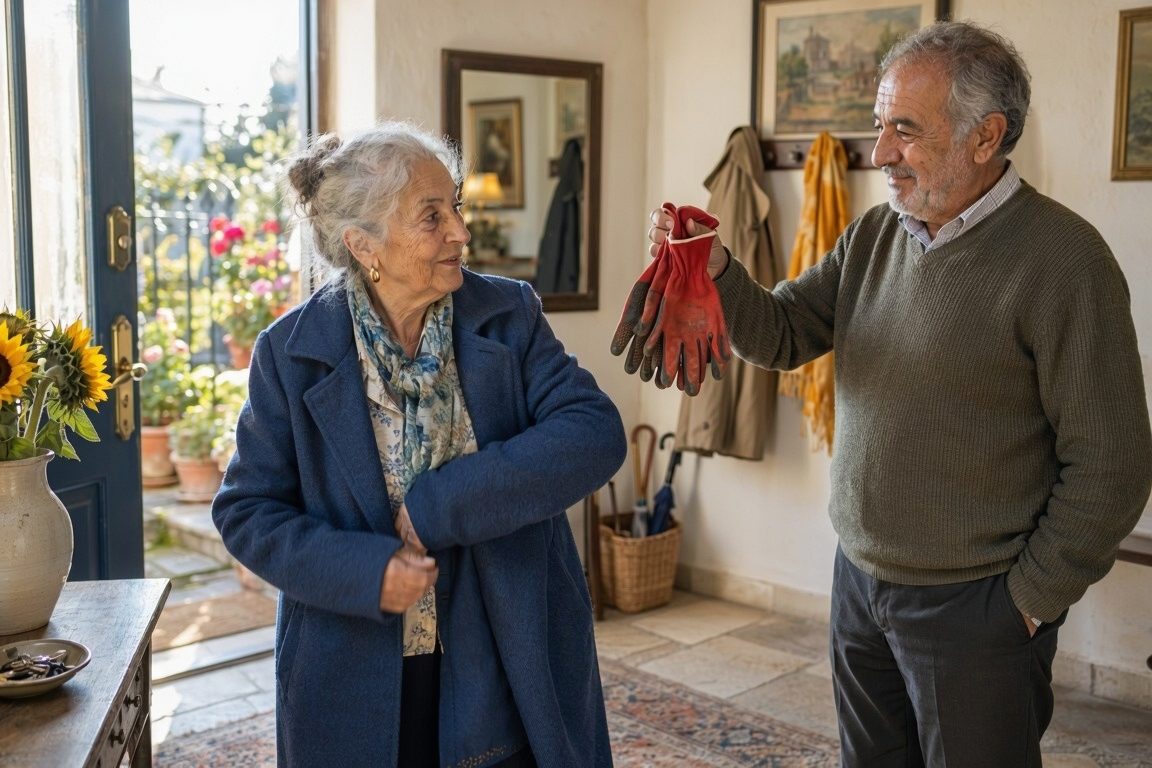
- Don't lead with verbal commands alone: Many caregivers start by saying 'Go brush your teeth' without showing the toothbrush. This can confuse the person because their brain struggles to translate words into actions.Instead, always show the object first.
- Don't use baby talk or a high-pitched voice: Using a tone you'd use with a child can feel demeaning and may cause the person to withdraw or become agitated. Speak to them as an adult, with respect and clarity. A calm, adult tone signals safety and partnership.
- Don't give multiple steps at once: Saying 'Go to the bathroom, wash your hands, and then come to the table' is overwhelming. The brain with dementia cannot hold that sequence. Break it into one step at a time, and wait for each step to be completed before giving the next.
- Don't touch without warning: A hand on the shoulder from behind can startle someone with dementia, who may have a limited visual field and not see you coming. Always approach from the front, make eye contact, and ask 'May I help you?' or 'I'm going to touch your arm now.'
- Don't correct or test their memory: If they ask the same question twice, don't say 'I already told you.' This feels like criticism and can trigger shame or anger.Instead, answer as if for the first time, with patience. Your goal is connection, not correction.
- Don't force a cue that clearly isn't working: If they push the toothbrush away or turn their head, stop. Pushing through will escalate distress. Try a different cue (e.g., switch from verbal to visual) or take a break and try again later. Sometimes a change in environment or time of day makes all the difference.
Key points
- Always lead with a visual cue (show the object or action) before using words or touch.
- Use one short, clear phrase per step, never give multiple instructions at once.
- Match your nonverbal cues (calm face, relaxed body) to your words to avoid sending mixed signals.
- Personalize cues based on the person's history, preferences, and current stage of dementia.
- If a cue doesn't work, pause, try a different type (e.g., switch from verbal to visual), or take a break.
- Celebrate small successes with encouragement, your positive feedback builds their confidence and cooperation.
Videos
 The Baffled Brain: Demystifying Dementia Episode 13This video explains the three types of cues (verbal, visual, tactile) and why visual cues should come first. It gives a clear framework for choosing which cue to use in different situations.
 Assisting with Activities of Daily Living in Dementia CareThis video demonstrates step-by-step cueing for daily tasks like dressing and bathing, showing how to break tasks into single steps and use the actual object as a cue.
 Dementia Tips: Food Cuing for Appetite and PleasureThis video focuses on using verbal cues during meals, especially naming the food and repeating it, to stimulate appetite and make eating more enjoyable for someone with advanced dementia.
 Live on TikTok | The Importance of Giving Visual and Verbal Cues When Providing CareThis live session emphasizes matching visual and verbal cues and demonstrates how to use your own body language to model actions for the person with dementia.
2 more videos
 What Is A Good Gift To Give For Someone With Dementia?This video discusses how to personalize activities and gifts based on the person's interests, which directly applies to choosing cues that feel meaningful and engaging.
 What Activities Are Good For Dementia Patients? Module 1This video shows how to adapt activities to different stages and personalities, reinforcing the idea that cueing must be tailored to the individual.
Practical tools
6
The 'Show-Tell-Touch' Sequence
A simple three-step checklist to use before every task. Step 1: Show the object (e.g., hold up the cup). Step 2: Say one short phrase (e.g., 'Time for a drink'). Step 3: If needed, gently guide their hand to the cup. Practice this sequence for meals, dressing, and bathing. It creates a predictable pattern that reduces anxiety.
The 'One-Step' Phrase Bank
Write down short, clear phrases for common tasks. Examples: 'Roll towards me' (instead of 'Roll over to the edge of the bed so I can help you sit up'), 'Arms up' (for dressing), 'Take a sip' (for drinking), 'Sit here' (pointing to a chair). Keep these phrases consistent and use them every time. Repetition builds familiarity.
The 'Favorite Food' Cue
When feeding, name the food you are offering, especially if it is a favorite. Say 'Here's your lasagna' or 'Another bite of chocolate pudding.' This uses the person's long-term memory of taste and pleasure to stimulate appetite. Repeat the name of the food several times during the meal, especially when switching dishes.
The 'Mirror' Cue
If they are not responding to verbal or visual cues, try doing the action yourself while they watch. For example, if you want them to brush their hair, pick up a brush and brush your own hair slowly. Often, they will imitate you. This works because the brain's mirror neurons can still fire, helping them understand the action by seeing it.
The 'Environmental' Cue
Set up the environment to cue the action. For example, place the toothbrush and toothpaste on the counter in plain sight. Lay out clothes in the order they should be put on (underwear on top, then shirt, then pants). Use a plate with a contrasting color to the food to help them see what's on it. These passive cues reduce the need for verbal prompting.
The 'Reminiscence' Cue
Use a memory or a past interest to cue an activity. For example, if they used to garden, say 'Let's go check on the tomatoes' to cue going outside. If they loved music, hum a song from their youth while cueing a walk. This taps into preserved long-term memories and makes the cue feel natural and meaningful.
Different situations
Early-stage dementia (mild cognitive impairment)
In early stages, the person can still participate in choosing cues. Ask them directly: 'Would you like me to remind you with a note, or would you rather I just show you?' They may still benefit from written lists or a daily schedule posted on the wall. Use verbal cues as a first step, but keep them as prompts, not commands. They may still be able to initiate tasks on their own with a gentle reminder.
Middle-stage dementia (moderate decline)
At this stage, visual cues become more important than verbal ones. The person may have trouble understanding complex sentences. Use single words or short phrases paired with gestures. For example, hold up a towel and say 'Bath time' while pointing to the bathroom. Tactile cues may be needed more often, but always ask permission first. The person may also benefit from a consistent routine, which acts as a cue in itself.
Late-stage dementia (severe decline)
In late stages, the person may have lost the ability to follow verbal or visual cues. Focus on tactile and environmental cues. For feeding, use 'food cueing', name the food and describe it ('Here's your favorite pudding, nice and sweet'). For mobility, use gentle touch to guide their body. The goal shifts from independence to comfort and connection. Your tone and presence become the primary cue.
Lewy body dementia (LBD)
People with LBD often have visual hallucinations and fluctuating attention. Avoid visual cues that could be misinterpreted (e.g., a patterned shirt might look like bugs). Use simple, solid-colored objects. Verbal cues should be very short and given when the person is alert. Tactile cues can be grounding but must be slow and predictable. Be prepared to stop and wait if they seem confused or frightened by a visual cue.
Frontotemporal dementia (FTD)
FTD often affects behavior and language more than memory. The person may have trouble understanding words but can still follow visual cues. Use demonstration heavily. They may also have repetitive behaviors, use those as a cue. For example, if they repeatedly pick up a cup, use that moment to say 'Take a sip.' Avoid verbal cues that sound like commands, as they may trigger resistance. A calm, neutral tone works best.
For the doctor
4
- If the person has a history of falls or balance issues, ask your doctor or physical therapist which tactile cues are safe for guiding movement (e.g., supporting the elbow vs. the wrist).
- If the person is on medications that affect swallowing (e.g., for Parkinson's or psychosis), discuss with the doctor or speech therapist how to cue for safe eating and drinking (e.g., 'Take a small sip' vs. 'Take a bite').
- If the person becomes aggressive or extremely agitated when you use tactile cues, consult a dementia care specialist or occupational therapist for alternative strategies that do not involve touch.
- If the person has vision or hearing loss, ask their doctor or audiologist how to adapt cues (e.g., using brighter colors for visual cues or speaking into their better ear for verbal cues).