Step by step
What not to do
- Do not leave the TV on all day with Memory Lane TV playing continuously. This can lead to overstimulation or habituation, where residents stop responding to the films.Instead, use it as a scheduled activity, like a movie time, and turn it off after the 28-minute episode.
- Do not choose a film that is too long or too complex. Avoid films with a plot or characters that require following a story. Memory Lane TV films are designed to be simple and sensory, so stick with those. If you use a different source, make sure it has no fast cuts, loud noises, or confusing narratives.
- Do not force participation. If a resident does not want to join the group, do not insist. They may prefer to sit nearby and listen, or they may need a different type of engagement. Forcing them can cause agitation.Instead, invite them gently and respect their choice.
- Do not talk over the film. The music and sounds are part of the therapeutic experience. Keep your comments brief and soft, and let the film do the work. If you need to redirect a resident, do it quietly and with a touch or a whisper.
- Do not use the TV as a babysitter while you do paperwork or leave the room. The group activity requires your presence and active facilitation. If you need to step away, have another staff member take over. The goal is connection, not distraction.
- Do not ignore residents who are nonverbal or seem unresponsive. They may still be absorbing the experience. Sit next to them, hold their hand, and describe what is on the screen. Sometimes a person who has not spoken in months will suddenly sing along to a familiar song, as happened in one memory care community where a man who had not spoken in six months began singing and then talking to caregivers.
Key points
- Memory Lane TV is designed for group engagement, not just one-on-one calming. Use its 28-minute films as structured activities that spark conversation and connection.
- Set up the room intentionally: semicircle seating, dimmed lights, and a small table with related objects. Your presence as a facilitator is essential, do not leave the room.
- After the film, lead a short reminiscence session using open-ended questions. Follow up with a hands-on activity that extends the sensory experience.
- Use the caregiver channel for staff training. It contains evidence-based content that can count toward CEA credits and helps staff learn more about dementia care.
- Personalize the activity for different stages and conditions. For late-stage residents, focus on comfort and subtle cues. For Lewy body dementia, choose calm, low-contrast films.
- Document observations after each session to track what works for each resident and to share insights with the care team.
Videos
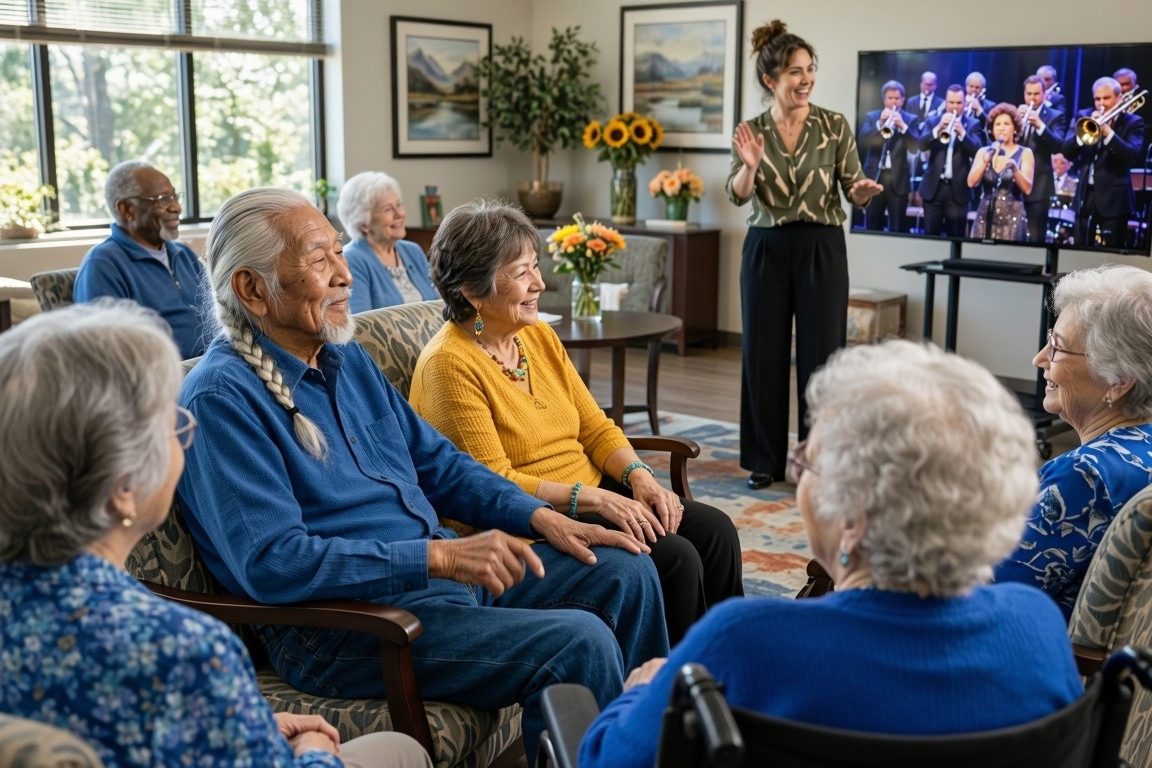
 Memory Lane TV - User Case Carlton Senior LivingThis video shows a real memory care community using Memory Lane TV. You will see how staff set up the room and how residents respond. It is a practical example of the group engagement described in this article.
 Hitlab Webinar - Memory Lane TV second place winner of InnovationThis webinar explains the science behind Memory Lane TV and how it was developed. It is useful for staff training and for understanding why the films are designed the way they are.
 An Interactive and Media Collection for people living with dementia & their care partnersThis video gives an overview of the full Memory Lane TV library, including the caregiver channel. It can help you choose films for different group activities.
 The Inspiration Behind Maude's Awards with Executive Director Marilyn Raichle MPA & Marigrace BeckerThis video discusses the importance of meaningful activities in memory care. It provides context for why tools like Memory Lane TV are valuable for group engagement.
Background
Why Group Engagement Matters in Memory Care
In memory care communities, residents who are not in the main activity group often end up sitting in front of a television that plays whatever the staff likes, news channels, for example. This is not appropriate for people with memory loss. The Alzheimer's Association reminds us that reminiscence therapy, talking about past experiences, can be very beneficial, and Memory Lane TV is designed exactly for that. Its films are not plot- or character-dependent; instead, they use a medley of images and soundscapes that can promote wakefulness, increase appetite, engage, redirect, or induce relaxation. When used in a group, these films become a shared experience that can spark conversation, reduce anxiety, and help staff learn more about each resident's life story.
How Memory Lane TV Changes the Dynamic
Staff at Carlton Senior Living found that after introducing Memory Lane TV, they were 'freed up to do more.' The music and cinematography helped them develop relationships with residents because they were talking about what they were seeing and learning more about the resident's life. In a group setting, this means the TV becomes a conversation starter, not a passive babysitter. Residents who may be nonverbal or withdrawn can be drawn in by a familiar song or image, and staff can use that moment to ask gentle questions or simply sit and enjoy together. The key is that the films are designed to be multi-sensory, some can even be paired with specific aromas, so the whole group can engage through sight, sound, and smell.
The Science Behind the 28-Minute Film Length
Each Memory Lane TV episode is 28 minutes long. Scientific evidence suggests that this is the optimal length to either 'wake up, calm down, focus, or get rid of anxiety' in people with dementia. For a group activity, this means you can plan a session around one film, then follow it with a short discussion or a related hands-on activity. The films are not overwhelming, they are paced to match the cognitive abilities of the audience, so residents are not left behind or confused by a fast-moving plot. Instead, they can relax into the experience, and staff can observe who is engaged, who might need a gentle prompt, and who seems to be drifting off or becoming agitated.
Practical tools
6
The 'Invitation Script' for Group Viewing
Use this exact language to invite residents: 'We're going to watch a short film together. It has beautiful music and scenes of [nature/old cars/beaches]. Would you like to join us? There's a comfy chair waiting for you.' Avoid the word 'TV' if possible, as it can be associated with passive watching. Instead, call it a 'film experience' or 'a trip down memory lane.'
The 'Sensory Extension Kit' for After the Film
Prepare a small basket of items that relate to the film you just watched. For example, after a film about a farm, include
After the film, pass each item around and let residents touch, smell, or hold it. This extends the engagement and can spark more memories.
The 'Observation Log' for Staff
Create a simple one-page log with columns for: Resident Name, Film Title, Engagement Level (high/medium/low), Comments Made, and Mood Change (calmer, more alert, agitated). Fill it out after each group session. Over time, you will see patterns, which residents respond to nature scenes, which ones like music, and which ones need a quieter setting. Share this log in care meetings.
The 'Music and Aroma Pairing' Guide
Memory Lane TV films can be paired with specific aromas. For a film about a bakery, use a diffuser with vanilla or cinnamon scent. For a film about a garden, use lavender or rose. Place the diffuser near the screen but not directly under residents' noses. The scent adds another layer of sensory engagement and can trigger deeper memories.
The 'Staff Training Session' Using the Caregiver Channel
Once a month, during a staff meeting, play a 15-minute segment from the Memory Lane TV caregiver channel. Afterward, discuss: 'How can we apply this to our group activities?' and 'What did we learn about a specific resident from today's film?' This turns the tool into a learning opportunity and helps staff feel more confident.
The 'Quiet Corner' Setup for Residents Who Need a Break
Not every resident will want to be in the main group. Set up a smaller TV or tablet in a quiet corner of the room, playing the same film at a lower volume. A resident who is overwhelmed by the group can sit there and still participate at their own pace. This prevents overstimulation and gives them a sense of control.
Different situations
For residents in early-stage dementia
These residents may be more verbal and able to lead the reminiscence discussion. After the film, ask them to share a specific memory: 'Did you ever go to a place like that?' or 'What did your grandmother's kitchen smell like?' They may also enjoy helping to set up the room or choose the next film from the menu.
For residents in middle-stage dementia
Focus on sensory engagement rather than verbal recall. Use the 'Sensory Extension Kit' heavily. Keep questions simple and concrete: 'Did you like the music?' or 'Was that a cow?' Use touch and eye contact to keep them grounded. If they become agitated, pause the film and switch to a calming one.
For residents in late-stage dementia
The goal is comfort and connection, not conversation. Sit close to them, hold their hand, and describe what is on the screen in a soft, rhythmic voice: 'The sun is shining on the water. The birds are singing.' Watch for subtle signs of engagement, a slight turn of the head, a relaxed jaw, a slower breathing rate. Use the 'Quiet Corner' setup if the group is too stimulating.
For residents with Lewy body dementia
These residents may be sensitive to visual stimuli and prone to hallucinations. Choose films with soft, natural scenes and avoid fast-moving images or high contrast. Keep the room well-lit to reduce shadows. If a resident seems to be reacting to something that is not on the screen, gently redirect them to the film or to a simple object you are holding.
For a memory care community with a mix of cognitive levels
Run two parallel sessions: one in the main living room for higher-functioning residents, and one in a smaller, quieter room for those who need a calmer environment. Use the same film but adjust the volume and lighting. Staff can rotate between the two rooms. This ensures everyone gets the benefit without anyone feeling left out or overwhelmed.
For the doctor
3
- If a resident becomes highly agitated or aggressive during a group film session, discuss with the clinician whether this activity is appropriate or if a different sensory approach is needed.
- If a resident has a known history of seizures triggered by flashing lights or certain visual patterns, review the film content with the clinician before showing it to the group.
- If a resident has a severe hearing or vision impairment, ask the clinician or occupational therapist for recommendations on how to adapt the activity, for example, using a larger screen or adding a tactile element.