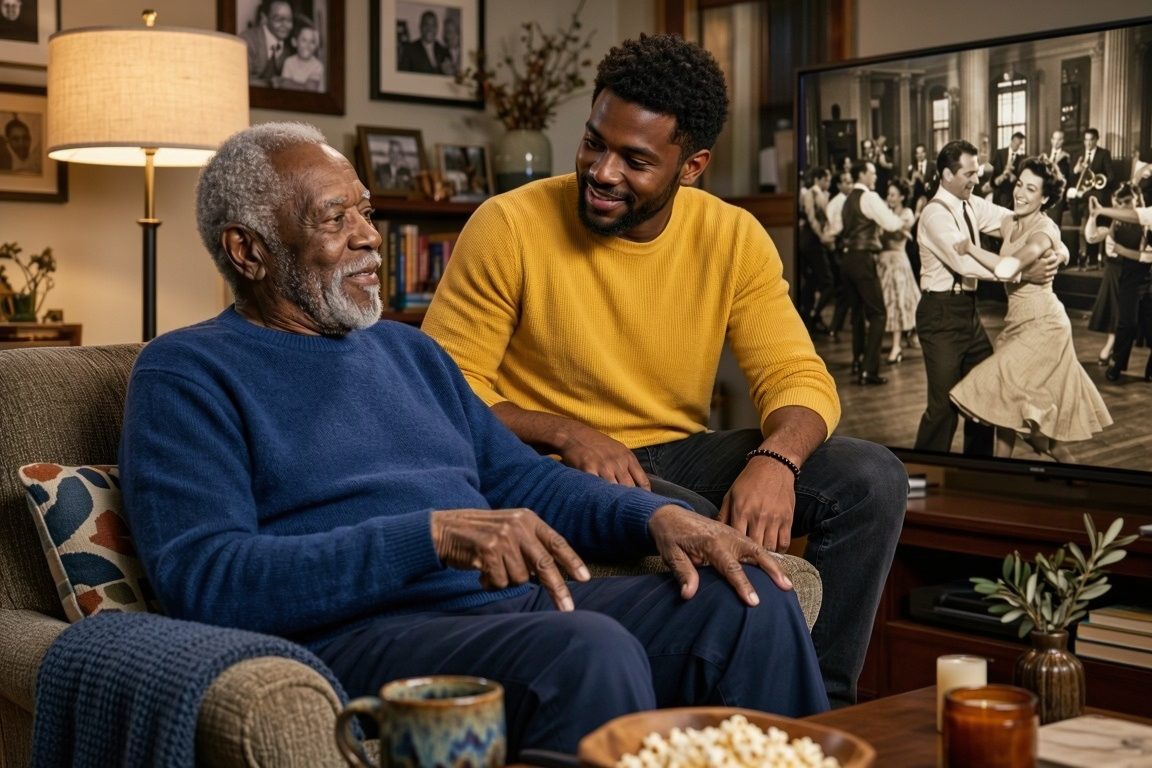
Step by step
What not to do
- Do not put on regular TV with complex plots, fast cuts, or loud commercials; stick to slow-paced, single-theme content like Memory Lane TV.
- Do not ask 'Do you remember this?' as it pressures and can cause frustration; instead make gentle observations like 'That was lovely.'
- Do not force viewing if they seem restless; pause and try a different category later, goal is engagement, not compliance.
- Do not leave the room the moment the video starts; sit beside them for the first few minutes and step away only once they appear calm and absorbed.
- Do not use Memory Lane TV as a replacement for human interaction; it is a tool for connection and brief respite, not a substitute for your presence.
- Do not assume one theme works for everyone; personal preferences vary, so keep exploring until you find what brings a smile or relaxed posture.
- Do not correct or argue with a confused recollection; meet their reality with warmth and acceptance.
Key points
- Memory Lane TV is a streaming service with short, multi-sensory videos designed specifically for people with dementia, no plots, no ads, just calming or uplifting content.
- It works by tapping into long-term memories and providing gentle sensory stimulation, which can improve mood, reduce agitation, and spark conversation.
- Set up a comfortable, quiet viewing environment and choose videos based on the time of day and your loved one's mood.
- Use simple, positive comments during the video, avoid asking 'Do you remember?' to prevent pressure or frustration.
- Memory Lane TV can give you a 28-minute break for respite, but always check on your loved one periodically.
- Personalize the experience by choosing themes that match your loved one's history and preferences, and combine with sensory objects for deeper engagement.
Videos
 Listen to what Teepa Snow has to say about Memory Lane TVTeepa Snow, a renowned dementia care expert, explains how Memory Lane TV can be a practical, low-cost tool for engagement and respite.
 An Interactive and Media Collection for people living with dementia & their care partnersThis video gives an overview of Memory Lane TV's features and shows how it can be used by both individuals and groups.
 Radio Show VoiceAmericaAn in-depth interview with the creator of Memory Lane TV, discussing the science and personal story behind the platform.
 Simple dementia trick to get your loved one talking and feeling happy.A care expert demonstrates how reminiscence activities (similar to Memory Lane TV) can spark joy and conversation in people with dementia.
2 more videos
 Using Reminiscence Therapy To Help Dementia PatientsThis video explains the principles of reminiscence therapy and how it can be applied using videos, photos, and music.
 How to talk on the phone to someone with dementia?While focused on phone calls, this video offers communication tips that are also useful when watching Memory Lane TV together.
Background
What is Memory Lane TV and Why Does It Work?
Memory Lane TV is a streaming platform filled with short, multi-sensory videos designed specifically for people with dementia. Unlike regular TV, which often has fast-paced plots, loud commercials, and confusing storylines, Memory Lane TV offers gentle, 28-minute episodes that combine soothing music, nature scenes, nostalgic footage (like old cars, trains, or farm animals), and simple narration. The goal is to engage your loved one without overwhelming them. As one expert explains, regular TV can be 'too much going on' for someone with dementia, while a book may have 'not enough going on.' Memory Lane TV hits that 'Goldilocks sweet spot' by using audiovisual content that is just right for maintaining attention and sparking positive emotions. The platform was created by a filmmaker whose mother had Alzheimer's, and it was developed with input from geriatric physicians, therapists, and experts in multi-sensory stimulation. It is designed to honor the individual's dignity, provide a sense of purpose, and ease behavioral symptoms like agitation or apathy.
How Reminiscence and Sensory Stimulation Help the Brain
In dementia, long-term memories from childhood and early adulthood are often preserved longer than recent memories. Reminiscence therapy, the practice of recalling and sharing past experiences, taps into these intact memories. When your loved one watches a Memory Lane TV video of a 1950s diner or a black-and-white film clip, it can trigger a flood of positive associations. This can improve mood, reduce anxiety, and even spark spontaneous conversation. One care expert notes that this kind of therapy 'helps improve the mood and behaviors for those who have dementia and helps improve the relationship between them and the person with dementia.' The videos also provide gentle sensory input, like the sound of waves, birdsong, or a familiar song, which can be calming for someone who feels confused or agitated. The 28-minute length is intentional: research suggests this is the optimal duration to engage, calm, or energize without causing fatigue. You can use different videos at different times of day, energizing ones in the morning, calming ones in the afternoon, to help regulate your loved one's disposition.
What Makes Memory Lane TV Different from Regular TV or YouTube?
Memory Lane TV is not just a collection of old shows. It is a carefully curated, multi-sensory intervention. Each video is produced by award-winning filmmakers and tested with people living with dementia. The content avoids complex plots, loud noises, and rapid scene changes. Instead, it focuses on single, beautiful moments: a butterfly landing on a flower, a child playing with a puppy, a steam train chugging through the countryside. The narration is slow and gentle, and the music is chosen to evoke emotion without being jarring. This makes it safe for someone who might be frightened by sudden sounds or confused by a storyline. Additionally, the platform is simple to use, you can subscribe online or through your TV's app store, and it works on any suitable television or streaming device. There are no ads, no confusing menus, and no need to search for content. It is designed to be a 'low-cost, high-engagement' tool that can be used alone or in a group setting, like a care home common room.
Practical tools
6
Memory Lane TV Subscription
Streaming service at memorylane.tv or apps on smart TV, Roku, Apple TV, Amazon Fire Stick; $10–$15/month with free trial. Offers ad-free 28-minute episodes in categories like 'Calm & Relax,' 'Energize & Uplift,' 'Nostalgia,' 'Nature,' produced by dementia-aware filmmakers.
Comfortable Viewing Setup
Fidget Blanket or Activity Apron
Lap blanket or apron with zippers, buttons, ribbons, pockets, textures to occupy restless hands; available online or easy to make at home.
Simple Phrases for Viewing
Warm script of observations: 'Look at that beautiful sunset,' 'That music is so peaceful,' 'I love the way the water sparkles', always statements, never questions, spoken in slow, smiling tone.
Related Sensory Objects
Themed items paired with videos:
Favorites and Reactions Log
Notebook or phone note recording which videos prompted smiles, humming, calm, conversation, or agitation, with time of day and mood; becomes a personalized guide over time.
Different situations
Early-stage Alzheimer's or mild cognitive impairment
Your loved one may still enjoy more complex content. Try the 'Nostalgia' category with old TV clips or historical footage. They might enjoy discussing the memories that come up. You can also let them choose the video from a menu of two or three options. Use the videos as a conversation starter for reminiscing about their own life.
Moderate to severe dementia (late-stage)
Focus on calming, sensory-rich videos like nature scenes or gentle music. Keep the environment very quiet and free of distractions. Your loved one may not speak but may show engagement through relaxed body language, humming, or smiling. Use headphones if they are easily overstimulated. Offer a fidget blanket or a soft object to hold. Do not expect verbal responses; just being present is enough.
Lewy body dementia or Parkinson's dementia
Be cautious with visual complexity, as these conditions can cause visual hallucinations or sensitivity to light. Choose videos with soft, slow-moving imagery (like clouds or water) and avoid flashing lights or rapid scene changes. Use calming music. If your loved one becomes agitated or seems to see things that aren't there, stop the video and try a different time of day. Consult with their clinician about using sensory stimulation safely.
Spouse vs. adult child caregiver
If you are a spouse, you may know exactly which songs or scenes from their youth will resonate. Use that knowledge to select videos. For example, if they loved Lawrence Welk, find a video with that music. If you are an adult child, you might not know their childhood favorites, ask other family members or look through old photo albums for clues. You can also watch the videos together and learn about their past through their reactions.
In a care facility or nursing home
Memory Lane TV can be played on a common-area TV for group viewing. Schedule sessions at the same time each day to create routine. Staff can use the videos as a calming activity before meals or bedtime. For residents who are withdrawn, try one-on-one viewing in a quiet room. The videos can also be used during family visits to provide a shared focus and reduce awkward silences.
For the doctor
4
- If your loved one has a history of seizures or epilepsy, ask their doctor if flashing lights or certain visual patterns in videos could trigger a seizure.
- If your loved one becomes agitated or distressed during a video, stop immediately and consult their clinician. This could indicate a need for medication adjustment or a different type of stimulation.
- If your loved one has hearing or vision impairments, ask their doctor or occupational therapist about using closed captions, audio descriptions, or adjusting the TV settings for better accessibility.
- If your loved one is on medications that cause drowsiness or dizziness, ask whether watching videos at certain times of day might interfere with their medication schedule or sleep patterns.