Step by step
What not to do
- Do not assume that playing music through a speaker is the same as music therapy. A music therapist has years of training to adapt in real time to the person's responses. A playlist is passive and cannot adjust to your loved one's mood or needs. Use recorded music as a tool, but understand its limits. If you want deeper engagement, consider hiring a board-certified music therapist for a few sessions to model techniques you can use at home.
- Do not force participation. If your loved one seems overwhelmed, confused, or agitated by active music-making, switch immediately to passive listening or stop altogether. Forcing engagement can cause distress and create a negative association with music. The goal is connection, not performance.
- Do not play music constantly in the background. While it may seem soothing, constant auditory input can overstimulate a brain that is already struggling to process sensory information. Use music intentionally, for specific times of day or activities, and allow quiet periods in between.
- Do not choose music based on your own taste. The most powerful music for your loved one is the music from their young adult years, not yours. If you are unsure, ask family members or look for clues in old records or conversations. Playing unfamiliar music may not trigger any response.
- Do not expect music to work every time. Some days, your loved one may not respond at all. That is normal. Dementia affects each person differently, and mood, fatigue, and pain all play a role. If music does not help today, try again tomorrow. It is still worth the effort.
Key points
- Active music-making (singing, playing instruments, dancing) generally produces stronger cognitive and mood benefits than passive listening, but passive listening is essential for calming and for later stages.
- Always choose music from your loved one's 'music set', songs from ages 10 to 25, for the strongest emotional and memory connection.
- Start with passive listening to gauge their mood, then gently invite active participation. Never force it.
- Use music intentionally for specific purposes: calming before care tasks, energizing during the day, or redirecting during agitation.
- Keep a log of what songs and modalities work best, and adjust as their dementia progresses.
- Consider hiring a board-certified music therapist for a few sessions to learn techniques you can use at home.
Videos
 An Interview with Music Therapist Alexis Baker MT-BCA music therapist explains the difference between passive and active music therapy, why active participation is preferred, and how to structure a session with a greeting song, familiar songs, and closing.
 The Statistical Case for Music Therapy in DementiaThis video presents research data showing that active music therapy improves memory and cognition, while passive listening is better for cognitive flexibility. It helps you understand the science behind the choice.
 Music and Alzheimer's DiseaseDiscusses how music is processed throughout the entire brain and remains accessible even in late-stage dementia. Offers practical ideas like dancing, karaoke, and listening to familiar music.
 Top 5 Indoor Activities for Seniors with Dementia (For Free)Demonstrates simple active music-making activities like clapping, using rhythm sticks, and swaying to music. Shows how to engage someone who may not be able to sing.
2 more videos
 Connecting Through Music in Dementia CareA caregiver shares how using music during care tasks (like changing clothes) can redirect and calm a loved one. Emphasizes the practical use of passive listening as a tool for cooperation.
 HOW TO REDUCE YOUR RISK OF DEMENTIA (and slow down dementia for your loved one)Suggests that learning a new instrument can reduce the caregiver's own risk of dementia. Encourages active music-making for both the person with dementia and the caregiver as a brain-healthy activity.
Practical tools
6
The 'Music Set' Playlist
Create a playlist of songs your loved one listened to between ages 10 and 25. Use streaming services or old CDs. Organize by mood: calming songs (slow tempo, familiar) for passive listening, and upbeat songs (faster, danceable) for active music-making. Label the playlist clearly so other caregivers can use it. Include at least 10–15 songs to provide variety.
Simple Rhythm Instruments
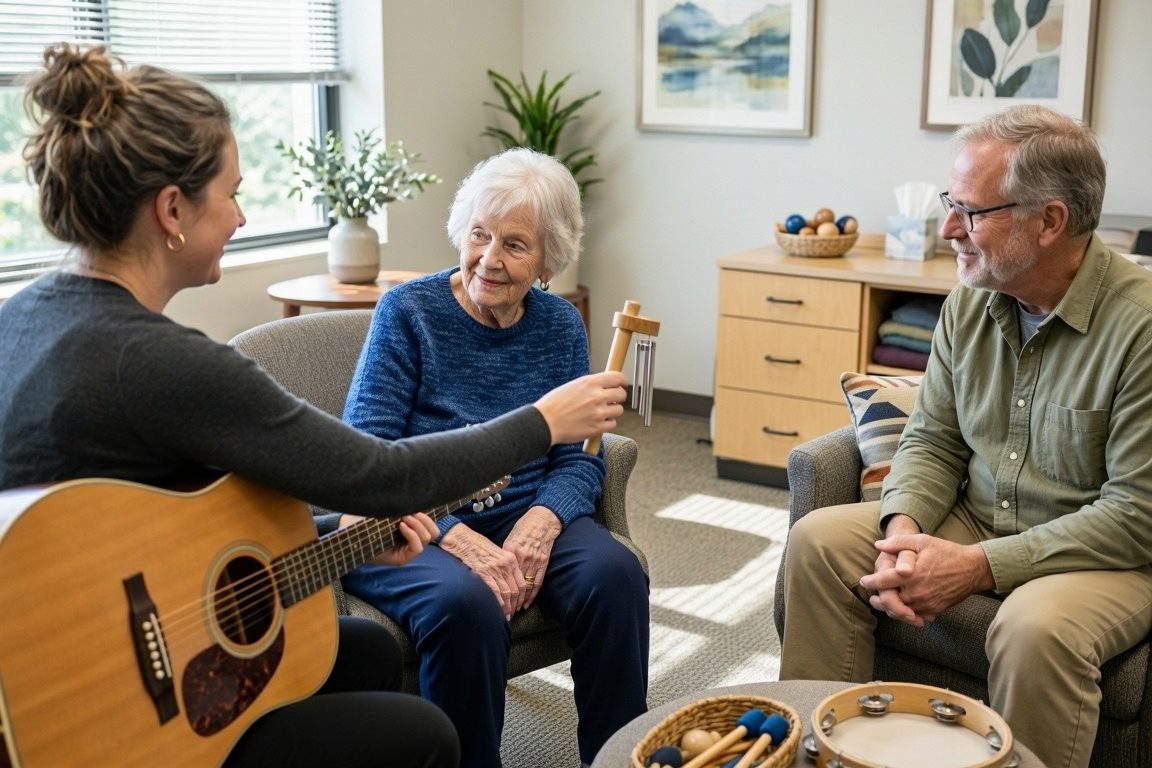
Keep a small basket of easy-to-hold instruments nearby:
These require no skill and invite participation. Hand one to your loved one during an active music session. If they cannot hold it, you can shake it near their ear or tap it gently on their hand or arm to engage their sense of touch and rhythm.
The 'Hello and Goodbye' Song Script
Use a consistent opening and closing song to frame music time. For example, sing to the tune of 'Happy Birthday': 'Hello [name], hello [name], it's so good to see you today.' For closing, sing: 'Goodbye [name], goodbye [name], we'll sing again another day.' This structure provides predictability, which is calming for people with dementia.
The 'Care Task Companion' Playlist
Create a short playlist (3–5 songs) specifically for difficult care moments like bathing, dressing, or dental care. Choose songs that are familiar, upbeat, and have a steady rhythm. Play this playlist on a portable speaker during the task. The music can distract and soothe, making the task easier. As one caregiver noted, after music, they could 'just about do anything' because their loved one was in a good place.
The 'Mood Check' Observation Log
Keep a simple notebook or digital note where you record: date, time, song played, modality (passive or active), and your loved one's response (e.g., 'smiled,' 'tapped foot,' 'sang along,' 'became agitated'). Over time, patterns will emerge. This log helps you refine your approach and share insights with other caregivers or the care team.
The 'Gentle Invitation' Phrase
When inviting active participation, use a warm, open-ended phrase rather than a command. Say: 'Would you like to try shaking this bell with me?' or 'I love this song. Let's hum it together.' If they say no or seem hesitant, simply say, 'That's okay. I'll enjoy it for both of us.' This respects their autonomy and reduces pressure.
Different situations
Early-stage dementia (still verbal and mobile)
Active music-making is highly beneficial. Encourage singing full songs, playing a simple instrument like a keyboard or ukulele (with your help), or dancing. This engages memory, motor skills, and social connection. Passive listening can be used for relaxation or as a bridge to active engagement. You can also try learning a new instrument together, which research suggests may help reduce the caregiver's own risk of dementia.
Middle-stage dementia (some verbal ability, may need prompting)
Use a mix of passive and active, leaning toward active but with simpler invitations. For example, instead of singing the whole song, just sing the chorus and invite them to join on the last word. Use rhythm instruments that require only shaking or tapping. Passive listening is useful for calming before or after a care task. Be patient if they do not respond immediately; they may need a few repetitions to engage.
Late-stage dementia (limited verbal ability, may be bedridden or in a wheelchair)
Passive listening is often the primary modality. Play familiar, slow-tempo music at a low volume. Observe for subtle responses: a change in breathing, a slight smile, a finger tap. You can also engage passively by humming softly near their ear or gently stroking their arm in time with the music. Active participation may be limited to eye contact or a slight movement. Do not expect singing or instrument play. The goal is comfort and connection.
Lewy body dementia (fluctuating cognition, visual hallucinations, movement issues)
Be cautious with active music-making that requires complex motor coordination, as movement problems are common. Passive listening may be more reliable, especially during periods of confusion or hallucinations. Use calming music to reduce agitation. Avoid overstimulation; keep sessions short (5–10 minutes). Observe for signs of distress, as music can sometimes trigger hallucinations if it is unfamiliar or jarring.
Frontotemporal dementia (behavioral changes, loss of empathy, repetitive behaviors)
Active music-making can be very effective for engaging the person and reducing apathy or agitation. Use upbeat, familiar songs. However, be prepared for possible resistance or lack of interest due to changes in emotional processing. Do not take it personally. Passive listening may help during moments of agitation. The structure of a greeting and closing song can provide a comforting routine.
In a memory care facility or nursing home
Coordinate with the activities staff. Ask if there is a music therapist on staff or if group music sessions are offered. If you are visiting, bring a portable speaker and a simple instrument. Use the same playlist each time to create familiarity. If your loved one is in a shared room, be mindful of volume and the preferences of their roommate. You can also use earbuds for yourself to listen to quiet music while sitting with them, which can help you feel more connected and less distant.
As a spouse vs. adult child caregiver
Spouses may have a deeper shared musical history. Use songs from your courtship and marriage. Singing together can be a powerful bonding experience. Adult children may need to research their parent's music set by asking other family members or looking at old records. Do not be discouraged if your parent does not respond to music you love; focus on what was meaningful to them in their young adult years.
For the doctor
5
- Ask your loved one's doctor or neurologist: 'Are there any medical reasons why active music-making (like singing or playing an instrument) might be unsafe for my loved one, given their specific dementia type and stage?'
- If your loved one has a history of seizures or epilepsy, ask: 'Could certain types of music or rhythms trigger a seizure? Should I avoid any specific tempos or volumes?'
- If your loved one is on medications that affect heart rate or blood pressure, ask: 'Could passive listening to calming music interfere with or enhance the effects of these medications? Should I monitor for any changes?'
- If your loved one has hearing aids or significant hearing loss, ask: 'What is the best way to deliver music, through headphones, a speaker, or live singing, to ensure they can hear it without distortion or discomfort?'
- If your loved one has a history of agitation or aggression, ask: 'Could music ever trigger a negative reaction? What signs should I watch for, and how should I respond if music seems to make things worse?'