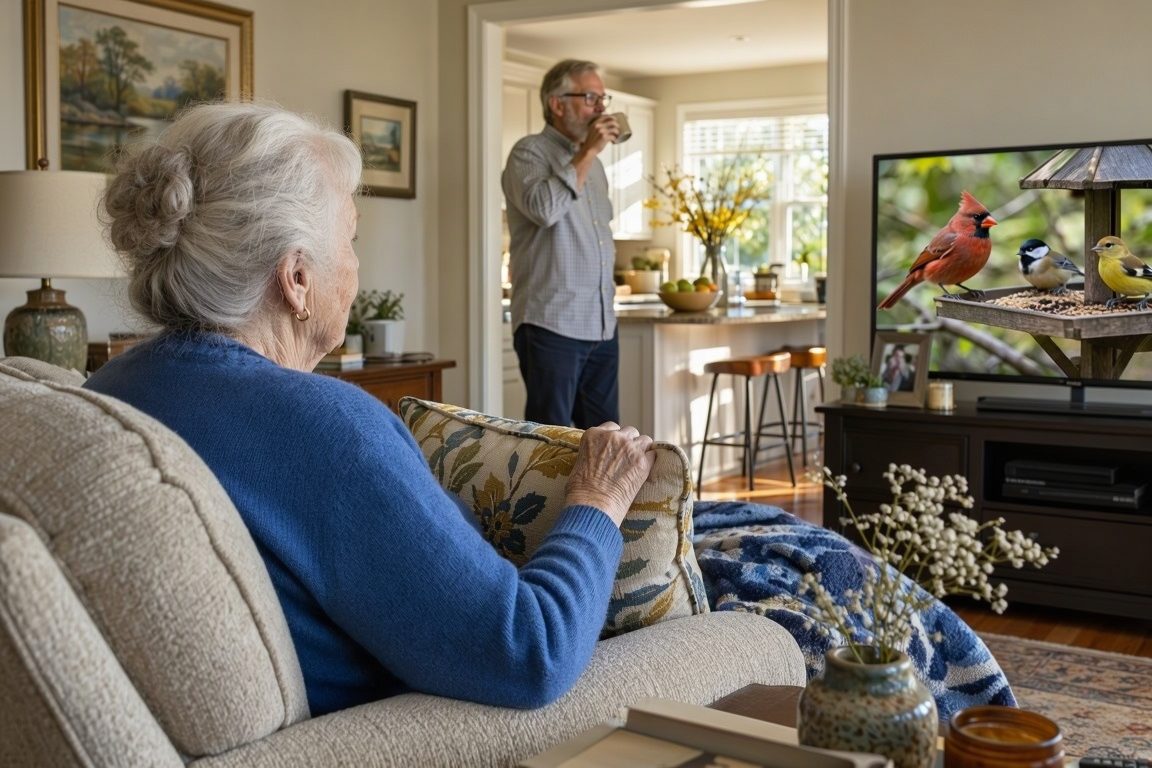
Step by step
What not to do
- Don't treat Memory Lane like background TV or leave your loved one alone with it for long stretches.
- Don't use it during high agitation or aggression, wait until they're calm first.
- Don't force participation if they resist; try a different topic or time of day instead.
- Don't play it too loudly or for too long; keep volume comfortable and limit sessions to 20–30 minutes initially.
Key points
- Memory Lane is a non-drug, multi-sensory digital therapy that reduces anxiety, agitation, and depression in people with dementia.
- It works by engaging the senses through videos, music, photos, sounds, and aromas, no plot or characters to follow.
- Use it at any time of day to energize, calm, or maintain your loved one’s mood; consistency helps.
- Set up the environment to avoid sensory overload: quiet room, soft lighting, comfortable seating.
- Sit with your loved one and use simple, reassuring language, avoid memory-testing questions.
- Memory Lane also gives you, the caregiver, a much-needed respite break.
Videos
 An Interactive and Media Collection for people living with dementia & their care partnersThis video shows Memory Lane in action and explains how it helps both the person with dementia and the caregiver.
 Hitlab Webinar - Memory Lane TV second place winner of InnovationA deeper dive into the science and design behind Memory Lane, presented by the creators.
 Simple dementia trick to get your loved one talking and feeling happy.Demonstrates a practical, non-drug technique similar to Memory Lane’s approach, useful for caregivers who want to spark conversation.
Background
What is Memory Lane and why does it work for dementia?
Memory Lane is a non-pharmacologic digital behavioral intervention specifically designed for people with Alzheimer’s disease and other dementias. Unlike regular TV shows or movies, it is not plot- or character-dependent, which means it won’t confuse your loved one with complicated storylines they can’t follow. Instead, it delivers a carefully crafted program of multi-sensory stimulation, videos, music, photography, sounds, and aromas , all aimed at creating immersion and engagement. This approach directly targets the anxiety, agitation, and depression that so often accompany dementia, and it does so without any medication.
Why does this matter? Traditional care methods and medications are often not enough, especially in the middle to late stages of dementia. Medications can have side effects and may only slow decline modestly. Non-drug approaches like Memory Lane are bold, evidence-based alternatives that can be used at home, any time of day, to positively impact mood, communication, and relationships. The program is delivered through any suitable television or streaming device, making it simple and cost-effective for families.
How does multi-sensory stimulation help with behavioral symptoms?
People with dementia often experience a decline in memory, judgment, and thinking skills. This can lead to feelings of failure, confusion, and a desire to withdraw. Multi-sensory stimulation works by engaging the senses, sight, hearing, smell , in a way that bypasses the damaged parts of the brain and reaches the emotional centers. This can reduce behavioral and psychological symptoms like restlessness, aggression, apathy, and obsessive-compulsive behaviors.
Memory Lane’s programming is designed to be used in the morning, afternoon, or evening to either energize, calm, or maintain your loved one’s disposition as needed. For example, a slower-paced video with nature sounds and familiar music can soothe agitation, while a more lively program with upbeat songs from their youth can boost spirit and evoke happy memories. The key is that it creates sustained engagement across all stages of the disease , from mild to moderate to severe , and it gives you, the caregiver, a much-needed respite from the daily stress of supporting your loved one.
Practical tools
5
Phrases to start Memory Lane
Use simple, reassuring language: 'Let's watch something nice together.' 'I found a program with beautiful music, would you like to see?' Avoid questions requiring recall; instead make statements: 'I love this song, it's so peaceful.'
Environment setup checklist
Before starting:
Subscription and device setup
Subscribe at memorylane.tv or through your TV's app store. Works on Roku, Apple TV, Amazon Fire Stick, or smart TV. Browse the library by category and save favorites for quick access.
Respite timer for caregivers
Set a 20-minute timer when starting a program. Use that time to step into another room, make tea, or do a short breathing exercise, giving a guilt-free break while your loved one is safely engaged.
Mood tracking log
Keep a notebook or phone note. After each session, note: date, time, program used, mood before and after, and any comments. Over time, this identifies which programs work best and at what times.
Different situations
Early-stage Alzheimer’s or mild cognitive impairment
In early stages, your loved one may still enjoy more interactive elements. Use Memory Lane as a conversation starter, pause the program and ask open-ended questions like ‘What does this remind you of?’ or ‘Did you ever visit a place like this?’ They may be able to share memories and feelings, which builds self-esteem. You can also let them choose the program from a few options.
Middle-stage Alzheimer’s (moderate dementia)
At this stage, your loved one may have more trouble following plots or remembering recent events. Stick to shorter programs (10–15 minutes) with simple, soothing content like nature scenes or familiar music from their youth. Use validation therapy, respond to the emotion they express rather than correcting facts. For example, if they say ‘That’s my mother’s house’ (even if it’s not), say ‘That’s a lovely memory , tell me about her.’
Late-stage Alzheimer’s (severe dementia)
In late stages, your loved one may be nonverbal or have very limited attention. Use very short, calming programs (5–10 minutes) with slow-moving visuals and soft music. Sit close, hold their hand, and speak in a gentle, rhythmic voice. The goal is not engagement but comfort and sensory soothing. Even if they seem unresponsive, the program can reduce agitation and provide a peaceful moment.
Lewy body dementia or Parkinson’s disease dementia
People with Lewy body dementia may be more sensitive to visual stimuli and can experience hallucinations. Start with very short sessions (5 minutes) and observe carefully. If they seem confused or frightened, stop immediately. Choose programs with simple, slow visuals and avoid fast-moving or complex scenes. Also, be aware that they may have fluctuations in alertness, use Memory Lane during ‘on’ times when they are more awake.
Care partner vs. adult child vs. spouse
If you are a spouse, your loved one may feel more comfortable with programs that reflect shared memories, songs from your wedding era, places you traveled together. If you are an adult child, choose content from their young adulthood (teens to 30s) rather than your own generation. If you are a professional care partner, use the program as a bonding tool , sit at eye level, use their name, and speak warmly. The program can help build trust and reduce resistance to care.
For the doctor
4
- If your loved one is already on medications for dementia (like donepezil or memantine), ask the doctor if Memory Lane can be used alongside them to enhance mood and reduce behavioral symptoms.
- If your loved one has a history of seizures or epilepsy, check with their neurologist before using any digital therapy with flashing or rapidly changing images.
- If your loved one has severe hearing or vision loss, ask the doctor or an occupational therapist for advice on how to adapt the program (e.g., using headphones, adjusting screen contrast, or adding aromatherapy).
- If behavioral symptoms (agitation, aggression, depression) persist despite using Memory Lane, discuss with the clinician whether other non-drug approaches or medication adjustments are needed.