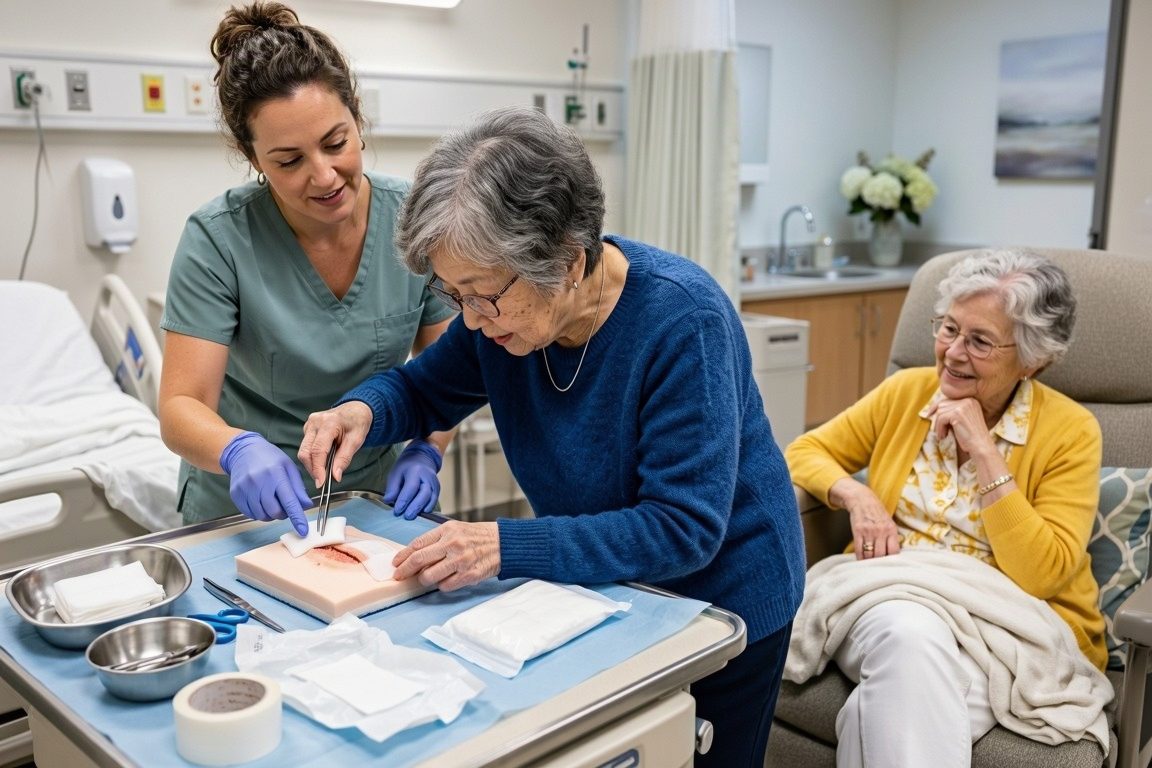
Step by step
What not to do
- Do not assume you will remember everything from a single demonstration. The common mistake is nodding along during training and then forgetting steps at home.Instead, insist on written instructions and a return demonstration.
- Do not wait until the day of discharge to ask for training. The hospital team may be too busy to give you adequate time.Instead, start asking on day one and schedule training early.
- Do not try to learn multiple tasks in one session. This leads to information overload and mistakes.Instead, ask for separate training sessions for each major task, such as one for tube feeding and another for medication injections.
- Do not be afraid to ask for a different teacher if you do not understand the first one. Every clinician has a different teaching style. If you are confused, say, 'I need someone to explain this in a different way so I can be safe.'
- Do not leave the hospital without a clear plan for what to do in an emergency. Many caregivers panic when something goes wrong at home because they did not get emergency instructions.Instead, ask for a written emergency protocol and a 24/7 contact number.
- Do not skip the step of practicing the task yourself in the hospital. Watching is not the same as doing. The only way to build confidence is to perform the task with the nurse watching and correcting you.
Key points
- Start discharge planning on day one of admission, not the day before leaving.
- Insist on a return demonstration: watch the nurse, then do it yourself with their feedback.
- Take written and video instructions home; do not rely on memory alone.
- Create a care binder with all instructions, contacts, and emergency plans.
- Arrange for home health nursing visits before discharge to get in-home support.
- Designate a backup caregiver who also receives training to prevent burnout.
Videos
 Preparing for Hospital DischargeThis video provides a step-by-step overview of what to expect during discharge and how to advocate for training.
 Conscious Caregiving with L & L 'The Bureaucracy of Care & Seniors'This video explains how to navigate hospital systems and communicate effectively with the care team to get the training you need.
 LinkedIn Live: December 20, 2022This discussion covers practical tips for building a care team and learning medical tasks from professionals.
 #6.4 A Team Approach and Caring for Yourself: Long Distance Caregiving (4 of 5)This video emphasizes the importance of creating a support team, which is crucial when learning complex tasks.
2 more videos
 6 ways to make dementia care tasks easier: Respect and Dignity in dementia careWhile focused on dementia, this video offers techniques for making medical tasks less stressful for both caregiver and patient.
 Todd 'TJ' Keitz Founder of My Care FriendsThis video shares insights on building a network of support, including how to find and work with home health aides.
Practical tools
6
Return Demonstration Checklist
Create a simple checklist for each task. For example, for a feeding tube: (1) Wash hands, (2) Gather supplies: formula, syringe, water, (3) Check tube placement, (4) Flush with water, (5) Administer formula at correct rate, (6) Flush again, (7) Cap tube. Use this checklist every time you perform the task at home.
The 'Teach-Back' Script
After the nurse shows you a task, say, 'I want to make sure I understand. Let me explain it back to you in my own words.' Then describe each step. If you miss something, the nurse can correct you. This is a proven way to solidify learning.
Care Binder Template
Use a three-ring binder with dividers for:
Keep it in a visible spot at home.
Video Recording Permission Script
Say to the nurse: 'I would like to record this demonstration on my phone so I can review it later. Is that okay? I will only use it for my own learning and will not share it.' If they say no, ask if they have a pre-recorded video or written guide you can take.
24-Hour Helpline Card
Before discharge, ask the hospital for a card with the number for a 24/7 clinical helpline. Write on it: 'Call if:
' Tape this card to your refrigerator or inside the care binder.
Home Health Nursing Referral Form
Ask the discharge planner to complete a referral for home health nursing. This gives you a nurse who can visit your home to supervise your first few attempts at the task. Many insurances cover this. If they say it is not needed, ask to speak to the patient advocate.
Different situations
Late-stage traumatic brain injury with tracheostomy and ventilator
You will need training from a respiratory therapist on suctioning, cleaning the trach site, and ventilator alarms. Ask for a written emergency plan for power outages or equipment failure. Request that a home health respiratory therapist visit within 24 hours of discharge.
Late-stage anoxic brain injury with feeding tube and seizure risk
Focus training on tube feeding and seizure first aid. Ask the neurologist for a seizure action plan that includes when to give rescue medication and when to call 911. Request a written guide on signs of aspiration during tube feeding.
Spouse as primary caregiver vs. adult child
Spouses may feel more emotional pressure and may need extra practice sessions. Adult children may need to coordinate with their own work schedules. Both should ask for a family meeting with the hospital team to discuss roles and backup plans. If you are the primary caregiver, designate at least one backup person who also receives training.
Discharge to home vs. to a skilled nursing facility
If going home, you must learn all tasks yourself. If going to a facility, you still need to learn the basics so you can monitor care. Ask the facility staff to show you their protocols and how they will communicate with you. Request a written care plan from the facility within 48 hours of admission.
Medicaid or limited insurance coverage
If home health nursing is not covered, ask the hospital social worker about community programs or charitable organizations that provide free or low-cost training. Some hospitals offer a 'caregiver training program' for complex discharges. You can also ask for a referral to a local Area Agency on Aging for support.
For the doctor
4
- Ask your loved one's doctor: 'Are there any medications that need to be stopped or started after discharge? How do I manage the timing of these medications with tube feedings?'
- Ask the hospital pharmacist: 'Can you review all medications for potential interactions or side effects that might be worse at home?'
- Ask the neurologist: 'What are the specific signs of a worsening brain injury that I should watch for at home? When should I call 911 versus call the clinic?'
- Ask the discharge planner: 'Is there a palliative care or hospice consult available to help with symptom management and advance care planning before discharge?'