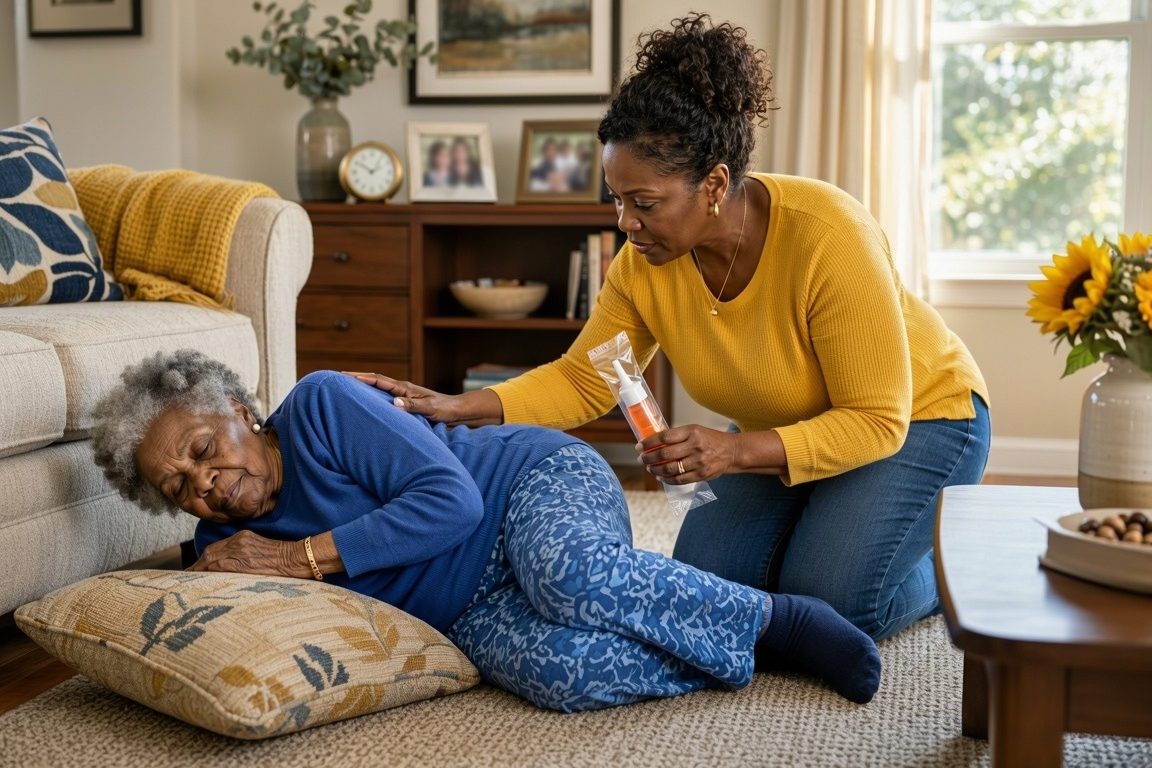
Step by step
What not to do
- Do not administer if the person has acute narrow-angle glaucoma or a known allergy to diazepam/benzodiazepines.
- Do not force the syringe or insert it roughly, use gentle, steady pressure.
- Do not administer during active vomiting or if the seizure has already stopped.
Key points
- Diazepam rectal gel is a rescue medicine for prolonged or cluster seizures, use it only as directed by your doctor.
- Stay calm and time the seizure; use the gel only if the seizure lasts longer than 5 minutes or meets your plan's criteria.
- Position the person on their side (recovery position) before and after giving the gel to prevent choking.
- Insert the syringe gently about 1 to 1.5 inches into the rectum, then slowly push the plunger. Keep the person on their side for 5 minutes.
- Monitor for side effects like drowsiness, confusion, or breathing problems. Call 911 if the seizure continues after 5 minutes or if breathing is difficult.
- Keep a written seizure action plan, a timer, and a log to track each use and share with your doctor.

Background
What is diazepam rectal gel and why is it used?
Diazepam rectal gel is a fast-acting benzodiazepine medicine given rectally to stop a seizure that is prolonged (typically lasting more than 5 minutes) or when seizures come in clusters. It works by calming overactive electrical activity in the brain, helping the seizure to end quickly. This medicine is prescribed by your doctor specifically for your loved one’s seizure rescue plan, and it is not meant for daily use or for mild seizures that stop on their own. The gel is absorbed through the rectal lining and enters the bloodstream rapidly, often stopping the seizure within a few minutes.
When should you consider using it?
Your doctor will give you a specific seizure action plan that tells you exactly when to use the rectal gel. Common triggers include a seizure lasting more than 5 minutes, a seizure that is different from usual, or multiple seizures in a short period without full recovery between them. Do not use it for every seizure, only for those that meet your doctor’s criteria. If you are unsure, call emergency services. It is also important to know that this medicine can cause drowsiness, dizziness, and sometimes confusion or disinhibition (where the person acts more agitated or restless after the seizure). Watch for these effects and keep the person safe until they wear off.
What are the risks and precautions?
Diazepam rectal gel should not be used if your loved one has acute narrow-angle glaucoma or a known allergy to diazepam or other benzodiazepines. Use it with caution if they have lung or breathing problems (like asthma, COPD, or pneumonia), kidney or liver disease, or a history of alcohol or drug abuse, as these conditions can increase the risk of side effects or dependence. Always discuss these conditions with your clinician before starting the medicine. Also, avoid grapefruit juice while using this medicine, as it can affect how the drug works. The gel is for rectal use only, never give it by mouth or any other route.
Practical tools
2
Diazepam Rectal Gel (Diastat)
Pre-filled, ready-to-use syringe with lubricant; prescribed dose per action plan.
Seizure Action Plan
Written instructions from the neurologist specifying when and how much to administer.
Different situations
For a child with epilepsy
The dose is weight-based and much smaller. Use a pediatric syringe if provided. Insert the tip only about 1/2 to 1 inch. After giving the gel, hold the buttocks together gently for 2 minutes to prevent leakage. Always have a second adult present if possible.
For an adult with dementia or Alzheimer's disease
The person may be confused or frightened during and after the seizure. Use a calm, reassuring voice. After the seizure, they may be disoriented or agitated (disinhibition). Do not argue; just keep them safe. Avoid using the gel if they have a history of falls or breathing problems without discussing with a doctor.
For a person with a history of substance abuse
Diazepam can be habit-forming. Use only as prescribed and never for anxiety or sleep. Discuss with the doctor about monitoring for dependence. Keep the medicine locked up and track usage carefully. Consider alternatives like nasal diazepam if available.
For a person living alone or with a single caregiver
Practice the steps with a friend or neighbor who can be called for help. Keep the medicine kit in a visible spot. Consider a medical alert system that can call for help if the seizure lasts too long. After the seizure, the person may be too drowsy to be left alone, arrange for someone to stay with them for at least 2 hours.
For a person with kidney or liver disease
The medicine may stay in the body longer and cause more side effects like sedation or confusion. Use the lowest effective dose as prescribed. Monitor for excessive drowsiness or breathing changes. Discuss with the doctor about adjusting the dose or using a different rescue medicine.
For the doctor
10
- Ask your doctor: 'What is the exact dose of diazepam rectal gel for my loved one based on their weight and medical history?'
- Ask your doctor: 'Are there any other medical conditions (like glaucoma, breathing problems, or liver/kidney disease) that would make this medicine unsafe for my loved one?'
- Ask your doctor: 'How often can I use this medicine safely? What is the maximum number of doses in a week or month?'
- Ask your doctor: 'What should I do if the seizure does not stop 5 minutes after giving the gel? Should I call 911 or give a second dose?'
- Ask your doctor: 'Can this medicine interact with other medications my loved one takes, including over-the-counter drugs or supplements?'
- Ask your doctor: 'What are the signs of dependence or withdrawal from diazepam, and how can I monitor for them?'
- Ask your doctor: 'Can you provide hands-on training for me to practice administering the rectal gel before I need to use it in an emergency?'
- Ask your doctor: 'What is the correct insertion depth and angle for my loved one’s age and size? Can you demonstrate or provide a diagram?'
- Ask your doctor: 'What should I do if I accidentally give the gel too quickly or if the person moves during insertion?'
- Ask your doctor: 'Are there any specific signs that mean I should stop and call 911 instead of giving the gel?'