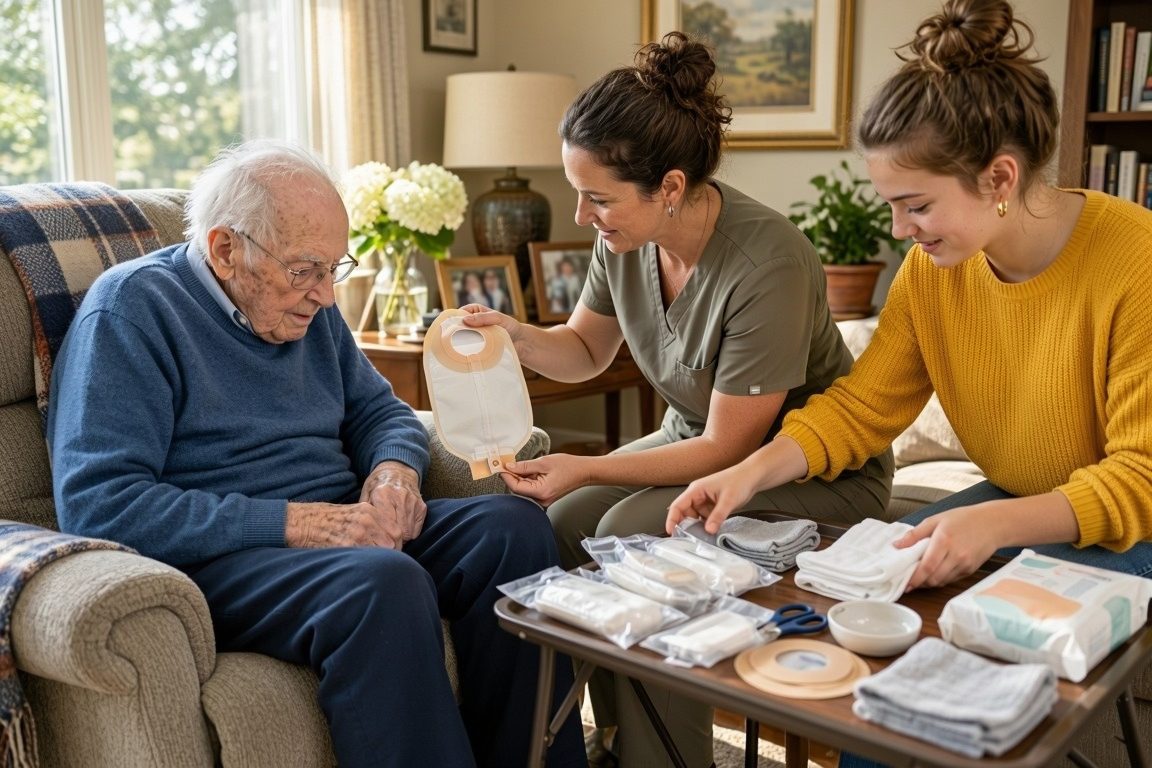
Step by step
What not to do
- Don't try to manage a wound or ostomy alone without professional guidance, get a certified specialist involved early.
- Don't assume the assigned nurse is a wound specialist; always ask for a CWOCN, and escalate to your insurance if the agency cannot provide one.
- Don't ignore signs of infection (redness, increased pain, green or foul drainage, fever), call the nurse or doctor immediately.
- Don't use hydrogen peroxide, alcohol, or betadine on chronic wounds unless specifically instructed.
- Don't change dressings more or less often than prescribed; if a dressing leaks or becomes soiled, call the nurse for guidance.
Key points
- You have the right to request a certified wound and ostomy nurse through Medicare home health or a specialty wound care company. Be persistent and specific.
- Use Medicare's Home Health Compare tool to find agencies with wound care expertise, and call ahead to confirm they have certified staff.
- If on hospice, you can still request therapy and wound care consults. The hospice is required to provide them with a doctor's order.
- Set up a wound care station with all supplies in one place, and keep a detailed log of each change to track healing and communicate with the team.
- For dementia patients, use calm language, distraction, and patience. Never force care; it can increase distress and risk injury.
- Do not try to manage complex wounds alone. Professional guidance is essential to prevent infection, hospitalization, and caregiver burnout.
Videos
 Nima Ahmadi & Julie Roskamp of The Wound CompanyThis video explains how specialized wound care companies work with insurance and home health to bring certified nurses into the home. It gives you the language to ask for this kind of service.
 The Baffled Brain: Demystifying Dementia Episode 27 June 5 ,2021This episode covers how to get help at home without needing a nursing home, including therapy and wound care services. It reinforces that you can request these services even on hospice.
 How to get dementia help without needing a nursing homeThis video provides practical strategies for accessing home care services, including skilled nursing, for a person with dementia. It helps you navigate the system.
 How to get someone with dementia to accept help from others: 5 tips (plus bonus)This video offers specific techniques for getting a loved one with dementia to accept care from a home health aide or nurse, which is crucial when wound care requires a stranger's help.
2 more videos
 When You Want to Walk Away From Dementia Caregiving (But Can't)This video addresses caregiver burnout and the emotional toll of complex care. It reminds you to prioritize your own well-being and seek respite, which is essential when managing wound care.
 #6.3 What Can Be Done from Far Away: Long Distance Caregiving (3 of 5)This video gives specific advice for long-distance caregivers, including how to coordinate home health services and wound care from afar. It helps you stay involved even when you cannot be there.
Background
Why Wound and Ostomy Care at Home Is So Challenging
Caring for a wound or ostomy at home is one of the most stressful tasks a family caregiver can face. These conditions require specialized knowledge about infection prevention, proper dressing changes, skin protection, and recognizing complications like infection or blockage. Yet most family caregivers have no medical background and are expected to learn these skills quickly, often while also managing dementia behaviors, mobility issues, or other chronic conditions. The emotional weight is heavy: you worry about causing pain, making things worse, or missing a sign that something is seriously wrong.
Adding to the difficulty, there is a severe shortage of certified wound and ostomy nurses, especially in home care. As one expert noted, finding a nurse who is actually certified in wound and ostomy care in the home setting has become an 'endangered species' (source 3). This shortage means that even when a doctor orders home health, the nurse who visits may not have advanced wound training. The care moving into the home has increased dramatically, but the workforce of specialists has not kept pace (source 3). This gap leaves families feeling abandoned and forced to manage complex care alone.
How Medicare and Home Health Agencies Can Help
Medicare does cover skilled home health services, including wound care, when ordered by a physician. This coverage includes visits from a registered nurse who can assess the wound, change dressings, and teach you how to provide care between visits. However, the nurse assigned may not be a certified wound and ostomy specialist. To get that higher level of expertise, you may need to seek out a company that specifically aggregates certified professionals who can align with patients for continuous care (source 3). These specialized wound care companies work primarily through structured partnerships with health insurance providers that specialize in Medicare Advantage or Medicaid, as well as with home care and hospice providers (source 1).
If your loved one is on hospice, you can still request a physical therapy or occupational therapy consult to learn safe transfer techniques or positioning that protects the wound (source 4). Even though hospice uses a 'bucket' payment system, therapy is not contraindicated and can be requested with a doctor's order. You have the right to ask for this help, and the hospice is legally required to provide it if ordered (source 4). The key is to be persistent and specific about what you need.
Practical tools
4
Wound Care Supply Caddy
A plastic bin or caddy that holds gloves, gauze, tape, wound cleanser, barrier products, waterproof pads, scissors, and a small trash bag for used supplies. Keep it in a clean, dry area near where you do changes.
Care Notebook with Wound Log
A three-ring binder with sections for the nurse's care plan, a daily log (date, time, wound appearance, drainage, pain, supplies used), and printed photos to track healing progress.
Smartphone for Wound Photos
Use the phone camera to photograph the wound at each change, with consistent lighting and a small ruler in frame to show size. These photos help the nurse and doctor track healing between visits.
Ostomy Go-Bag
A small zippered pouch stocked with extra wafers, pouches, barrier rings, disposal bags, and skin cleanser that you keep by the door or in the car for emergency leaks when you are out of the house.
Different situations
If your loved one has dementia (any stage)
Approach wound care with extra patience and simplicity. Use short, clear instructions: 'Time to check your bandage.' Avoid medical jargon. If they become agitated, stop and try again later. Use the distraction kit. For late-stage dementia, you may need two people to safely position them. Ask the nurse to teach you safe transfer techniques (source 4). Never leave them alone during a dressing change; they may try to remove the dressing or wander.
If your loved one is on hospice
You can still request wound care and therapy services even though they are on hospice. The hospice is required to provide a doctor-ordered therapy consult to teach you safe transfers and positioning (source 4). Be persistent: 'I need a therapist to show me how to move my loved one without hurting the wound.' The hospice nurse can also coordinate with a wound care specialist if needed.
If you are a long-distance caregiver
You cannot be there for every dressing change, but you can coordinate care from afar. Use the care notebook to track everything. Schedule regular video calls with the home health nurse to review the wound. Ask the nurse to send you photos. Use Medicare's Home Health Compare tool to vet agencies before they start. Hire a geriatric care manager locally to oversee the care and communicate with you (source 21).
If your loved one is a veteran
Enroll them in the VA health system if they are not already. The VA offers home health services, including wound care, and may have access to certified wound and ostomy nurses. Talk to a VA social worker about what senior options are available (source 5). The VA also covers respite care, which can give you a break.
If your loved one is in a facility (nursing home or assisted living)
The facility is responsible for providing wound care, but you can still advocate for a certified specialist. Ask the facility director: 'Do you have a certified wound and ostomy nurse on staff? If not, can you bring one in for a consult?' If the wound is not healing, request a transfer to a facility with a higher level of wound care expertise. You have the right to request a change.
For the doctor
5
- Ask the doctor: 'Is this wound infected? Do I need to use a specific antibiotic ointment or silver dressing?' Do not use any medicated product without a prescription or explicit instruction.
- Ask the nurse: 'How often should I change the dressing? What signs of infection should I call you about immediately?' Get a written schedule.
- If your loved one has diabetes, ask: 'How does their blood sugar affect wound healing? Should I check their blood sugar more often?' High blood sugar slows healing and increases infection risk.
- If the wound is near a joint or pressure point, ask: 'What special positioning or cushioning do I need to prevent the wound from getting worse?' A physical therapist can help with this (source 4).
- If your loved one is on blood thinners, ask: 'Is it safe to use this wound cleanser or dressing? Could it increase bleeding?' Some products may interact with medications.