What not to do
- Do not expect daily personal care or 24-hour supervision.
Key points
- Medicare home health is for short-term skilled care (nursing, PT, OT, speech) after a medical event, not for long-term personal care.
- To qualify, the patient must be homebound: leaving home requires major effort and help from a person or device, and trips outside are rare and short.
- Dementia alone does not qualify for home health; there must be a specific medical need like a wound, infection, or recent surgery.
- Home health is not 24-hour care; it is part-time, usually a few times a week. For daily help with bathing, meals, or supervision, you need private-pay home care or Medicaid.
- If home health is denied, you can appeal. Always ask for a written denial notice and a list of community resources.
- For advanced dementia, hospice may be a better fit and is fully covered by Medicare Part A, including nursing, personal care, and equipment.
Videos
 What is Medicare?This video explains the basics of Medicare Part A and Part B, which is essential for understanding what home health services are covered and how they differ from other types of care.
 Home Health vs Palliative Care vs Hospice for Dementia Patients with Candance RamosThis video clearly distinguishes between home health, palliative care, and hospice, which is a common source of confusion for caregivers. It helps you know which service to ask for at each stage.
 Dementia and Hospice: The Who, What, When, Where, and How of hospiceIf your loved one's dementia is advanced, this video explains when hospice becomes appropriate and what it covers, including how it differs from home health.
 What is Home Care?This video explains private-pay home care (custodial care), which is what most dementia caregivers need but Medicare does not cover. It helps you understand the difference and plan accordingly.

Background
What Medicare Home Health Actually Covers
Medicare Part A and Part B (Original Medicare) cover skilled home health care, but only for a specific purpose: to help someone recover from an illness, injury, or surgery. This is not the same as long-term personal care or 24-hour supervision. Skilled services include part-time skilled nursing (for example, wound care, IV antibiotics, or teaching a new diabetic how to monitor blood sugar), physical therapy, occupational therapy, and speech-language therapy. The goal is to help the patient regain independence and become as self-sufficient as possible, it's a short-term service, not a permanent solution.
Importantly, Medicare does not cover 'custodial care', the kind of help many dementia caregivers need most, like bathing, dressing, eating, or companionship. That type of care is called 'home care' or 'personal care' and is usually paid for privately, through long-term care insurance, or in some cases through Medicaid. As one expert explains, 'home health' and 'home care' are different services that can work in conjunction with each other, they do not conflict or overlap. Having a nurse come for skilled care does not cancel out having a home care aide for daily help, but you will likely need to pay for that aide out of pocket.
The Homebound Requirement: What It Means in Practice
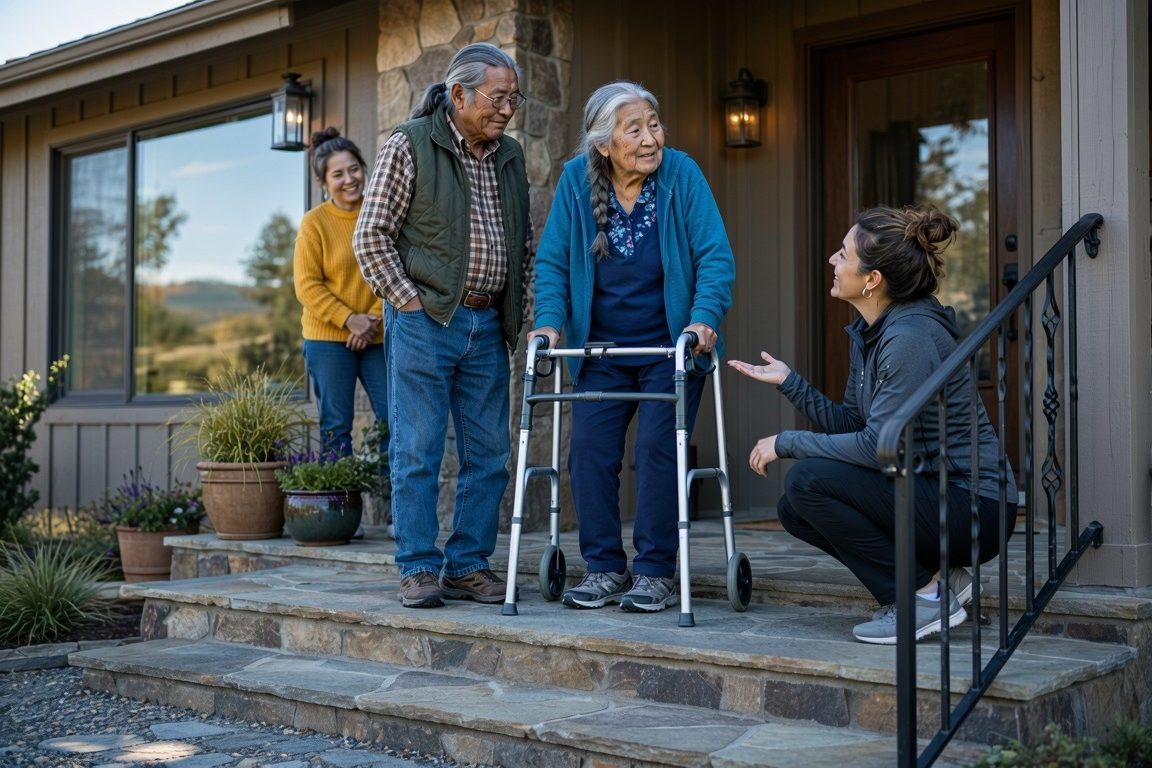
To qualify for Medicare home health, a doctor must certify that the patient is 'homebound.' This does not mean the person can never leave the house. According to Medicare's definition, a person is homebound if they have a normal inability to leave the home, and leaving requires a considerable and taxing effort. This can be because of an illness or injury that makes it hard to leave without help, like using a cane, walker, wheelchair, or needing assistance from another person. The patient may still leave home for medical treatment (like doctor visits or dialysis) or for short, infrequent non-medical reasons, such as attending religious services, a wedding, or a haircut. But these outings must be rare and brief.
For a person with dementia, being homebound often means that even a short trip to the store is exhausting or confusing, or that the person cannot be left alone safely. However, simply having a dementia diagnosis does not automatically make someone homebound. The homebound status must be tied to a specific medical need, for example, recovering from a hip fracture or managing a new wound. As one expert notes, 'the goal is from home health is to help patients get better, regain independence, and become as self-sufficient as possible.' If the patient is stable but just needs daily supervision, they likely do not meet the homebound criteria for skilled home health.
How Home Health Differs from Hospice and Palliative Care
It is easy to confuse home health with hospice or palliative care, but they serve different purposes. Home health is for recovery and rehabilitation, it is meant to help someone get better. Hospice is for people with a terminal illness (usually with a prognosis of six months or less) and focuses on comfort, not cure. Palliative care can be provided at any stage of a serious illness and focuses on symptom management, but it is not necessarily tied to being homebound. Medicare covers hospice under Part A, and it includes nursing, medications for symptom control, medical equipment, and grief support, all at no cost to the patient. But hospice requires a doctor to certify that the person is terminally ill, and the patient must choose comfort care over curative treatment.
For a dementia patient, the line can be blurry. A person with advanced dementia might qualify for home health after a hospitalization (for example, for sepsis from a urinary tract infection) but would not qualify just because they have dementia. If the dementia has progressed to a point where the person is no longer eating, is bedbound, or has frequent infections, they may be eligible for hospice. The key is to talk with the doctor about the specific medical situation and what type of care is most appropriate.
Practical tools
1
Medicare Home Health Benefit Checklist
A one-page list of coverage criteria:
Different situations
For a person with early-stage dementia who is still active
Home health is unlikely to be needed unless there is a separate medical event (like a fall or surgery). Focus on private-pay home care for companionship and safety monitoring. The homebound criteria will not be met if the person can still go out independently.
For a person with advanced dementia who is bedbound or has frequent infections
Home health may be appropriate after a hospitalization for an infection or wound. But if the person is declining and not expected to recover, ask the doctor about hospice. Hospice can provide nursing, personal care, and equipment at no cost, and the homebound requirement is easier to meet for hospice.
For a spouse caregiver who is also elderly or has health issues
You may qualify for 'respite' services through home health or hospice (if on hospice). Ask the home health nurse or hospice social worker about caregiver support. You can also look into the Program of All-Inclusive Care for the Elderly (PACE) if available in your state, which provides comprehensive care at home.
For a person with Lewy body dementia or Parkinson's disease dementia
These conditions often involve physical symptoms like rigidity, falls, and difficulty walking, which may make the person homebound more quickly. Home health physical therapy can help with mobility and fall prevention. Be sure to mention any hallucinations or fluctuations in alertness to the home health team, as these affect safety.
For a person living in a facility (assisted living or nursing home)
Medicare home health can still be provided in an assisted living facility if the person is homebound and needs skilled care. However, the facility may already have nursing staff. Check with the facility's director of nursing first. In a nursing home, Medicare Part A covers skilled nursing facility (SNF) care, not home health, so the rules are different.
For the doctor
5
- Ask the doctor: 'Is my loved one's condition such that leaving home is medically contraindicated? Could that help meet the homebound criteria?'
- Ask the doctor: 'What specific skilled services does my loved one need right now, nursing, physical therapy, occupational therapy, or speech therapy?'
- Ask the doctor: 'If home health is denied, can you write a letter of medical necessity for an appeal?'
- Ask the doctor: 'Is my loved one eligible for hospice? What are the criteria for dementia patients?'
- Ask the pharmacist or doctor: 'Are there any medications that need to be administered by a nurse at home? Could that be a reason for home health?'