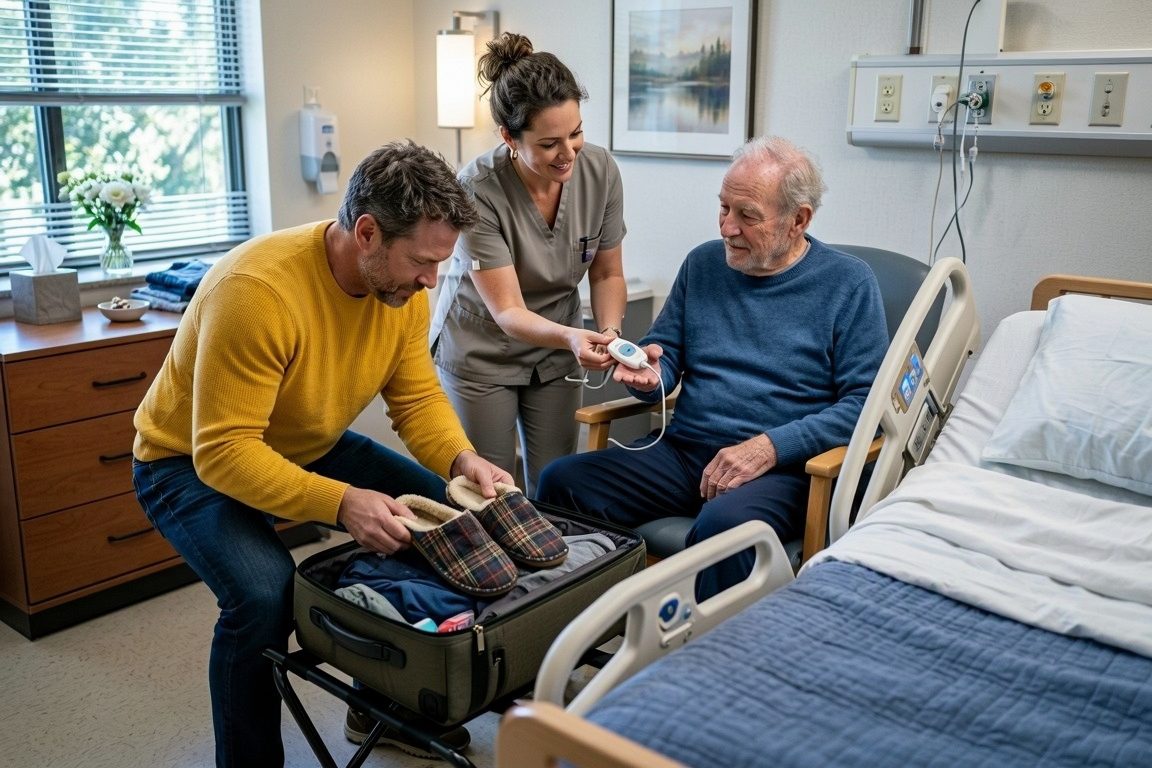
Step by step
What not to do
- Do not bring them into a room filled with boxes and chaos. This will overwhelm them immediately.Instead, have everything unpacked, organized, and looking like a home before they ever see it.
- Do not argue or try to reason with them about why they need to be there. Their brain cannot process that logic, and it will only lead to frustration and anger. Use therapeutic fibbing or redirection instead.
- Do not rush them through the process. Rushing creates anxiety for both of you and can cause them to shut down or push back. Allow extra time for everything, and be patient with their slower processing speed.
- Do not force a full tour or explanation of the facility on the first day. Keep it simple. Focus on their room and one or two calming activities. Too much new information at once is overwhelming.
- Do not disappear without saying goodbye. Sneaking out can increase their anxiety and distrust. Always give a calm, loving goodbye, even if they are upset. They will settle more quickly if they know you will return.
- Do not take their anger or resistance personally. Their reactions are symptoms of their disease, not a reflection of your care. You are making a difficult but loving decision.
Key points
- Start planning early; facility placements can take months.
- Set up the room to look like their old home before they arrive.
- Use therapeutic fibbing to reduce their stress and avoid arguments.
- Keep communication simple, slow, and one step at a time.
- Stay calm and present on move-in day; your presence is their anchor.
- Visit frequently in the first weeks to build trust and familiarity.
Videos
 DEMENTIA NURSING HOME TRANSITIONThis video offers three practical tips from a dementia care expert to make the move comfortable and successful, including the importance of familiar objects and timing.
 7 TIPS to get your loved one with dementia to move closer to familyThis video helps you understand what you are asking your loved one to do and provides strategies to make them more open to the idea of moving, including compassionate lying when safety is a concern.
 Tips For Moving Someone With DementiaThis video explains transfer trauma and gives 10 tips to ease the transition, including recreating the floor plan and bringing familiar objects to reduce fear and confusion.
 The Do's and Don'ts of Visiting a Loved One with DementiaThis video covers how to prepare for visits after the move, including learning about dementia stages and creating a dementia-friendly space for successful interactions.
Practical tools
6
The 'Familiar Room' Checklist
Before move-in day, create a list of items to bring:
Arrange the furniture to mirror their old living room layout as closely as possible.
Therapeutic Fibbing Phrases to Use
When your loved one asks why they are there or says they want to go home, try these phrases: 'This is a nice place where you can rest for a bit.' 'The doctor said you need some extra care for a few days.' 'We're having your house painted, so you're staying here while it dries.' 'This is a vacation spot, look at the nice garden.' Keep your tone light and matter-of-fact.
The 'Slow and Simple' Communication Script
Use short, one-step commands. Instead of saying, 'Let's go to the dining room for lunch,' say, 'Let's walk to the door.' Then, 'Let's turn left.' Then, 'Let's sit here.' Give them at least 10 seconds to process each step before repeating. Use a calm, low voice. Avoid asking open-ended questions like, 'Do you want to eat?' Instead say, 'It's time for lunch, let's go.'
The 'Activity Blending' Strategy
Call the facility ahead and ask what activities are scheduled for the day of move-in. Aim for a low-key, enjoyable activity like a music group, a pet therapy visit, or a simple craft. When you arrive, head straight to that activity. Your loved one will be distracted by something pleasant, and the staff can gently introduce themselves in a natural way.
The 'Calm Goodbye' Routine
When you need to leave, say the same phrase every time: 'I love you, I'll be back tomorrow. The staff here will take good care of you.' Then leave without lingering. Do not get drawn into long goodbyes or arguments. Your consistency will help them learn that you always return.
The 'Sundowning Prevention' Setup
For loved ones who get agitated in the late afternoon, set up their room with warm, dimmable lighting that gradually brightens or dims. Use smart lights that warm up from 3:30 to 5:00 PM. Close blinds to reduce reflections. Schedule calm, repetitive tasks like folding towels or sorting buttons for the afternoon. Avoid new or stimulating activities after 3:00 PM.
Different situations
For a loved one in the late stage of dementia
In late stages, your loved one may have very limited communication and may not understand verbal explanations at all. Focus entirely on sensory comfort: familiar smells (their laundry detergent, a favorite lotion), soft music they loved, a weighted blanket, and a consistent routine. Do not try to explain the move. Simply be present, hold their hand, and speak in a soothing tone. The staff will handle all physical care.
For a spouse caregiver vs. an adult child caregiver
If you are the spouse, your loved one may feel a deeper sense of abandonment or betrayal. Reassure them often that you are not leaving them, but that you need help caring for them. Use phrases like, 'I need to get some rest so I can be strong for you.' If you are an adult child, your loved one may be more accepting because they are used to you making decisions. However, they may also feel like they are losing their independence. Emphasize that this is a place where they will be safe and well-cared for.
For a loved one with Lewy body dementia
People with Lewy body dementia are often very sensitive to medications and may have visual hallucinations or severe fluctuations in alertness. The move may trigger intense fear or paranoia. Keep the room very simple, with minimal clutter and soft, even lighting to reduce shadows. Avoid patterned wallpaper or busy decor. Use calming music at a low volume. Be extra patient with their confusion, as they may have good days and bad days. Discuss any anxiety medications with their doctor before the move.
For a move to a Medicaid-funded facility vs. a private-pay memory care unit
Medicaid-funded facilities may have fewer private rooms and less flexibility in room setup. You may need to be more creative with familiar objects, using smaller items like a favorite photo album, a small plant, or a familiar pillow. Advocate for your loved one with staff to ensure their room feels personal. In private-pay memory care, you often have more control over the room layout and can bring larger furniture. Use that advantage to recreate their home environment as closely as possible.
For a loved one who is mobile and may try to leave the facility
If your loved one is prone to wandering, choose a facility with a secure, locked memory care unit. On move-in day, keep the door to their room closed and use a familiar object like a family photo on the door to help them identify it. Do not leave them unattended in common areas until they are settled. Use therapeutic fibbing like, 'We have to stay inside until the doctor says it's safe,' rather than arguing about why they cannot leave.
For the doctor
4
- Ask your loved one's doctor if a short-term anti-anxiety medication might be appropriate for the first few days of the move to help them settle without extreme distress.
- Discuss any changes in behavior, sleep, or appetite after the move with the facility's nursing staff and their primary care provider. These could be signs of depression or a medical issue.
- If your loved one has a history of falls, ask the facility about fall prevention strategies and whether a bed alarm or floor mat is appropriate.
- Ask the facility's social worker or director about their policy on family visits and how they handle residents who become very agitated during transitions.