Step by step
What not to do
- Don't use a high-pitched baby voice or speak loudly; use a warm natural tone.
- Don't quiz them about the past or test their memory; describe what you see together instead.
- Don't argue or correct confusion about facts or time; meet them in their reality to avoid distress.
- Don't force conversation or overstay when they seem tired; quiet companionship counts as success.
Key points
- Prepare by learning your loved one’s schedule and notifying staff of your visit.
- Approach with a calm, friendly tone and use short, one-idea sentences.
- Avoid asking 'Do you remember me?', introduce yourself naturally instead.
- Bring simple, adult-appropriate activities like a photo album or sensory objects.
- Keep visits short (15-30 minutes) and end on a positive note.
- Your presence and warmth matter more than conversation or memory.
Videos
 The Do's and Don'ts of Visiting a Loved One with DementiaThis video offers clear, practical guidelines for what to say and avoid during visits, reinforcing the one-idea sentence approach.
 How Often Should You Visit Someone With Dementia In A Care Home?Helps you think about visit frequency based on your loved one’s needs and your own capacity, with tips for quality over quantity.
 How To Visit Someone With Alzheimer's & DementiaWalks through a full visit from start to finish, including how to handle common challenges like wandering or silence.
 How Often Should You Visit A Loved One In Memory Care?Addresses the emotional side of visiting frequency and offers strategies for maintaining connection without burnout.
2 more videos
 How To Get Someone With Dementia To Accept HelpUseful if your loved one resists care or activities during visits; offers scripts to reduce resistance.
 How to get someone with dementia to accept help from others: 5 tips (plus bonus)Expands on the previous video with additional tips for involving staff or other family members in visits.
Background
Why Visits Can Be Tricky
Dementia changes how a person experiences the world, and that includes visits from family. Your loved one may not remember who you are in the moment, or they might feel confused or agitated by a sudden change in routine. This isn’t a reflection of your relationship, it’s the disease affecting memory, perception, and emotional regulation. The goal of a visit shifts from 'catching up' to simply being present in a way that feels safe and pleasant for them.
The Power of Preparation
A successful visit starts before you walk through the door. Learning about your loved one’s daily schedule, their current stage of dementia, and what typically calms or upsets them helps you choose the best time and approach. Staff can be your allies here, they know the person’s rhythms and can suggest moments when they are most alert and relaxed. When you prepare, you reduce surprises for both of you, making the visit more likely to be a positive experience.
Focus on the Person, Not the Disease
It’s easy to get caught up in what your loved one can no longer do, but the heart of a good visit is seeing them as the person they still are. That means honoring their adulthood, avoiding baby talk or childlike activities, and meeting them where they are emotionally. Even if they don’t remember your name, they can feel your warmth, your tone, and your presence. That feeling of safety and connection is what lasts.
Practical tools
5
One-Idea Sentence Script
Write a few short one-idea sentences to use during the visit (e.g., 'I brought a flower for you'), and keep them in your pocket to refer to if you feel stuck.
Simple Photo Album
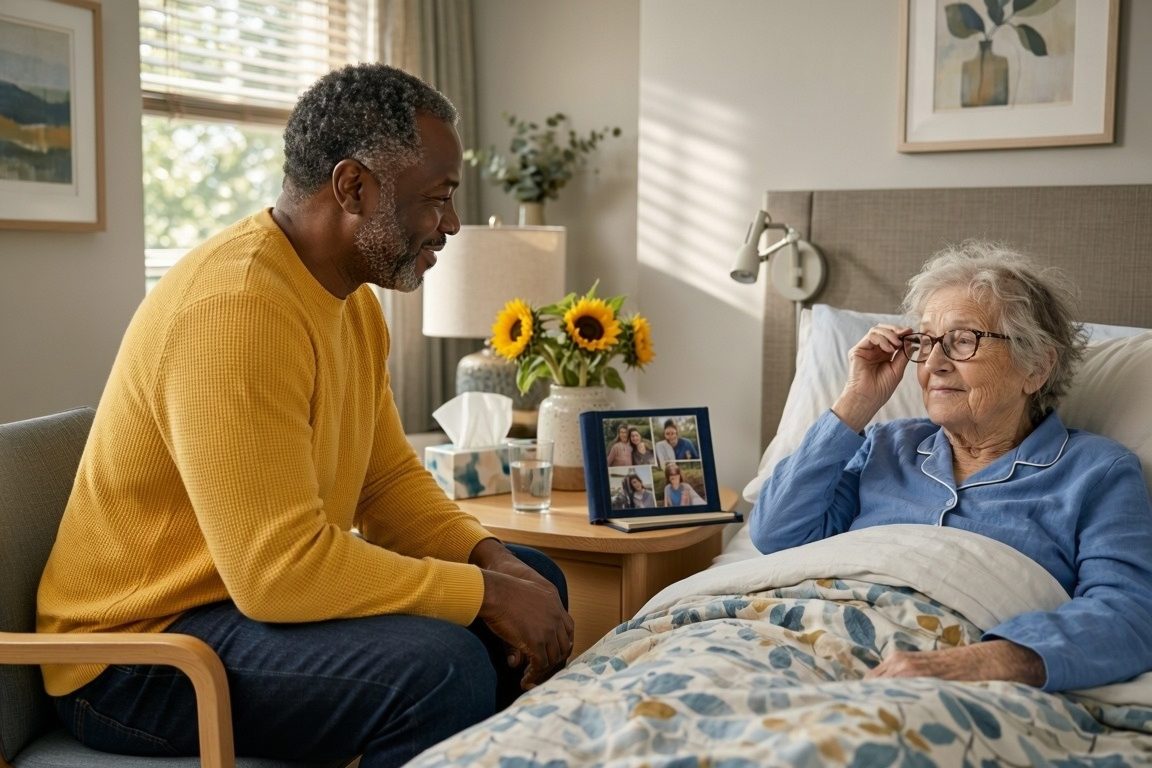
Prepare a small album with 5-10 large clear photos of familiar faces or places, one per page. Sit side by side and describe what you see together.
Comfort Object Kit
Bring a small bag with sensory items like a soft fabric, smooth stone, familiar-scented lotion, or a favorite song on a simple player. Offer one item at a time.
Staff Communication Card
Create an index card with your loved one's preferred name, favorite topics, calming phrases, and triggers. Give a copy to staff and keep one for consistency.
Exit Strategy Plan
Decide before the visit how you will leave gracefully, with a phrase ready like 'I need to go now, but I'll be back soon' to end on a positive note.
Different situations
Early-stage dementia (mild cognitive changes)
Your loved one may still recognize you and enjoy longer conversations. You can ask open-ended questions like 'What did you do today?' but avoid memory tests. Bring a simple puzzle or a book of poetry. Visits can last 30-45 minutes.
Middle-stage dementia (moderate decline)
Focus on sensory and emotional connection. Use the 'one idea' sentences and bring tactile objects. Your loved one may not remember your visit minutes after you leave, but the positive feeling lingers. Keep visits to 15-20 minutes and avoid busy environments.
Late-stage dementia (severe impairment)
Your loved one may be non-verbal or bed-bound. Sit close, hold their hand, and speak in a soft, rhythmic voice. Play familiar music or read a short poem. Your presence alone is comforting. Visits can be as short as 5-10 minutes. Focus on your own emotional readiness.
Lewy body dementia (fluctuating alertness, hallucinations)
Visit during times of clarity, which staff can help identify. Avoid sudden movements or loud noises. If hallucinations occur, do not argue; instead, say something like 'I see you’re concerned. Let’s sit together.' Keep visits very short and calm.
Adult child vs. spouse visiting
Spouses may feel more emotional weight and should prepare for possible role reversal. Adult children can focus on being a loving presence without the burden of daily care. Both should practice self-care before and after visits. Spouses might benefit from joining a support group.
For the doctor
3
- If your loved one becomes very agitated or aggressive during visits, ask the doctor about possible causes like pain, infection, or medication side effects.
- If you notice a sudden change in their behavior or alertness between visits, discuss this with the care home nurse or their primary care provider.
- If you are unsure about the right time to visit due to your own health or stress levels, talk to a counselor or social worker about balancing your needs with your loved one’s.