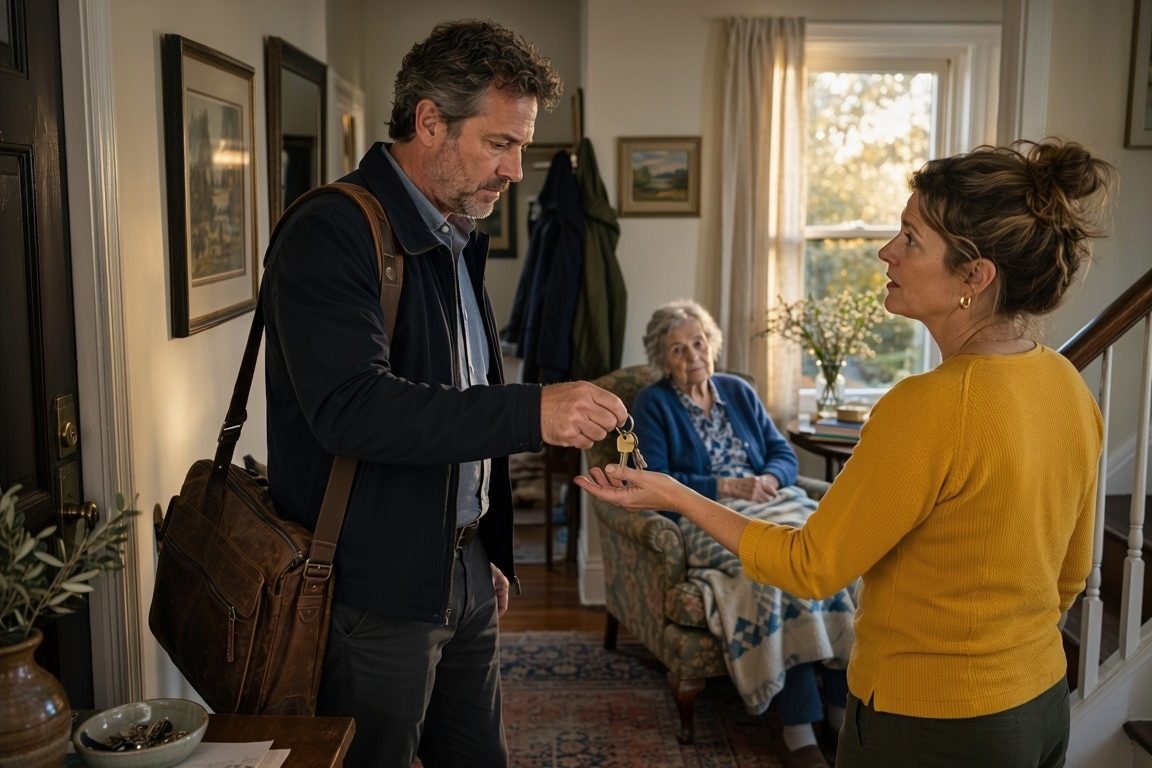
Step by step
What not to do
- Don't argue or correct delusions or false statements
- Don't give multiple instructions at once
- Don't change routine, furniture arrangement, or caregiver abruptly
- Don't use restraints, physical or chemical, unless necessary for safety after other measures fail
- Don't isolate the person; involve them in conversations even if they cannot fully respond
Key points
- Caring for a parent is a choice, not an obligation. You can choose to help because you want to, not because you feel you have to.
- Guilt is a normal emotion in caregiving, but it does not mean you are doing something wrong. Learn to question the source of your guilt.
- Setting boundaries is an act of love, not selfishness. It protects your ability to provide sustainable care.
- Accepting help is a skill that prevents burnout. Practice receiving without deflecting.
- You are not responsible for solving every problem your parent has. Focus on what is within your control.
- You are doing enough. The fact that you are reading this shows you care deeply. Be gentle with yourself.
Videos
 AGING PARENT CARE OBLIGATION? DO YOU HAVE TO PROVIDE CARE TO YOUR ELDERLY PARENT?This video directly addresses the question of obligation versus choice, helping you untangle the feeling of 'I have to' from 'I want to.'
 Support Caring for Elderly Parents: How to Manage Caregiver GuiltProvides practical strategies for managing guilt, including how to set boundaries and communicate with your parent.
 Navigating the Emotional Terrain of Caregiving: Understanding and Overcoming Caregiver GuiltExplores the emotional roots of guilt and offers a framework for understanding and overcoming it.
 Caregiver BurnoutExplains the link between guilt, obligation, and burnout, and why accepting help is essential for prevention.
2 more videos
 Beverley Glazer Founder of Reinvent Impossible Inc. & Host of 'Aging with Purpose & Passion' PodcastOffers a perspective on reframing caregiving as a choice and finding purpose in the role.
 I Made a Promise: Coping with Caregiver Guilt and Finding PeaceAddresses the guilt of feeling you have broken a promise and how to find peace with difficult decisions.
Practical tools
3
Visual labeling system
Use large-print labels or photos on drawers, cupboards, and doors to help locate items and rooms
Grab bars and non-slip mats
Install bars in bathrooms and near bed, non-slip mats in shower and kitchen
Simplified activity kit
Prepared set of tasks like folding cloths, sorting socks, or large-piece puzzles for engagement
Different situations
Adult child caregiver vs. spouse caregiver
Adult children often feel a stronger sense of obligation from childhood promises and societal expectations. They may also face the 'sandwich generation' squeeze of caring for both children and parents. For adult children, it is especially important to set boundaries with siblings and to remember that you are not the only one responsible. Spouse caregivers may feel a deeper sense of duty from marriage vows and shared history. For spouses, the guilt of considering placement can be intense. The advice is the same: you still have the right to ask for help and to prioritize your health, even if you promised 'in sickness and in health.'
Early-stage vs. late-stage dementia
In early-stage dementia, the person may still be aware of their situation and can participate in decisions. You can have conversations about future care preferences and boundaries. In late-stage dementia, the person may not understand your limits, and you must make decisions based on safety and your own capacity. The guilt may be different: in early stage, guilt about 'taking away independence'; in late stage, guilt about 'not doing enough.' The core advice remains: you are allowed to set limits and ask for help at any stage.
When the parent is manipulative or ungrateful
This is one of the hardest situations. The parent may use guilt as a tool to get what they want. In this case, you must be extra firm with boundaries. Do not JADE (Justify, Argue, Defend, or Explain). Use the 'broken record' technique: repeat your boundary calmly. For example: 'I understand you are upset. I will visit on Thursday.' Do not engage in arguments. Seek support from a therapist or support group to handle the emotional toll. You are not obligated to accept abuse.
When you are an only child
Only children often feel the full weight of responsibility with no siblings to share the load. The guilt can be crushing because there is no one else to 'pass the buck' to. It is even more critical for only children to build a care team of friends, neighbors, and paid helpers. You cannot do it alone. Accept that you will need to delegate and that it is okay to hire help. Your parent's care is not solely your burden.
When considering placement in a facility
Guilt about placement is extremely common. Many caregivers feel they are breaking a promise or abandoning their loved one. The key is to reframe placement as a care decision, not a failure. Ask yourself: 'Is my loved one safe? Is my health suffering? Is there a better option?' If the answer points to placement, it is a loving choice. You can still be involved in their care at the facility. You are not a bad person for making this decision.
For the doctor
4
- If you are experiencing severe anxiety, depression, or thoughts of harming yourself or your loved one, discuss this with a doctor or mental health professional immediately.
- If you are considering stopping medications or changing a medical regimen for your loved one because of caregiver stress, discuss this with their doctor first.
- If you are unsure about the legal implications of moving your parent to a facility or stopping care, consult with an elder law attorney or social worker.
- If you are physically unable to lift or transfer your loved one, discuss safe handling techniques and equipment options with an occupational therapist or physical therapist.