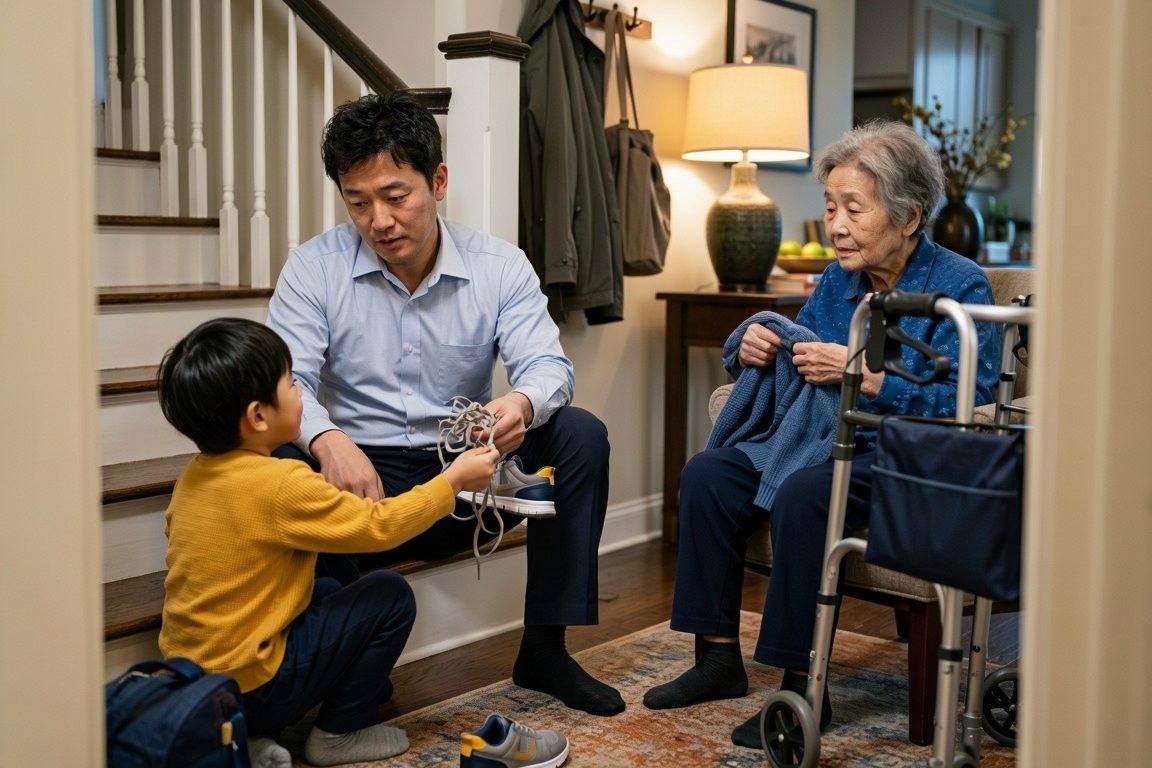
Step by step
What not to do
- Don’t try to do everything alone, delegate to family, friends, or paid helpers.
- Don’t skip your own medical appointments; caregiver stress raises blood pressure, diabetes, and heart disease risk.
- Don’t snap in anger; step away, cool down, and return to speak calmly.
- Don’t use denial or avoidance, start researching memory care options now, not during a crisis.
- Don’t put off legal and financial planning: secure durable power of attorney, advance directives, and a funding plan while you have clarity.
Key points
- Sandwich caregiving is a unique and growing reality: you are caring for both your children and an aging parent, often while working.
- The stress is real and can harm your physical and mental health if ignored. Self-care is not optional, it is essential for your ability to care for others.
- Ask for and accept specific help. People want to help but often don't know what to do. Give them a clear task.
- Use tiny positive goals each day to build momentum and protect your sense of self.
- Respite care, support groups, and honest conversations with your employer are powerful tools, use them.
- You are not alone. Millions of others are in the same situation. Reach out, connect, and give yourself grace.
Videos
 Are You Part of the Sandwich Caregiver Generation?This video explains exactly what a sandwich caregiver is and why this group is growing so rapidly. It helps you feel seen and understood.
 Quick Tips: Managing Caregiver StressOffers fast, actionable tips for reducing stress in the moment, which is especially helpful when you are feeling overwhelmed.
 Managing Caregiver Stress & BurnoutA deeper dive into the signs of burnout and how to reverse it. Essential for long-term sustainability.
 How To Manage Caregiver Stress Effectively? - Dementia Help HubProvides a structured approach to stress management, including the importance of training, emotional support, and respite care.
2 more videos
 The Realities of CaregivingA candid look at the day-to-day challenges of caregiving, including the emotional and physical toll. Validates your experience.
 An Interview with Denise Brown the Founder at The Caregiving Years AcademyOffers wisdom from a long-time caregiver advocate, including strategies for navigating the different stages of caregiving.
Background
What is a Sandwich Caregiver?
A sandwich caregiver is someone who is simultaneously caring for their own children (or other dependents) and for an aging parent or relative. According to the U.S. Census Bureau, between 2024 and 2030, 10,000 adults will turn 65 every single day, and among Americans in their 40s, over half, 54 percent, are currently sandwiched between an aging parent and their own children. By the time these adults reach their 50s, over 59 percent have at least helped their aging parent financially. This is not a rare situation; it is a rapidly growing reality for millions of families.
Why the Stress is Different and More Intense
The stress of sandwich caregiving is not just regular caregiver stress multiplied by two. It is a unique kind of pressure because your attention and energy are split between two generations that have very different needs. You might be helping a toddler with homework while also managing your parent's medication schedule. You might be taking your child to soccer practice while also driving your parent to a doctor's appointment. This constant switching of roles can lead to mental exhaustion, irritability, and a feeling that you are failing everyone, including yourself. Many sandwich caregivers find themselves reducing work hours, passing up promotions, or even leaving the workforce early because the demands at home are so high. The financial strain is real, and the emotional toll can be overwhelming.
The Hidden Toll on Your Health
The chronic stress of sandwich caregiving does not just affect your mood; it affects your body. Research shows that caregivers are at higher risk for high blood pressure, diabetes, heart disease, and a weakened immune system. You might find yourself missing your own medical appointments, skipping meals, or not getting enough sleep. Some caregivers turn to alcohol or prescription drugs to cope. Perhaps most alarming, studies indicate that spouses caring for a partner with dementia are six times more likely to develop dementia themselves. This is not meant to scare you, but to underscore a critical point: taking care of yourself is not selfish, it is essential. If you don't take care of yourself, you won't be able to care for anyone else.
Practical tools
3
Weekly Caregiver Meeting Agenda
20-minute template:
End with one written action item per person.
Respite Care Options Worksheet
Checklist of respite types, home health aides, adult day care, family rotation, volunteer visitors, to match your parent’s needs and budget before a crisis.
Specific Help Request Script
Keep a running list of concrete tasks (pickup, pharmacy, homework, meal) with ready-to-use requests; when someone offers help, hand them a specific task.
Different situations
If you are caring for a parent with Lewy body dementia
Lewy body dementia often causes visual hallucinations, sleep disturbances, and sudden changes in alertness. This can be especially frightening for children who witness it. Explain to your children in simple terms: 'Grandma's brain sometimes sees things that aren't real. It's not scary, it's just her illness. If she says something strange, just say, 'That sounds interesting, Grandma,' and then come tell me.' Keep a calm, matter-of-fact tone. Also, because sleep problems are common, consider hiring a night-time caregiver a few nights a week so you can get rest.
If you are an adult child caring for a parent in a facility
Even when your parent is in a facility, you are still a sandwich caregiver because you are managing their care from a distance. Your stress may come from feeling guilty about not being there, or from dealing with facility staff. Coping strategies include: scheduling regular video calls with your parent, visiting at consistent times so your children can also visit, and designating one family member as the main contact with the facility to reduce phone calls. Also, take advantage of the facility's social worker or care coordinator, they are there to help you.
If you are caring for a parent with late-stage dementia
In late-stage dementia, your parent may be bedridden, unable to speak, and require full assistance with eating, bathing, and toileting. This is physically and emotionally exhausting. Your coping strategies must include: accepting help from hospice or palliative care teams (they provide nursing visits, bathing assistance, and emotional support), using a hospital bed and other equipment to make care easier, and giving yourself permission to grieve the loss of the person your parent once was. It is also vital to talk to your children about death in an age-appropriate way. For example: 'Grandma's body is very tired, and she may soon go to heaven/be at peace. It's okay to be sad.'
If you are a single parent sandwich caregiver
Being a single parent while also caring for a parent with dementia is one of the most challenging situations. You have no partner to share the load. Your coping strategies must be aggressive: apply for all available financial assistance (such as Medicaid waivers, local grants for caregivers, and food stamps), use adult day care at least two days a week, and build a 'village' of friends, neighbors, and church members who can help with specific tasks. Do not be afraid to say, 'I am a single parent caring for my mom. I need help. Can you bring dinner on Tuesdays?' Most people will say yes.
For the doctor
5
- Ask your doctor: 'Given my stress levels as a sandwich caregiver, should I be screened for depression or anxiety?'
- Ask your doctor: 'Are there any medications or supplements that could help me manage stress or sleep better, without interfering with my ability to care for others?'
- Ask your doctor: 'What are the warning signs that my own health is being seriously affected by caregiving stress? Should I have my blood pressure and blood sugar checked more often?'
- Ask your doctor: 'If I am considering leaving my job to care for my parent, what financial and health insurance implications should I consider?'
- Ask your doctor: 'My parent has dementia and is on several medications. Can a pharmacist or geriatrician review them to make sure there are no interactions or unnecessary drugs?'