
Step by step
What not to do
- Do not say 'Don't you remember?' or 'I already told you that.' Simply repeat the information calmly as if it is the first time.
- Do not quiz them on names, dates, or events. Offer information freely instead: 'I am your daughter, Sarah.'
- Do not argue about factual errors that do not matter. If they say they had lunch with a friend who passed away, say 'That sounds nice. Tell me about your lunch.'
- Do not use a harsh or scolding tone, even when correcting a safety issue. Stay calm and quietly fix the problem.
- Do not assume they will remember a correction from one day to the next. You may need to repeat the same reminder many times a day; that is normal.
- Do not hide important news, such as a death in the family. Tell them gently with support nearby, and be prepared to repeat the news as needed.
Key points
- Never ask 'Don't you remember?' It triggers shame and does not help.
- Answer repeated questions as if for the first time, with a calm tone.
- Use visual reminders like whiteboards and sticky notes to reduce reliance on memory.
- Step into their reality when they are confused about time or place; do not argue.
- Safety issues (stove, wandering) require calm redirection, not scolding.
- Choose kindness over factual accuracy in most situations; it preserves the relationship.
Videos
 TELLING A PARENT WITH DEMENTIA ABOUT A DEATHThis video addresses the tough decision of whether to share painful news, and offers guidance on how to do it with compassion rather than avoidance.
 What's Wrong with Grandpa? (Talking with Kids about Dementia and Alzheimer's Disease)Helps you explain memory loss to children in age-appropriate terms, so they understand why grandparent forgets and how to respond kindly.
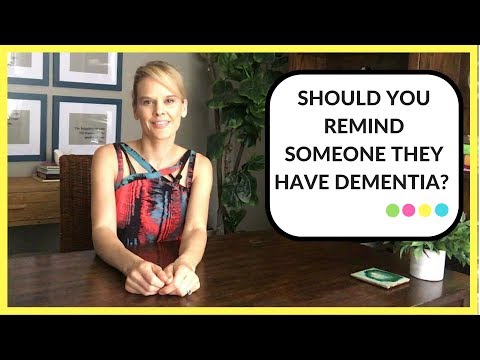 Should you remind someone they have dementia?Directly answers the question of whether to remind your loved one of their diagnosis, and offers a framework for deciding based on their emotional state.
 How to Deal With Dementia in a ParentProvides nine practical topics for caregivers, including communication strategies and planning ahead for memory changes.
2 more videos
 Supporting a Loved One with DementiaFocuses on consistency, routine, and using notes and visual cues to support memory without correction.
 HOW TO TALK TO A PARENT WITH DEMENTIA - DEMENTIA COMMUNICATION TECHNIQUESTeaches specific communication techniques like stepping into their reality and validating emotions instead of correcting facts.
Practical tools
6
First Time Response
When your parent asks a repeated question, answer exactly as if they had never asked before. Use a warm, neutral tone. This avoids shame and keeps the interaction positive.
Visual Reminder Whiteboard
Place a large whiteboard or wall calendar in a central spot. Write the day's schedule, appointments, and important names in large letters. Use sticky notes for specific reminders. Point to them when they ask, so your parent can begin helping themselves.
Step Into Their Reality Script
When they are confused about time, place, or people who are gone, respond: 'I can help with that. Let's sit here and tell me more.' Then gently guide them to a different activity.
Safety Redirect
For safety issues, use calm direct action: 'Let me check that for you. I will turn it off now.' Then change the subject to something pleasant. Install automatic shut-off devices to prevent future incidents.
Introduce Yourself Technique
When they forget who you are, say warmly: 'Hi Mom, it's [your name], your daughter.' Show a photograph of the two of you to help ground them, then continue the conversation naturally.
Emotion-First Validation
When they become upset, lead with the feeling before any information: 'I can see this is frustrating. It's okay. I'm right here.' Then shift to a calming activity.
Different situations
Early Stage (Mild Cognitive Impairment or Early Alzheimer's)
In early stages, your parent may still be aware of their memory loss and may appreciate gentle reminders. You can use notes and calendars together. Ask them how they prefer to be reminded. For example, 'Would you like me to write it down or tell you again?' This preserves their sense of control and partnership.
Middle Stage (Moderate Dementia)
At this stage, repeated questions and confusion about time/place are common. Avoid all correction unless it is a safety issue. Use visual cues heavily. If they ask about a deceased spouse, use therapeutic fibbing: 'He is not here right now, but I am here with you.' Do not remind them of the death every time.
Late Stage (Severe Dementia)
In late stages, your parent may have very limited short-term memory and may not recognize you. Never correct them. Focus on emotional connection through touch, music, or familiar objects. If they ask a question, answer simply and then redirect to a sensory activity like holding a soft blanket or listening to music.
Lewy Body Dementia or Parkinson's Dementia
These conditions often involve visual hallucinations and fluctuating cognition. Do not argue about what they see or believe. Instead, say, 'I can see that is real to you. Let's sit together.' Avoid correcting their reality unless it is causing distress or danger. Use calm redirection.
Spouse vs. Adult Child Caregiver
Spouses may feel more comfortable using direct reminders because of their long history. However, the same principles apply: avoid shame and correction. Adult children may need to be extra gentle to avoid triggering a parent-child dynamic of being 'told what to do.' Use phrases like 'Let's do this together' rather than 'You need to...'
For the doctor
3
- If your parent becomes extremely agitated or aggressive after being reminded of something, discuss with their doctor whether medication adjustments or a referral to a dementia specialist might help.
- If forgetting leads to missed medications or unsafe behaviors (like wandering), ask the clinician about safety interventions, such as medication dispensers, GPS trackers, or home modifications.
- If your parent is in a facility and staff are correcting them frequently, discuss with the care team how to align on a 'no correction' approach that prioritizes emotional well-being.