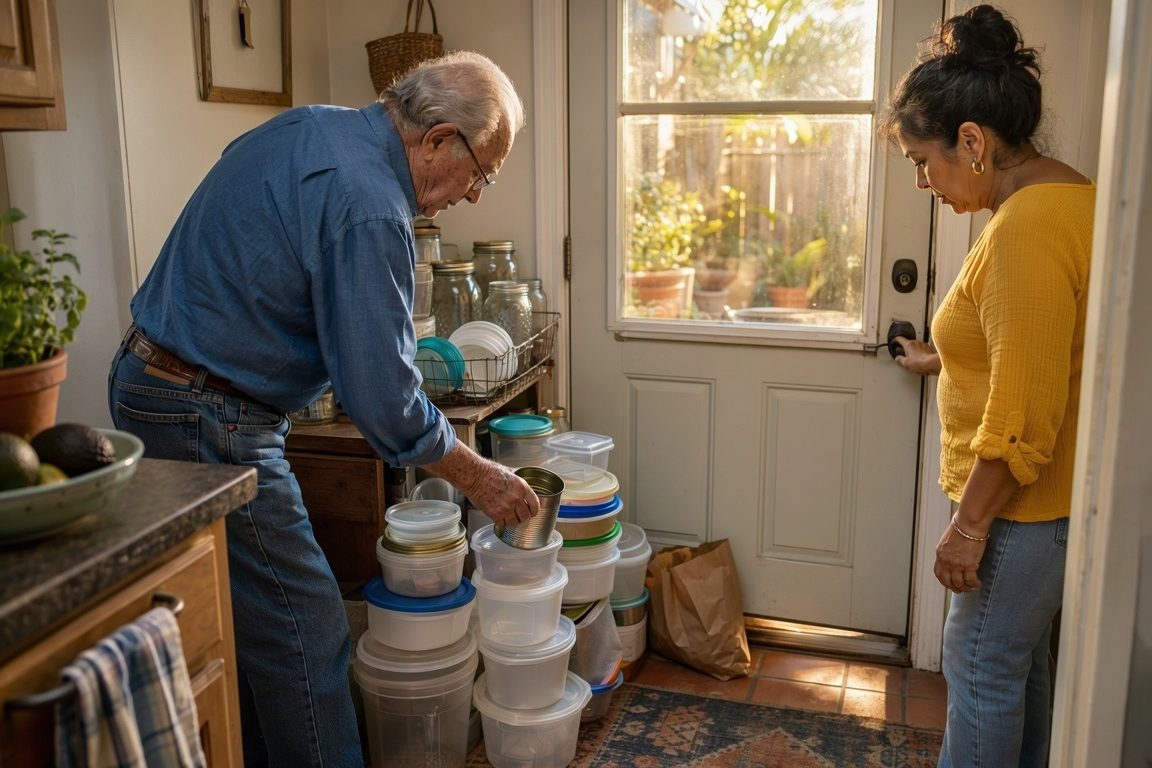
What not to do
- Do not attempt a full cleanup at once―this can trigger severe anxiety, aggression, or worsening of the hoarding behavior.
- Do not discard items without the person's knowledge or consent unless it is an immediate safety emergency.
- Do not argue about the value or necessity of items; this often escalates resistance.
- Do not force the person to stop hoarding entirely, as this is usually not possible and increases distress.
Key points
- Hoarding in dementia is driven by anxiety, a need for control, or fear of loss, not laziness. Approach it with compassion, not criticism.
- Focus on harm reduction: prioritize safety (clear pathways, fire hazards, spoiled food) over forcing the person to stop hoarding or clean everything out.
- Always ask permission before moving or discarding items, and use 'we' language to reduce resistance.
- Lock up or remove dangerous items like chemicals, medications, sharp objects, and weapons to prevent accidents.
- Create a 'safe zone', a small clutter-free area where the person can relax safely.
- Seek professional help if the hoarding is severe, especially if there are blocked exits, no running water, or animal hoarding.
Videos
 Hoarding Disorder in Geriatric PatientsThis video provides a clinical overview of hoarding disorder in older adults, helping you understand the medical and psychological underpinnings of the behavior.
 Hoarding Behaviors Insights and InnovationsOffers practical insights and innovative approaches for managing hoarding behaviors, including harm reduction strategies that can be applied at home.
 Ep. 260: When Collecting Isn't Collecting AnymoreExplores the line between normal collecting and problematic hoarding, which is crucial for recognizing when to intervene.
 What Are Common Safety Risks For Dementia Patients? - Dementia Help HubCovers general safety risks for dementia patients, including falls and fire hazards, which are directly relevant to hoarding situations.
2 more videos
 Discussing the Issue of Hoarding with USA Bio Care LLC Founder, Steve VenturaProvides a real-world perspective on hoarding cleanup and the importance of professional help, especially for biohazards and severe cases.
 Ep. 239: Hoarding, How Do We Get Here?Explores the emotional and psychological journey that leads to hoarding, helping caregivers develop empathy and patience.
Background
What Is Hoarding in Dementia and Why Does It Happen?
Hoarding in dementia is not the same as collecting or being messy. It is an ongoing difficulty with throwing away or parting with possessions, even items of little value, because the person believes they need to save them. This can lead to extremely cramped living conditions with only narrow pathways winding through stacks of clutter, and surfaces like countertops, sinks, stoves, and beds piled high with stuff. The person may not be able to use rooms for their intended purpose, for example, the bed becomes storage instead of a place to sleep. This behavior is often driven by anxiety, a need for control, or a fear that something important will be lost if it is put away. For someone with dementia, the clutter can feel like a protective barrier or a way to hold onto memories, even if it creates chaos for you as a caregiver.
The Real Safety Risks: What You Are Up Against
Hoarding creates serious safety hazards that can harm both your loved one and others in the home. The most immediate risks include a much higher chance of falls from tripping over items or from shifting piles that can avalanche and cause injury. Blocked emergency exits, such as doors or windows, can be deadly in a fire. Unsanitary conditions from spoiled food, rodent or insect infestations, and lack of cleaning can lead to infections and respiratory problems. Fire hazards are also common, items piled near stoves, heaters, or electrical outlets, or grease buildup on the stovetop, can ignite quickly. Additionally, overloaded electrical circuits from multiple power strips and adapters can cause shocks or fires. These risks are compounded by the person's cognitive decline, which may impair their judgment, balance, and ability to recognize danger.
Why a Harm Reduction Approach Works Best
Instead of trying to force your loved one to stop hoarding or to clean everything out at once, which can cause extreme distress, anxiety, and even aggression, a harm reduction approach focuses on minimizing the harmful consequences of hoarding without requiring the person to have insight into their behavior. This means you prioritize safety over order. For example, you might not be able to clear all the clutter, but you can make sure pathways are clear for walking, that the stove is not blocked, and that spoiled food is removed. This approach respects the person's autonomy and reduces resistance, because you are not taking away their possessions, you are just making the environment less dangerous. Over time, this can build trust and open the door to more help, like working with a mental health professional or community agency.
Practical tools
3
Clear storage bins
Use transparent containers to allow the person to see their items while reducing clutter and trip hazards.
Fire extinguisher and smoke detector
Install and test these devices regularly in rooms where clutter is most concentrated.
Visual schedule or checklist
Use a simple daily plan (e.g., 'Today we will sort one box together') to provide structure and predictability.
Different situations
Early-stage dementia vs. late-stage
In early-stage dementia, the person may still have some insight and can be involved in decisions about what to keep and what to discard. Use this time to establish routines like weekly refrigerator checks and safe zones. In late-stage dementia, the person may not understand why you are moving items, so focus purely on harm reduction, clear pathways, lock up dangerous items, and do not try to reason with them. You may need to take more control for their safety, but always use a gentle, reassuring tone.
Spouse vs. adult child caregiver
As a spouse, you may have more emotional attachment to the shared home and its contents, which can make it harder to address hoarding. It is important to remember that your safety and your spouse's safety come first. Consider couples counseling or joining a support group for caregivers of people with hoarding disorder. As an adult child, you may have more distance but also less authority. Approach the situation with humility: 'Mom, I am worried about your safety. Can we work together to make the house safer?' Avoid a confrontational tone, and consider involving a neutral third party like a social worker.
Hoarding animals
If your loved one is hoarding animals, the risks are even higher because of unsanitary conditions and the potential for animal neglect. This requires immediate intervention from animal control and a mental health professional. Do not try to handle this alone. The person may need to be separated from the animals for their own safety and the animals' welfare. Contact your local animal shelter or hoarding task force for guidance.
Living in a facility (assisted living or nursing home)
In a facility, hoarding may manifest as collecting items from other residents' rooms or common areas, or filling their own room with clutter. Work with the facility staff to create a plan: designate a small area for their belongings, and check daily for items that could be safety hazards (like food that spoils or sharp objects). The facility may have policies about what can be kept, so be prepared to negotiate. Use the same harm reduction approach, focus on safety, not on stopping the behavior entirely.
Lewy body dementia or Parkinson's disease dementia
These types of dementia often involve visual hallucinations and fluctuating cognition, which can make hoarding more complex. The person may collect items because they believe they are protecting themselves from something they see or fear. Be especially careful about fire hazards, as they may also have difficulty with balance and coordination, increasing fall risk. Use very gentle, non-confrontational language, and consider consulting a neurologist or geriatric psychiatrist for medication management if anxiety or hallucinations are driving the hoarding.
For the doctor
4
- Ask your doctor if any medications your loved one is taking could be contributing to hoarding behaviors, such as certain antidepressants or antipsychotics.
- Discuss with a mental health professional whether cognitive behavioral therapy (CBT) or motivational interviewing might be appropriate for your loved one, especially if they are in early-stage dementia and have some insight.
- If the hoarding is severe and the person is at high risk but lacks capacity to make decisions, ask your clinician about the possibility of guardianship or conservatorship. This is a legal step that should only be taken with professional guidance.
- If your loved one has a history of falls or fractures, ask their doctor about a home safety evaluation by an occupational therapist, who can recommend specific modifications to reduce fall risk.