Step by step
What not to do
- Do not wait until a crisis. If you delay until your loved one is hospitalized, wandering, or being exploited, the court process will be rushed and more stressful. Start planning as soon as you notice cognitive decline. The earlier you act, the more options you have.
- Do not assume you can make decisions without legal authority. In Wisconsin, family members are legal strangers. Even if you are the spouse, you cannot force medical treatment, access bank accounts, or move your loved one without a power of attorney or guardianship. Trying to do so can lead to legal trouble or accusations of elder abuse.
- Do not use guardianship as a first resort. Always try less restrictive alternatives first: a durable power of attorney for health care, a financial power of attorney, a living trust, or an advance directive. These documents allow your loved one to maintain control while you assist. Guardianship should be the last option because it strips the person of their rights.
- Do not ignore the person's wishes. Even if they have dementia, they may still have opinions about where they want to live or what medical care they want. Involve them in decisions as much as possible. For example, if you need to move them to a facility, let them choose between two options. This preserves their dignity and reduces resistance.
- Do not go it alone. The legal process is complex and varies by county. Work with an elder law attorney and use the Wisconsin Guardianship Support Center. They can help you avoid mistakes that could delay the process or harm your case.
- Do not neglect your own well-being. Caregiver burnout is real. If you are exhausted, you cannot make good decisions. Take breaks, ask for help from other family members or respite care, and prioritize your health. Your loved one needs you to be strong and clear-headed.
Key points
- Guardianship is a last resort in Wisconsin, try powers of attorney and advance directives first.
- The process requires a court petition, two medical evaluations, and a hearing with a guardian ad litem.
- Wisconsin law treats family members as legal strangers; you need legal authority to make decisions.
- Limited guardianship preserves more autonomy by only taking away specific decision-making rights.
- The Wisconsin Guardianship Support Center (1-855-409-9410) offers free, neutral information.
- Always involve your loved one in decisions as much as possible to maintain their dignity.
Videos
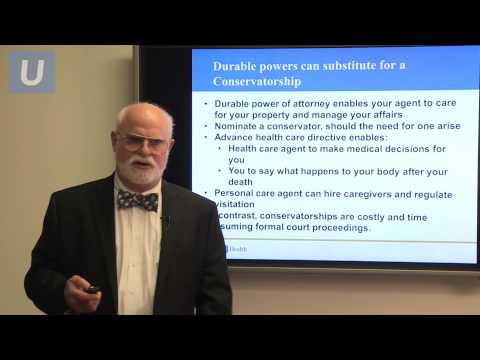 Elder Law: Protecting & Caring for Patients with Dementia | Marc B. Hankin | UCLAMDChatThis video explains the legal options for protecting a person with dementia, including when guardianship becomes necessary and how to avoid it with proper planning.
 Elena Sallitto, Esq. Owner & Principal at Stavely & Sallitto Elder LawAn elder law attorney discusses the guardianship process, the importance of powers of attorney, and how to navigate the legal system with compassion.
 Recognizing the Value of Care Planning Paired with Dementia EducationThis video emphasizes the importance of early care planning and education to prevent crises that lead to guardianship.
 It's OK to Choose Nursing Home Or Memory Care || Dementia Caregiving JourneyA caregiver shares their experience of making the difficult decision to move a loved one to a facility, which often requires guardianship if the person resists.
Practical tools
6
Wisconsin Guardianship Support Center Helpline
Call 1-855-409-9410 or email guardian@gwaar.org. This free, neutral resource provides information about guardianship, powers of attorney, protective placement, and other advance directives. They can explain the process, answer questions, and send you publications. They do not give legal advice but can help you understand your options.
Sample Script for Talking to Your Loved One About Guardianship
Say: 'I love you and I want to make sure you are safe. I know you want to make your own choices, and I respect that. But sometimes it is hard for you to remember things or make decisions that keep you healthy. I would like to help you with some of those decisions. Would it be okay if we talk to a lawyer together to see how I can help you without taking away your freedom?' Use a calm, loving tone. Avoid words like 'guardianship' or 'court' at first, focus on help and partnership.
Medical Incident Log
Keep a written log of specific incidents that show your loved one cannot make safe decisions. For example: 'On March 15, Mom forgot to take her blood pressure medication for three days and ended up in the ER.' Or 'Dad gave $500 to a phone scammer on April 2.' Share this log with doctors and the guardian ad litem. It provides concrete evidence of incapacity.
Elder Law Attorney Referral
Use the National Academy of Elder Law Attorneys (NAELA) website or the State Bar of Wisconsin's lawyer referral service to find an attorney who specializes in guardianship. Ask for a consultation to discuss your specific situation. Many offer a free initial phone call. Bring a list of questions: '
'
Annual Report Template
After guardianship is granted, you must submit annual reports to the court. Create a simple template that includes:
Keep copies for your records. This helps you stay organized and compliant.
Support Group Finder
Use the Alzheimer's Association's online locator or call their 24/7 helpline (800-272-3900) to find a support group for caregivers. Many groups meet online or in person. Sharing your experience with others who understand can reduce isolation and provide practical tips. You are not alone.
Different situations
Early-stage dementia (mild cognitive impairment)
In early stages, the person may still have capacity to sign a power of attorney. Focus on getting these documents in place now. Guardianship is rarely needed at this stage. Use the time to have conversations about future care and to build trust. If the person is resistant, consider working with a geriatric care manager or therapist to facilitate the discussion.
Late-stage dementia (severe cognitive decline)
At this point, the person likely cannot participate in decision-making at all. Guardianship may be necessary if no power of attorney exists. The process may be faster because medical evidence of incapacity is clear. Focus on safety and comfort. The guardian will need to make decisions about end-of-life care, placement, and financial management. Work closely with hospice or palliative care if available.
Lewy body dementia or frontotemporal dementia
These types often involve behavioral changes, hallucinations, or impulsivity that can make guardianship more urgent. The person may refuse care or act in dangerous ways. Medical reports should highlight these specific behaviors. Be prepared for the person to resist the process, they may not believe they are impaired. Use a calm, non-confrontational approach. Consider a limited guardianship if they can still make some decisions.
Spouse vs. adult child as caregiver
A spouse may have more emotional leverage but also more conflict of interest (e.g., shared finances). An adult child may be seen as more objective by the court but may face resistance from the parent. Both should work with an attorney to ensure the guardian is the best person for the role. If there is family conflict, the court may appoint a professional guardian. Discuss with your attorney whether a family member or professional is best.
Person is in a nursing home or memory care facility
If the person is already in a facility, guardianship may still be needed for medical decisions or financial management. The facility may require a guardian to sign consent forms. The process is similar, but the court may consider the person's current living situation when deciding. If the person is safe and cared for, the guardianship may be limited to financial matters only.
Medicaid or low-income situations
If your loved one is on Medicaid or has limited assets, you may need to apply for guardianship to manage their benefits or to prevent financial exploitation. The court may waive some fees if you can show financial hardship. Contact the Wisconsin Guardianship Support Center for information on fee waivers. An elder law attorney can also help with Medicaid planning.
For the doctor
5
- Ask your loved one's doctor: 'Can you provide a written evaluation of their capacity to make decisions about health care, finances, and living arrangements? This will be needed for the guardianship process.'
- Ask: 'Are there any medications or treatments that could improve their decision-making ability, even temporarily? This might help us avoid guardianship or use a less restrictive option.'
- Ask: 'What is the prognosis for their cognitive decline? Knowing the timeline can help us plan when to start the guardianship process.'
- Ask: 'If we do pursue guardianship, what medical reports will you need to provide? Do you have experience with this process?'
- Ask: 'Are there any community resources, like adult day care or respite care, that could reduce the need for guardianship by supporting the person at home?'