
Step by step
What not to do
- Do not wait until a crisis or until capacity is significantly impaired, once that happens the person cannot legally sign, and the family will face costly guardianship court proceedings.
- Do not use a standard (non-durable) power of attorney; it becomes invalid the moment capacity is lost.
- Do not rely on a generic online form without attorney review, state requirements vary and an invalid form can be worse than none.
- Do not name an agent you do not fully trust, and never skip naming a successor agent.
- Do not assume your bank will automatically accept the DPOA, many institutions require their own forms and may refuse a general one.
- Do not keep the document secret from your agent and family, or it will be useless in an emergency.
- Do not choose an agent without explaining their fiduciary duties, act in the principal's best interest, keep separate records, avoid mixing funds. Misuse can lead to lawsuits or criminal charges.
- Do not activate the agent's authority before a doctor confirms incapacity; doing so can be treated as financial abuse and violates the principal's autonomy.
Key points
- A durable power of attorney for finances stays in effect even after the person loses mental capacity, unlike a standard POA, which becomes invalid.
- Create it early, while the person with dementia still has legal capacity; waiting often forces families into expensive guardianship court.
- Choose your agent carefully, someone trustworthy, responsible, and willing to serve, and always name a successor.
- Make sure the document explicitly says 'durable' and is signed with proper witnesses and notarization per your state's laws; work with an elder law attorney, not a generic form.
- Include a 'personal care power' clause so the agent can hire caregivers and regulate visitation, and add Medicaid planning language if long-term care may be needed.
- Give copies to your agent, bank, and doctor; if a bank refuses, use an Affidavit of No Revocation to compel acceptance.
- The agent is a fiduciary, activate authority only after a written doctor's declaration of incapacity, keep meticulous records, and never use the principal's funds personally.
- Revisit the DPOA every few years or after major life changes; it is a continuing legal care plan, not a one-time document.
Videos
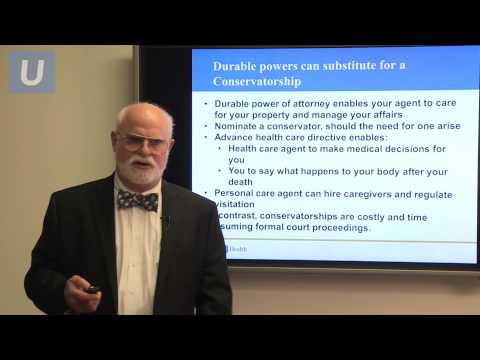 Elder Law: Protecting & Caring for Patients with Dementia | Marc B. Hankin | UCLAMDChatThis video covers the legal framework for durable power of attorney, including how to handle banks that refuse to honor it and the use of an affidavit of no revocation.
 Does your loved one with dementia resent you? Try this!Discusses the emotional challenge of a loved one with dementia resisting financial help and the importance of having documents in place before resentment escalates.
 Elena Sallitto, Esq. Owner & Principal at Stavely & Sallitto Elder LawExplains the difference between power of attorney and guardianship, and why a DPOA keeps the principal in control while a guardianship removes rights.
 Financial 'POWERLESS' of Attorney? Day 4 Dad in Skilled Nursing FacilityReal-life example of a caregiver struggling to get a bank to honor a power of attorney, highlighting the need for bank-specific forms and persistence.
2 more videos
 Recognizing the Value of Care Planning Paired with Dementia EducationEmphasizes that legal planning is part of a comprehensive care plan and should be revisited regularly as the disease progresses.
 Power of Attorney + Dementia 2024Updated guidance on creating a durable power of attorney specifically for dementia, including tips for choosing an agent and handling resistance.
Background
Understanding the situation
A durable power of attorney is a legal document in which the person with dementia (the 'principal') names someone they trust (the 'agent' or 'attorney-in-fact') to handle financial and legal affairs. The word 'durable' is the key difference: a standard power of attorney becomes void the moment a person loses mental capacity, while a durable one remains in force precisely when it is needed most. Dementia is progressive and gradually erodes judgment, memory, and the ability to manage bills, accounts, and property. It can also bring dramatic personality changes, paranoia, impulsivity, or sudden distrust of a once-trusted spouse, which makes a clear, pre-arranged plan essential. Without a DPOA, the only path to managing a loved one's affairs after capacity is lost is a court-appointed guardianship or conservatorship: a public, expensive, months-long process that can put a stranger or a judge in control and strip the person of all decision-making rights. A DPOA avoids this by letting the person choose their own agent and retain control for as long as possible. The agent does not override the principal while the principal still has capacity; the agent acts as a fiduciary, legally bound to act in the principal's best interest and never to use funds for personal benefit.
Practical tools
8
Doctor's Declaration of Incapacity Letter (with suggested wording)
A written statement from a physician or psychiatrist confirming the principal can no longer manage their affairs, this is what activates a springing DPOA and what banks often ask for. Ask your doctor for language such as: '[Name] is no longer able to manage their financial affairs due to [diagnosis].' Keep the signed letter stored with the DPOA and present it to institutions when you begin acting as agent.
Three-Way Call Script for Banks
When notifying a bank you are now acting as the agent, use this script to get the right forms in a single call: 'Hello, I'm calling about [principal's name]'s account. I am their named agent under a durable power of attorney. I have a copy of the document and a doctor's letter confirming incapacity. What do you need from me to update the account so I can manage it?' Having the principal (if able) or a second family member on the line can help verify and speed the process.
Personal Care Power Clause
Ask your elder law attorney to build a 'personal care power' into the DPOA. This gives the agent authority to hire and manage caregivers and to regulate or restrict visitation, including keeping away anyone who is harassing, exploiting, or financially abusing the person with dementia. Combined with a doctor's declaration and, if needed, a court order, this protects the person far more simply and cheaply than a full conservatorship. It is especially important in Lewy body or frontotemporal dementia, where impulsivity or paranoia can lead to exploitation.
Late-Stage / No-DPOA Action Step
If the person is already in middle or late-stage dementia and has no DPOA, do not assume the door is closed. Contact an elder law attorney immediately: many people with dementia still have 'lucid intervals' during which they can legally understand and sign documents, and an attorney can assess capacity at the right moment. If signing is no longer possible, the attorney can advise on alternatives such as a revocable living trust, or, only as a last resort, court guardianship or conservatorship.
Affidavit of No Revocation
A legal form from your elder law attorney stating the DPOA has not been revoked and holding the institution harmless if they honor it. Present it when a bank or other institution demands proof of validity; keep several signed copies on hand. If refusal continues, your attorney can escalate to a court petition.
Bank-Specific Power of Attorney Form
Most banks have their own DPOA paperwork.
National Academy of Elder Law Attorneys (NAELA) Finder
Use the directory at www.naela.org to locate a certified elder law attorney in your state who understands dementia-related planning and state-specific legal requirements.
Alzheimer's Association Legal Planning Resources
Free programs to help families navigate DPOA setup, including 'Dementia Conversations: Driving, Doctor Visits, Legal & Financial Planning' and 'Managing Money: A Caregiver's Guide to Finances.' Your local chapter can also refer you to elder law attorneys.
Different situations
Early-stage dementia (still has capacity): This is the ideal time to create the DPOA. The person can participate in choosing their agent and understanding the document. Open the conversation warmly: 'I want to make sure you're taken care of if you ever can't manage things. Let's do this together.' Discuss with your attorney whether immediate or springing effectiveness is best.
Middle-stage dementia (capacity declining): Act quickly, as capacity may be lost soon. The person may still have lucid intervals when they can legally sign; an elder law attorney can assess capacity. Frame it as 'planning for the future' rather than 'you can't handle things.' If they refuse, consider a revocable living trust or, as a last resort, guardianship.
Late-stage dementia (no capacity, no DPOA): A new DPOA can no longer be created. You will likely need court guardianship or conservatorship, which is costly and public. If a DPOA already exists, rely on it or update it through a court process. The best protection is always acting early.
Spouse vs. adult child as caregiver: Spouses often name each other and may have some authority over joint accounts, but a DPOA is still needed for separate assets and to prevent disputes. Adult children have NO automatic authority, so a DPOA is essential. If a spouse with dementia becomes resentful or paranoid, naming an adult child as agent can reduce conflict. Consider splitting roles, one person on finances, another on healthcare, to ease burden, and have children communicate openly with siblings.
Person in a facility or on Medicaid: The agent must follow strict spending rules. Medicaid has a five-year look-back period; transferring assets for less than fair market value can trigger penalties. Work with an elder law attorney for compliance, and complete any financial forms the facility requires.
Lewy body or frontotemporal dementia: These types often cause early personality changes, paranoia, and impulsivity, and the person may make sudden reckless financial decisions or distrust loved ones. A DPOA with immediate effect and strong personal care powers is crucial so the agent can step in quickly to protect against exploitation.
Common questions
8
Set up the DPOA before any crisis, 'everyone over 18 needs one because you never know what will happen.'
Always name a successor agent; a single named agent who becomes unavailable can leave the document useless.
Pre-register with banks and complete their own forms early, so you are not fighting for access during an emergency.
Keep several signed copies of the Affidavit of No Revocation and the doctor's incapacity letter ready to present on demand.
Store the original somewhere safe but accessible to the agent, never a safe deposit box only the principal can open.
Ask your attorney whether a revocable living trust would complement the DPOA, since banks often accept trusts more readily.
Treat the DPOA as a living plan: revisit it every few years and after divorce, a death, or a move to a new state.
As agent, act strictly as a fiduciary, keep separate records, never mix funds, and document every transaction to protect against accusations of abuse.
For the doctor
8
- Ask your doctor: 'At what point will my loved one lose the legal capacity to sign a power of attorney, and can you help us determine when that is?'
- 'When the time comes, can you provide a written declaration of incapacity, and what specific language do you need from us?'
- 'Are there medical conditions, delirium, infection, medication side effects, that could temporarily affect decision-making, and how do we handle that?'
- 'Are there treatments that might temporarily improve capacity enough to sign legal documents, and when is the best time to attempt it?'
- 'How should we handle a decision that is clearly against my loved one's best interest, like giving money away, should we override them, and when?'
- 'What are the signs my loved one is no longer safe managing their own finances?'
- 'Can you recommend an elder law attorney or a social worker/counselor to help us have this conversation if my loved one becomes agitated or paranoid?'
- and 'What are the specific legal requirements in our state for a valid DPOA?' Always confirm capacity assessments, timing of activation, and any medication-related questions directly with the treating clinician.