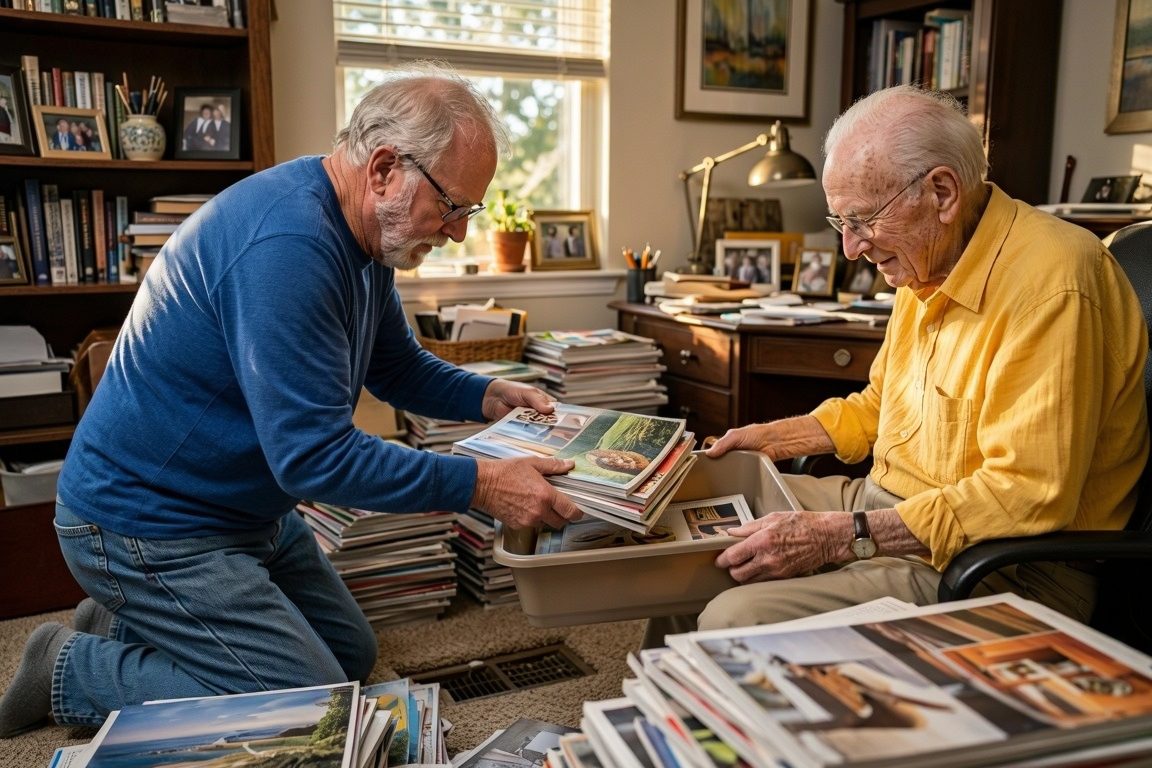
Step by step
What not to do
- Do not try to clean out the entire house or throw away large amounts of items without the person's consent. This will cause extreme distress, erode trust, and may lead to the person 're-hoarding' more aggressively to regain control.Instead, focus on one small, high-risk area at a time and involve the person as much as possible.
- Do not argue about the value of items. The person may believe that old newspapers are valuable or that a broken lamp will be fixed. Arguing will only increase their anxiety and resistance.Instead, acknowledge their attachment: 'I see this is important to you. Let's keep it safe here.' Then redirect to the safety issue.
- Do not use shame or blame. Phrases like 'This place is a mess' or 'You are a hoarder' will make the person defensive and more attached to their items.Instead, use 'I' statements about your feelings: 'I am worried about you getting hurt.' This keeps the focus on care, not criticism.
- Do not involve the person in decisions about discarding items if they are in the middle or later stages of dementia and lack insight. They may become overwhelmed or agitated.Instead, make the decision yourself for safety items, and do it quietly. For example, remove expired food from the fridge while they are in another room, and do not mention it.
- Do not call adult protective services or the fire department as a threat or punishment. This will destroy trust and may lead to involuntary interventions that are traumatic.Instead, call them as a collaborative resource when you need help, and explain that you are using a harm reduction approach.
- Do not expect the person to change their hoarding behavior. The goal is not to stop the hoarding, it is to keep them safe despite the hoarding. Accepting this will reduce your frustration and help you focus on what you can actually achieve.
Key points
- Harm reduction means reducing the dangerous consequences of hoarding, not stopping the hoarding itself.
- Focus on immediate safety risks: blocked exits, fire hazards, spoiled food, and fall risks from piles.
- Use calm, safety-focused language. Avoid words like 'hoarding' or 'mess.'
- Involve the person when possible, but remove dangerous items discreetly if they lack insight.
- Create 'safe zones' where the person can keep items without risk.
- Seek help from community agencies when the risk is high and you cannot manage alone.
Videos
 Hoarding Disorder in Geriatric PatientsThis video explains the harm reduction framework in detail, including the risk-capacity model that helps you decide when to intervene and how.
 Hoarding Behaviors Insights and InnovationsOffers practical innovations for addressing hoarding in seniors, including how to work with community agencies and reduce resistance.
 160. 5 Quick Tips for Dementia Caregivers About Hoarding BehaviorsProvides quick, actionable tips that align with harm reduction, such as focusing on fire safety and spoiled food rather than overall clutter.
 How Hoarding Can Impact Decision MakingHelps you understand why a person with dementia may not be able to make safe decisions about their belongings, reinforcing the need for a harm reduction approach.
2 more videos
 Ep. 282: Unpacking Hoarding and Brain Health: A Fresh Approach to Understanding and CareExplores the brain health aspects of hoarding and offers a compassionate, non-judgmental framework for caregivers.
 What to do when a person with dementia refuses care: 6 simple strategiesWhile not specifically about hoarding, this video teaches strategies for handling refusals that are directly applicable when a person resists your safety interventions.
Practical tools
6
The 'Safety First' Script
A set of phrases to use when you need to move or remove items. Say: 'I am worried about the stove because it could catch fire. Can we move these papers to the table?' Or: 'The path to the bathroom is blocked. Let's make a clear path so you don't fall.' Always lead with a safety concern, not a judgment about clutter. If they resist, say: 'I hear you. This is hard. Let's just move one thing for now.'
The 'Safe Zone' Setup
Designate one or two areas in the home where the person can keep as many items as they want, a corner of the living room, a shelf, or a small table. Use a piece of tape or a small rug to mark the boundary. Explain: 'This is your special spot. Everything in this spot is yours to keep. The rest of the room needs to be clear so we can walk safely.' This gives them control while containing the clutter.
The 'One-In, One-Out' Rule (Gentle Version)
If the person is still acquiring new items, try a gentle version of this rule. When they bring something new home, say: 'That is nice. Where would you like to put it? Maybe we can find a spot for it in your safe zone.' If the safe zone is full, offer to help them choose one item to move to a storage bin or to give away. Do not force it, just offer the option.
Weekly Food Safety Check
Set a weekly reminder to check the refrigerator and pantry. Use a small notebook to track what is in there. When you find spoiled food, remove it when the person is not watching, or say: 'I am going to take out this old milk so it doesn't make us sick. I will get fresh milk tomorrow.' Replace the item if possible to reduce the sense of loss.
The 'Avalanche' Prevention Kit
For tall piles that could fall, use lightweight bins or baskets to contain items. Place them on the floor or on low shelves. Say: 'Let's put these things in this bin so they don't fall on you.' This reduces the risk of injury without discarding anything. You can also use furniture anchors to secure heavy shelves to the wall.
Community Resource List
Create a list of local agencies that can help:
Keep the numbers handy. Call them for advice before a crisis. They can often do a home safety assessment without removing items, and they are trained in harm reduction.
Different situations
Early-stage dementia with high capacity
You can have more direct conversations about safety. Use the 'high risk, high capacity' approach: respect their right to make decisions, but gently point out risks. Say: 'I know you want to keep these things, but I am worried about the pile by the door. Can we work together to make a safe path?' They may be able to help you create a plan.
Middle-stage dementia with low capacity
The person may not understand safety concerns at all. You will need to take more action on your own. Use the 'high risk, low capacity' approach: remove dangerous items when they are not present, and do not discuss it. Focus on creating safe zones and clear pathways. You may need to involve adult protective services or a geriatric care manager to help with decision-making.
Spouse as caregiver
The emotional attachment to the home and to each other can be very strong. You may feel guilty about removing items or setting boundaries. Remember that harm reduction is an act of love, you are keeping them safe. Use 'we' language: 'We need to make the house safe for both of us.' Consider couples counseling or a support group for spouses of people with dementia.
Adult child as caregiver
You may have a history of conflict around the hoarding. Try to approach this as a new chapter. Do not bring up past clean-outs or arguments. Start fresh with a harm reduction lens. You may also need to set boundaries for your own well-being, such as limiting the time you spend in the home or asking for help from siblings or professionals.
Living in a facility or assisted living
Hoarding in a facility is often more about collecting small items like food, toiletries, or trinkets. The harm reduction approach still applies: focus on fire safety (no items near heaters), fall risks (clear pathways), and food spoilage. Work with staff to create a 'safe zone' in the person's room. Do not remove items without the person's knowledge, as this can cause distress and behavioral issues.
For the doctor
4
- If the person is on medications that may affect their behavior or cognition, ask the doctor whether any adjustments could help reduce anxiety or agitation that fuels hoarding.
- If you are considering guardianship or conservatorship due to high risk and low capacity, discuss this with a lawyer or elder law specialist, not just a clinician. The clinician can provide documentation of the person's capacity.
- If the hoarding is accompanied by severe depression, anxiety, or other mental health conditions, ask about treatment options such as therapy or medication. There is no FDA-approved medication for hoarding itself, but treating underlying conditions may help.
- If the person has a history of falls or injuries related to hoarding, ask the doctor for a home safety evaluation or a referral to an occupational therapist who can assess the environment.