Step by step
What not to do
- Don't give a gift that exceeds their current abilities. A board game with many rules, a new electronic device, a craft with tiny pieces, or a book with small print will frustrate them. Match the challenge to what they can still do, not what they once could.
- Don't give something childish or patronizing. Skip toys made for young children (baby rattles, plastic shape sorters) and choose adult-oriented sensory items instead, a soft scarf, a wooden fidget object, a nice hand cream.
- Don't give something overstimulating. Loud, flashing, or visually busy items can trigger agitation. Choose calm colors, gentle sounds, and simple patterns.
- Don't give a gift that highlights a lost ability or painful memory. A cookbook for someone who can no longer cook safely, a crossword puzzle for a former champion solver, or driving memorabilia for someone who gave up their license can feel like a quiet loss. Celebrate what they can still enjoy instead.
- Don't overlook physical safety. Watch for choking hazards, sharp edges, long strings or cords, and anything that could cause harm if used unsupervised. When in doubt, choose something plainly safe, a soft blanket, a large smooth ball, a sealed music player.
- Don't give food or candy without checking first. Many people with dementia have swallowing difficulties, dietary restrictions, or diabetes. Always ask the caregiver before bringing anything edible.
Key points
- Focus on the person's current abilities and lifelong interests, not on what they used to be able to do.
- Safety comes first: avoid small parts, sharp edges, and anything that could be a choking or strangulation hazard.
- Sensory gifts (soft textures, calming sounds, gentle scents) are almost always a safe and comforting choice.
- The best gifts often involve an experience or activity you can share, not just an object.
- When in doubt, choose something simple and comforting, a soft blanket, a music playlist, or a fidget box.
- Involve the person in the gift-giving process if possible, even in a small way, to give them a sense of purpose.
Videos
 What Are Dementia Friendly Gift Ideas?This video provides a broad overview of gift ideas for different stages, including practical and affordable options under $20 and $50.
 What Is A Good Gift For Someone Who Has Alzheimer's?This video emphasizes the importance of considering the person's abilities and interests, and warns against gifts that are out of their range of capabilities.
 What Is A Good Gift To Give For Someone With Dementia?This video offers a list of thoughtful gift ideas, including music playlists and comfortable clothing, and discusses how to involve the person in the gift-giving process.
 What are Dementia Friendly Gift ideas? Top 10 gift guide for someone with dementiaThis video covers a top 10 list of dementia-friendly gifts, including sensory items, fidget blankets, and simple music players, with practical tips for each.
2 more videos
 dementia gift guide 2018This video provides a range of gift ideas from previous years, including craft kits and memory boxes, and discusses how to modify activities for different stages.
 How to keep a dementia patient busyThis video focuses on activities and gifts that keep a person with dementia engaged, such as simple chores, puzzles with large pieces, and sensory boxes.
Background
Why Gift-Giving Changes with Dementia
When someone has dementia, their cognitive abilities shift over time, and a gift that was once perfect can become confusing or even upsetting. The goal of a gift is no longer to challenge or impress, but to connect, comfort, and engage at their current level. Think of it as a way to honor their history while meeting them where they are today. A gift that is too complex, like a board game with many rules or a craft kit with tiny pieces, can lead to frustration and a feeling of failure. On the other hand, a gift that is too simple or childlike can feel patronizing. The sweet spot is something that feels meaningful to them, taps into a past interest, and is within their grasp to enjoy without help.
The Core Principle: Know the Person and Their Abilities
The most important step is to think deeply about the person you are buying for. What did they love to do in their younger years? Were they a gardener, a musician, a cook, a handyman, or someone who loved to organize? Their past activities and interests are a goldmine for gift ideas. But you must also honestly assess their current abilities. A person in early-stage dementia might still enjoy a simple puzzle with large pieces or a music player they can operate themselves. Someone in middle or late stages may benefit more from sensory items, soft fabrics, a weighted blanket, or a fidget box with safe, interesting textures. If you are unsure, it is better to choose something very simple and safe rather than risk giving a gift that is out of their range of capabilities. As one expert put it, 'It's really disappointing to give a gift to a person with dementia that is out of the range of their capabilities. If in doubt, choose something else.'
Gifts as Tools for Connection, Not Just Objects
A gift for someone with dementia is often less about the object itself and more about the experience it creates. A playlist of songs from their youth can spark memories and conversation. A simple craft kit that you do together can be a shared activity. A box of familiar, safe items from around the house, like a soft scarf, a deck of cards, a squishy ball, can be a 'busy box' they can explore on their own. The best gifts are those that give them a sense of purpose, independence, or comfort. For example, a simple chore like polishing a spoon with a soft cloth can make them feel helpful and capable. The gift is the moment of engagement, not the thing itself.
Practical tools
3
Busy Box / Fidget Box
A personal collection of safe objects for restless hands:
Vary textures and shapes, avoid anything small enough to swallow. Keep it in a favorite chair and bring out during restlessness. A personal collection is often more meaningful than pre-made versions.
Life Story Memory Book
A large-format photo album or scrapbook with photos from their younger years paired with short, clear captions (e.g., 'Mary's wedding, 1962'). Add small mementos taped to the pages, a ticket stub, a pressed flower, a swatch of fabric. Best used together with a caregiver, flipping slowly and talking about each page. Familiar faces and objects often spark a smile even when verbal memory fades.
Personalized Music Playlist
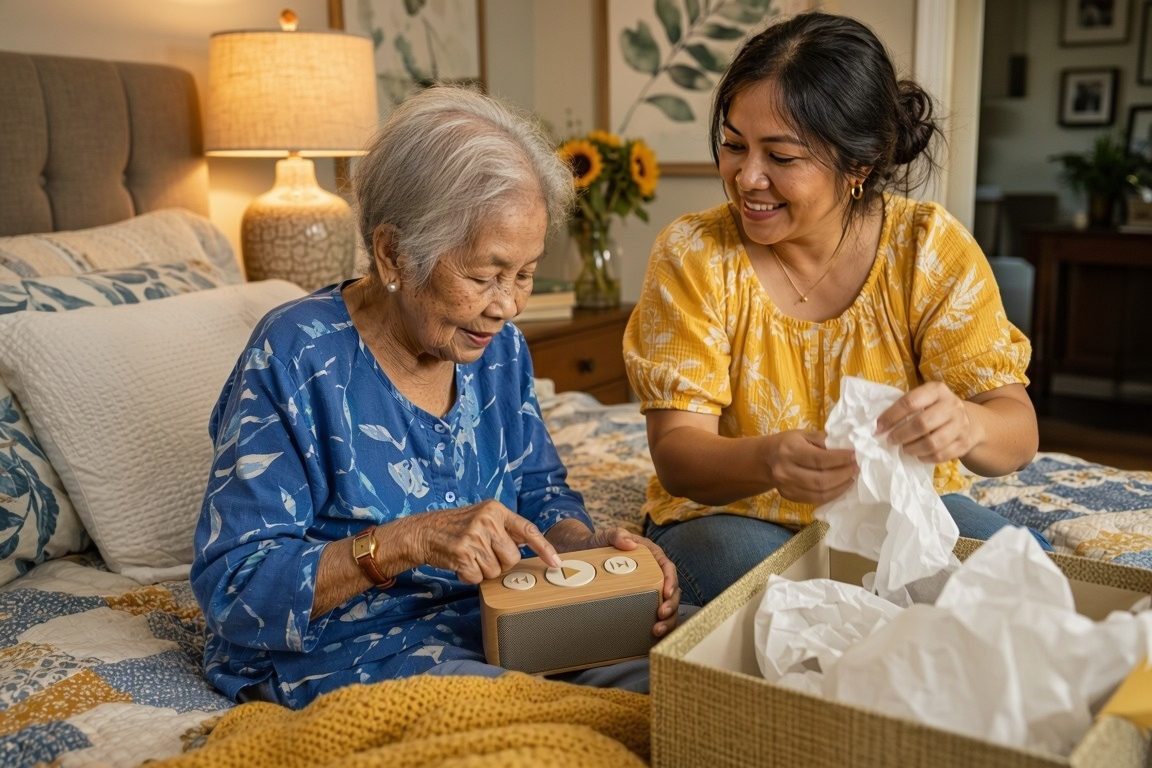
A simple, foolproof player loaded with 10–20 songs from their youth, their wedding song, hymns they loved, the band they saw live. Music often reaches people even when language doesn't. Use a player with just a play/pause button to avoid confusion.
Different situations
Early-stage Alzheimer's or dementia
The person can still learn new, simple things and may enjoy gifts that are slightly challenging but not frustrating. Consider a large-print crossword puzzle book, a simple board game with few rules (like a matching game), or a bird identification book with large photos. They might also appreciate a gift that helps them maintain independence, like a simple calendar with large dates, a pill organizer with a timer, or a 'memory book' with photos and names of family members. Avoid anything that requires multi-step instructions or new technology without a very simple interface.
Middle-stage dementia
Focus on sensory and comfort items. The person may have trouble with language and fine motor skills. Gifts should be safe, easy to use, and require no reading. Examples: a soft stuffed animal (like a weighted 'calm' cat or dog), a fidget blanket, a simple music player with one button, or a basket of soft fabrics to sort. Avoid anything with small parts, sharp edges, or complex steps. The goal is to provide comfort and gentle engagement, not to challenge. Also consider practical items like adaptive clothing (with magnetic closures or elastic waistbands) or a large-print clock that shows day/night.
Late-stage dementia
The person may be bedridden or have very limited interaction. Gifts should focus on comfort and gentle sensory stimulation. Examples: a soft, warm blanket, a hand massager, a CD of calming music or nature sounds, a lavender-scented pillow spray, or a simple mobile to hang above the bed. Avoid anything that requires any action from them, the gift is for their comfort, not for them to 'do' something. You can also give a gift to the caregiver, like a gift certificate for a massage or a meal delivery service, which indirectly benefits the person with dementia by reducing caregiver stress.
Lewy body dementia
Be very cautious with gifts that involve visual or auditory stimulation, as people with Lewy body dementia often have visual hallucinations and sensitivity to noise. Avoid busy patterns, flashing lights, or loud sounds. Stick to calm, simple items: a soft blanket, a plain-colored fidget toy, a quiet music player with gentle classical music. Also, be aware of motor symptoms, avoid gifts that require fine motor control or balance. A weighted lap pad can be helpful for tremors. Always observe their reaction to new items and remove anything that seems to cause confusion or agitation.
Vascular dementia
People with vascular dementia may have more variability in their abilities from day to day. Choose gifts that are flexible and can be used at different levels. For example, a simple puzzle with large pieces can be done on good days and just looked at on harder days. A music player with a simple on/off switch is good for any day. Avoid gifts that require a consistent level of attention or memory. Also, be aware of physical limitations, if they have had a stroke, choose gifts that can be used with one hand or while seated. Comfort items like a soft robe or slipper socks are always safe.
Common questions
10
How can a dementia-friendly newspaper or comfort kit help with reminiscence and connection?
A dementia-friendly newspaper or comfort kit can spark reminiscence by using large, familiar headlines and sensory items like soft fabrics or simple puzzles, giving you a gentle way to share a moment of connection as you look through them together. Try setting it on a tray during a quiet afternoon, pointing out one or two pictures or textures, and waiting for their response.
How do I create a healthcare binder for my loved one with dementia?
To create a healthcare binder, gather a simple three-ring binder with tab dividers labeled for sections like ‘Medications’ and ‘Doctor Visits,’ then slip in only the most recent medical records and a contact list. Keep it in a visible spot in your kitchen so you can grab it for appointments, updating it every few months with a single sentence per entry.
What clothing features and strategies make dressing easier for someone with dementia?
Look for clothing with Velcro or magnetic closures instead of buttons and zippers, soft stretchy fabrics that slide on easily, and elastic waistbands to reduce struggle. A simple strategy is to offer just two shirt options in the morning and lay them out in the order they go on, so your loved one feels a sense of choice without overload.
Should a person with dementia keep the right to make personal choices about food and daily life?
Yes, letting your loved one make simple choices about food and daily routines, like picking between two snacks or deciding when to take a walk, can give them a comforting sense of control and dignity. You can guide this by offering only safe, appealing options, and always respecting their ‘no’ with a gentle backup plan.
How can I help a person with dementia choose a product in a store?
When helping them choose a product in a store, hold up just two similar items and say something like, ‘This scarf is blue, and this one is green, which feels nicer to you?’ Keep your voice calm and give them plenty of time to look or touch, then follow their lead even if it takes a long moment.
Which type of transfer belt should I use to assist a person with dementia safely?
For safe transfers, use a gait belt with a padded handle that you can firmly grip around their waist, ensuring it’s snug but not tight enough to cause discomfort. Always stand close to them, bend your knees, and move slowly while talking them through each step to keep them calm and balanced.
Which type of transfer belt should I use to assist a person with dementia safely and comfortably?
A gait belt with a padded handle and a quick-release buckle is best for both safety and comfort, as it gives you a secure grip without digging into their skin. Adjust it so you can slip two fingers between the belt and their body, and guide them with short, calm instructions like ‘Now we stand up slowly.’
What features make a book engaging and accessible for someone with dementia?
A book for someone with dementia should have large, clear text, high-contrast pictures of familiar scenes like gardens or pets, and sturdy, easy-to-turn pages with no small flaps or pop-ups. Choose one with a single calming image per page and a simple, repetitive theme so they can enjoy it without feeling overwhelmed.
What types of music are best and what should be avoided?
The best music is familiar, slow-paced songs from their young adult years (like 1940s or 1950s ballads), as these often trigger happy memories without agitation. Avoid loud, fast, or complex music with sudden shifts in volume or tempo, which can cause confusion or anxiety.
How should gift-giving change for seniors with dementia or Alzheimer's?
Gift-giving should shift from complex or memory-based items (like puzzles or photo albums with many captions) to sensory, present-focused gifts like a soft lap blanket, a scented hand lotion, or a simple fidget toy you can explore together. The most important change is to focus on the joy of the moment you share, not the gift itself, and to avoid any expectations about remembering the gift later.
For the doctor
4
- If you are considering a weighted blanket or weighted lap pad, ask the doctor if it is safe for your loved one, especially if they have respiratory issues, circulation problems, or are at risk of falls.
- If you want to give a gift that involves a new medication or supplement (like a lavender oil diffuser or a melatonin spray for sleep), discuss with the doctor first to ensure it won't interact with their current medications.
- If you are considering a gift that involves physical activity (like a simple exercise band or a walking stick), ask the doctor if it is appropriate for their current physical condition and fall risk.
- If you are thinking of a gift that involves food or drink (like a special tea or a candy), check with the doctor about dietary restrictions, swallowing difficulties, or interactions with medications.