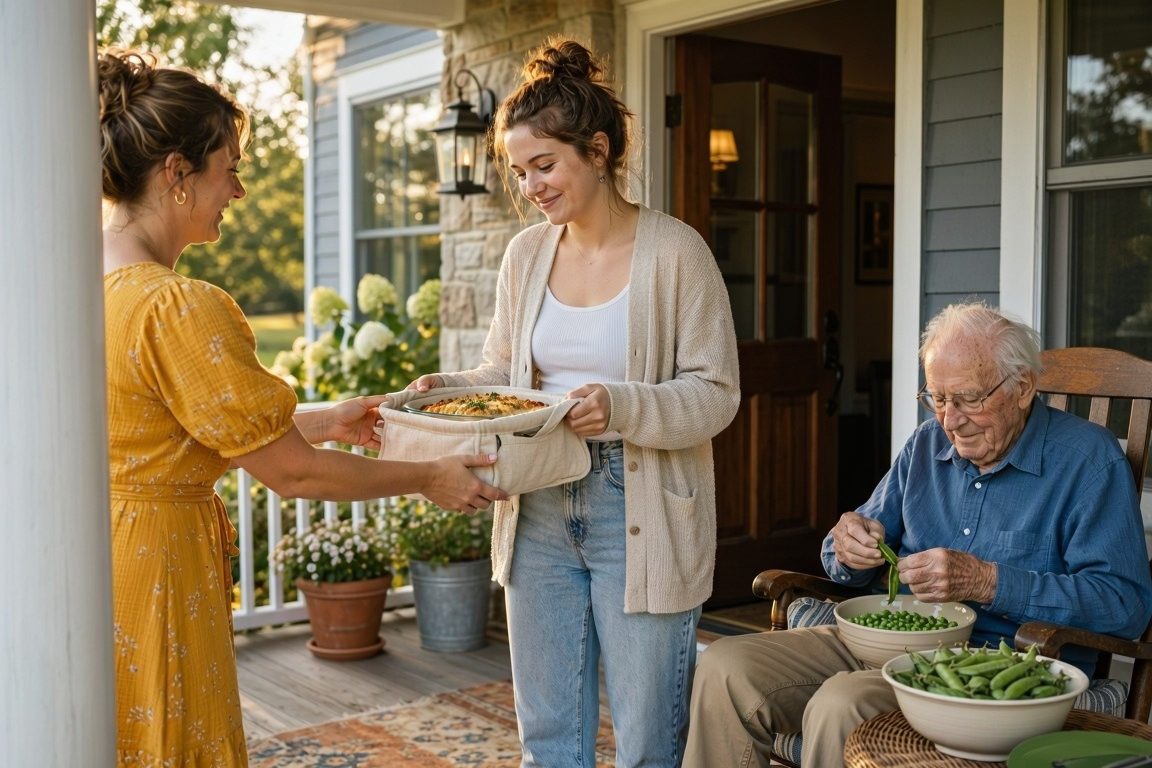
Step by step
What not to do
- Do not offer help in vague terms like 'let me know if you need anything' or 'call me if there's anything I can do.' Always come with a specific offer, date, and task.
- Do not give a gift that adds to the caregiver's workload, such as a high-maintenance plant, a complicated recipe kit, a pet, a book they have no time to read, or anything requiring scheduling, setup, or assembly.
- Do not give a generic or impersonal gift like a mug saying 'World's Best Caregiver,' a one-size-fits-all spa set, or a generic gift basket.Instead, choose something reflecting their specific interests or personality.
- Do not give a gift poorly matched to the person's stage of dementia, such as a complex puzzle, a game with many rules, clothing with confusing fasteners, or a device with a steep learning curve.
- Do not break a promise. If you say you will sit with their loved one on Saturday, show up on time, stay the full window, and be fully present, not on your phone or rushing out early.
- Do not offer once and then disappear. Commit to staying in regular, low-effort contact: a short check-in text every week, a monthly visit, or a recurring slot on the care calendar.
Key points
- The most valuable gift is time: offer specific, concrete help like sitting with their loved one for a few hours.
- Practical gifts that take tasks off the caregiver’s plate, like lawn service, meal delivery, or house cleaning, are deeply appreciated.
- Gifts that help the caregiver reconnect with their own identity (hobbies, interests, self-care) are restorative.
- Avoid vague offers; instead, make a specific plan and follow through reliably.
- Coordinate with other friends or family to create ongoing support, not just a one-time gesture.
- A heartfelt note of recognition and appreciation costs nothing but can mean everything.
Videos
 How to enjoy the holidays as a dementia caregiverOffers practical tips for caregivers to reduce holiday stress, which can inform gift-givers about what would help most during that season.
 What are Dementia Friendly Gift ideas? Top 10 gift guide for someone with dementiaProvides ideas for gifts for the person with dementia, which indirectly helps the caregiver by reducing frustration and creating moments of joy.
 Affordable gifts for dementia caregivers- 2018Directly addresses affordable, thoughtful gifts for caregivers, including time, practical help, and comfort items.
 What Is A Good Gift To Give For Someone With Dementia?Helps gift-givers choose appropriate items for the person with dementia, reducing caregiver burden from managing unsuitable gifts.
2 more videos
 Christmas Presents For Dementia PatientsSeasonal gift ideas for the person with dementia that are safe and engaging, which can make holidays easier for caregivers.
 What Are Dementia Friendly Gift Ideas?General guide to dementia-friendly gifts, useful for anyone wanting to support both the caregiver and their loved one.
Background
Why Caregivers Struggle to Accept Help
Many caregivers feel they should be able to handle everything alone, or they worry that asking for help means they are failing. They may also be unsure what would actually help because their days are so full of tasks that they cannot step back to think. This is why a vague offer like 'let me know if you need anything' rarely gets used, it puts the burden on the caregiver to figure out what you can do. Instead, a specific, concrete offer or gift removes that mental load and makes it easy to say yes.
The Emotional Weight of Caregiving
Caring for someone with dementia is emotionally and physically draining. Caregivers often experience guilt, frustration, and isolation. They may feel they have lost their own identity, hobbies, and connections. A gift that helps them reconnect with who they are outside of caregiving, even for an hour, can be profoundly restorative. Research shows that caregivers who feel seen and supported are better able to find joy in their role and provide better care.
What Makes a Gift Truly Useful
The best gifts address the caregiver's specific situation: their loved one's stage of dementia, the caregiver's own interests, and the practical gaps in their day. A gift that works for one caregiver might not work for another. For example, a gift card for takeout is wonderful for someone who never has time to cook, but less useful for a caregiver who already has meals covered. The key is to observe, ask gently, or choose gifts that are universally helpful, like time off, household help, or something that brings comfort.
Practical tools
4
The Specific Offer Script
Use concrete, no-guilt language naming a date, time, and task. Example: 'I have two hours free this Saturday afternoon. I would love to sit with your mom so you can go for a walk or run errands, would that work?' or 'I am dropping off dinner on Thursday at 6. Any allergies or foods to avoid?'
The Respite Care Gift Certificate
Purchase a gift certificate from a local licensed home care agency for two to four hours of professional in-home respite care, and present it with a note: 'Use this for a few hours of time for yourself: I have already arranged it with [agency name].' Removing the research, phone calls, and scheduling is the real gift.
The Shared Care Calendar
Set up a free online calendar on MealTrain.com, LotsaHelpingHands.com, or a private group chat, inviting the caregiver's circle to sign up for recurring slots:
This turns your one-time gesture into a sustainable, coordinated system.
The Memory Playlist
Create a playlist of 15 to 20 songs popular during the person with dementia's teen and young adult years (roughly ages 15 to 25) using a free streaming service. Load onto a simple, dedicated music player with large buttons, an iPod Shuffle, basic MP3 player, or small Bluetooth speaker with clearly labeled controls. Music from this era often calms agitation and boosts mood.
Different situations
For a spouse caregiver (vs. adult child)
Spouse caregivers often feel a deep sense of loss and identity change. Gifts that help them reconnect with their own interests, like a hobby kit, a date night gift card (if they can arrange respite), or a couples’ counseling session, can be especially meaningful. Adult children may appreciate practical help like lawn care or a cleaning service, as they often juggle caregiving with work and their own family.
For early-stage vs. late-stage dementia
In early stages, the person with dementia can still engage in simple activities. Gifts like a bird feeder, a large-print puzzle book, or a music player can be shared. In late stages, focus on comfort items for the caregiver: a weighted blanket, a journal, or respite care. Avoid gifts that require the loved one to participate actively.
For a caregiver living far away
If you cannot be there in person, consider hiring a local service to mow the lawn, clean the house, or deliver meals. You can also send a gift card for a grocery delivery service or a subscription to a meal kit. A video call with a specific offer to listen can also help, say, 'I have an hour this evening, tell me how you’re really doing.'
For a caregiver who is also working full-time
This caregiver is likely stretched thin. Gifts that save time are key: a house cleaning service, a lawn care subscription, or a gift card for a restaurant that delivers. Also consider a subscription to a meditation app or a few sessions with a therapist to help manage stress.
For a caregiver whose loved one is in a facility
The caregiver may still feel guilt and exhaustion from visiting and advocating. Gifts that help them recharge are important: a spa gift certificate, a book, or a subscription to a streaming service. Also consider a gift that makes visits easier, like a comfortable chair for the facility room or a photo album to share.
For the doctor
3
- If you are considering giving a gift that involves medication management (like a pill organizer or a reminder service), discuss with the caregiver’s clinician first to ensure it aligns with the care plan.
- If you want to give a gift that involves financial planning or legal help (like a consultation with an elder law attorney), suggest this to the caregiver and recommend they discuss it with their own financial advisor or lawyer.
- If the caregiver is showing signs of severe depression or burnout, gently encourage them to speak with a doctor or mental health professional. A gift of therapy sessions is thoughtful, but the caregiver should choose their own therapist.