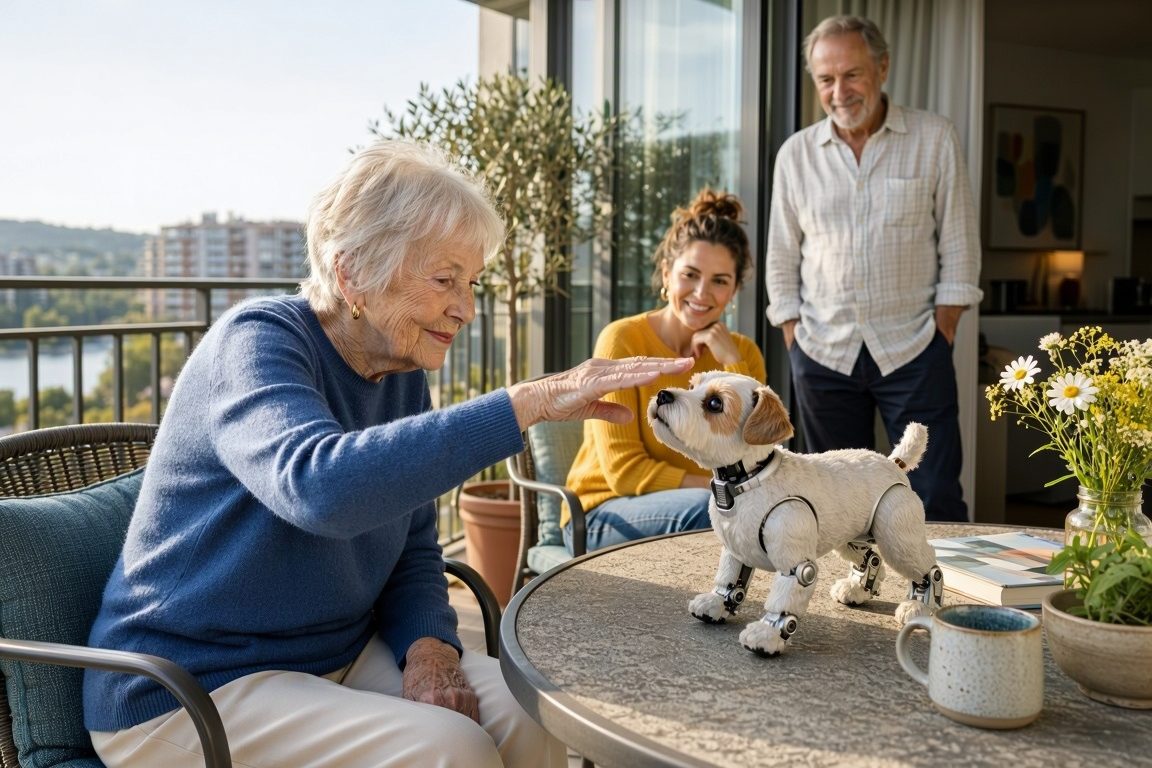
Step by step
What not to do
- Don't force the pet on them; if uninterested, set it aside and try later.
- Don't correct them if they believe the pet is real; this causes confusion and distress.
- Don't choose a pet with loud or startling sounds; opt for quiet sounds or turn the volume off.
- Don't leave the pet unattended if it has small parts like loose eyes or accessible batteries.
Key points
- Robotic pets and stuffed animals can reduce anxiety, agitation, and loneliness in people with dementia.
- Choose a realistic, soft, and cuddly pet, avoid artificial or toy-like appearances.
- Introduce the pet casually and positively; if they ask if it's real, respond with an open-ended question.
- Use the pet during times of restlessness, especially late afternoon (sundowning).
- You don't need to spend a lot, a simple stuffed animal can be just as effective as an expensive robot.
- Always supervise initially to ensure safety, and adapt the approach based on the person's stage and type of dementia.
Videos
 Just try it! A stuffed animal brings comfort to a dementia patient.Shows a real-life example of introducing a stuffed cat to a person with dementia, including the caregiver's gentle approach and the positive reaction.
 How To Use Baby Doll Therapy For Dementia And Alzheimer’sExplains the principles of doll therapy, which are very similar to robotic pet therapy, offering comfort, purpose, and reduced anxiety.
 Christmas Presents For Dementia PatientsIncludes robotic pets as a gift idea, with practical tips on choosing and presenting them.
 dementia gift guide 2018Features robotic pets as a top gift category for comfort, with caregiver testimonials.
2 more videos
 What are Dementia Friendly Gift ideas? Top 10 gift guide for someone with dementiaLists robotic pets as a soothing gift, with advice on how to introduce them without causing confusion.
 Managing Sleep & Sundowning in Dementia CareDiscusses how calming activities like using a robotic pet can help reduce sundowning symptoms.
Background
Why Robotic Pets Work for Dementia
People with dementia often feel unsafe, lonely, or disconnected from their surroundings. Their brains may struggle to process complex social cues, but the simple, repetitive act of holding, stroking, or talking to a soft creature can be deeply soothing. Studies show that robotic pets, and even regular stuffed animals, can reduce anxiety and agitation, increase happiness levels, and encourage more social interaction with others. The key is that these companions provide a non-judgmental, predictable presence that doesn't demand anything from the person. They offer a sense of purpose: the person can care for the pet, talk to it, or simply hold it, which can ease feelings of fear and isolation.
What Makes a Good Robotic Pet?
Not all robotic pets are created equal. Research with older adults and people with dementia shows that realistic, cute, and cuddly robots are preferred. Artificial-looking, creepy, or toy-like robots are often rejected. A pet that feels soft, has gentle movements (like a wagging tail or purring), and makes simple sounds (like a bark or meow) tends to be most successful. However, you don't need to spend a lot of money, many people respond just as well to a simple stuffed animal. The goal is comfort, not technology. A soft, warm, and familiar-looking animal can trigger positive memories and emotions, especially if the person once had a pet.
How It Reduces Anxiety and Sundowning
Late-day restlessness, known as sundowning, often stems from overstimulation, tiredness, or boredom. A robotic pet can help by providing a calming, repetitive activity that soothes the brain. The act of petting, holding, or talking to the animal can lower stress hormones and shift focus away from anxiety. Some caregivers find that introducing a robotic pet in the late afternoon helps prevent the agitation that often comes with sundowning. It gives the person something to do with their hands and a comforting presence to focus on, which can help them feel more in control of their emotions.
Practical tools
5
Phrases for Introducing the Pet
Say: 'I brought you a little friend. Look how soft she is.' If they ask if it's real, respond: 'Do you want her to be real? What would you name her?' If anxious: 'She's here to keep you company. You can pet her whenever you like.' Avoid saying 'it's fake' or 'it's a toy.'
Checklist for Choosing a Pet
Product Recommendation: Joy for All Companion Pets
Realistic robotic cats and dogs with soft fur, gentle movements, and responsive sounds. Used in memory care. Priced $100–$150. Cheaper alternative: high-quality stuffed animal from GUND or Melissa & Doug.
Activity: 'Caring for' the Pet
Set out a basket with
Invite them to 'feed' or 'brush' the pet with prompts like 'I think she's hungry, can you give her some food?' for a calming, purposeful activity.
Simple Response Log
Keep a log for 3–5 days: date, time, mood before pet, reaction (positive, neutral, negative), and changes in anxiety. Example: 'Day 1, 4pm, restless, held pet 5 min, calmed down.' Helps spot patterns.
Different situations
Early-stage dementia (still living at home, independent)
The person may be more aware that the pet is robotic. Introduce it as a 'companion' or 'fun gadget' rather than a real pet. Let them choose the type and color. They may enjoy showing it to visitors. Use it as a conversation starter or a way to reduce boredom during quiet times.
Middle-stage dementia (needs more assistance, may be in day center or memory care)
This is often the most responsive stage. The person may believe the pet is real, which is fine. Use it to reduce sundowning and agitation. Staff at day centers can incorporate it into group activities, pass the pet around, have everyone 'pet' it. At home, keep it in a consistent spot so they can find it when anxious.
Late-stage dementia (bedridden, limited communication)
Focus on tactile comfort. Place the pet on their lap or beside them in bed. The soft texture and gentle weight can be soothing. Don't expect interaction, just having it nearby can reduce restlessness. Choose a pet that is easy to clean and has no hard parts. If they try to put it in their mouth, choose a pet that is safe and non-toxic.
Lewy body dementia (visual hallucinations, fluctuating cognition)
Be cautious. The person may misinterpret the pet's movements as threatening or hallucinate that it is moving in a scary way. Introduce it very slowly, in good lighting, and with your hand on it. If they seem frightened, remove it immediately. A simple, non-moving stuffed animal may be a safer choice.
In a memory care facility or adult day center
Coordinate with staff. They can help introduce the pet during calm times and monitor for positive effects. Label the pet with the person's name to avoid mix-ups. Some facilities have communal robotic pets, ask if they already use them. If the person is in a shared room, a pet can provide a sense of personal space and comfort.
Common questions
6
What features do people with dementia and care partners prefer in social robots, and what is emotional alignment?
People with dementia and care partners prefer soft, realistic, and cuddly robots that feel like a real pet. Emotional alignment means the robot matches your loved one's mood, calm when they are anxious and playful when they are cheerful.
What practical and emotional benefits can a dementia-trained dog provide?
A dementia-trained dog can reduce your loved one's loneliness by offering unconditional, predictable affection, and it can lower your stress by providing a safe, non-judgmental companion that never needs walking or feeding.
What is emotional alignment and why is it important for social robots in dementia care?
Emotional alignment is when the robot's behavior matches your loved one's current emotional state, which is important because a mismatched response, like a playful bark during agitation, can increase anxiety instead of soothing it.
Does a more interactive social robot improve engagement and mood in people with dementia?
Yes, studies show that a more interactive robot can improve engagement and mood, but a simple stuffed animal works just as well if your loved one prefers quiet comfort over noise and movement.
Should I use a therapy doll or interactive pet, and how do I assess if it's appropriate?
Start with a realistic, soft stuffed animal first, because it's inexpensive and less confusing. If your loved one ignores it or seems distressed, switch to a therapy doll with no mechanical parts, always observe their reaction to know what soothes them.
Can an emotionally intelligent social robot help my loved one with dementia feel better?
An emotionally intelligent robot can help if it responds gently to your loved one's cues, such as purring when held or staying still during anxiety. For tired families, the simplest option, like a soft cat that doesn't need charging, is often the most reliable.
For the doctor
5
- If your loved one has a history of severe anxiety or panic attacks, ask the doctor if a robotic pet might trigger or worsen symptoms.
- If the person has a swallowing disorder or tends to put non-food items in their mouth, ask about safe materials and supervision needs.
- If your loved one is on medications that cause drowsiness or confusion, discuss whether introducing a new stimulus could interfere with their routine.
- If the person has a latex allergy or sensitive skin, check the materials of the pet before purchasing.
- If you're considering a robotic pet for someone with a history of aggression toward objects, ask the care team for guidance on safe introduction.