Step by step
What not to do
- Do not expect the robot to replace human interaction. It is a tool for comfort and engagement, not a substitute for your presence. If you rely on it too heavily, your loved one may feel more isolated. Use it as a supplement to your visits and conversations.
- Do not force the robot on someone who is not interested. If they push it away or seem confused, back off. Forcing it can create negative associations.Instead, try again later with a different approach, such as placing it in their room without comment and seeing if they pick it up on their own.
- Do not buy a robot that looks too toy-like or has flashing lights or loud noises. These can be overstimulating or even frightening for someone with dementia. Stick to realistic, gentle designs that mimic a real pet's behavior.
- Do not assume the robot will work for everyone. Some people simply do not connect with it, and that is okay. If your loved one prefers a real pet or a different kind of comfort object, honor that preference. The goal is their well-being, not the device.
- Do not spend a lot of money on a high-end robot without trying a simpler version first. A $100 Joy for All pet is a good investment, but a $20 stuffed animal can tell you if the concept works for your loved one. You can always upgrade later.
- Do not forget to check with your loved one's facility or home care agency. Some assisted living or memory care communities have a 'pet therapy' program that includes robotic pets, and they may allow you to donate one for communal use. This can reduce cost and increase social engagement.
Key points
- Robotic companion pets can provide real comfort and reduce agitation for many people with dementia, but they are not a substitute for human interaction.
- Medicare and Medicaid do not cover robotic pets as a medical expense, but low-cost stuffed animals can work nearly as well.
- Introduce the robot gently and model how to interact with it, do not force it.
- Choose a realistic, soft, and cute robot; avoid toy-like or creepy designs.
- Use the robot to redirect during anxious moments by asking for 'help' with the pet.
- Check with your loved one's facility or hospice team for potential funding or communal use options.
Videos
 Just try it! A stuffed animal brings comfort to a dementia patient.Shows a real-life example of introducing a stuffed animal (not robotic) to a person with dementia. Demonstrates the gentle, patient approach and the emotional response. Useful for understanding the low-cost alternative.
 An Interview with Dr. Richard Caro Co-Founder of Tech-Enhanced LifeDiscusses the broader landscape of technology for aging, including the gap between available products and insurance coverage. Helps frame why robotic pets are not covered and what to expect from the tech market.
 Time with Teepa - What is new with Roon Dementia.Teepa Snow offers expert insight into dementia care, including the use of comfort objects. Her positive approach to care aligns with the gentle introduction method described in this article.
Background
Why a Robotic Pet Works for Dementia
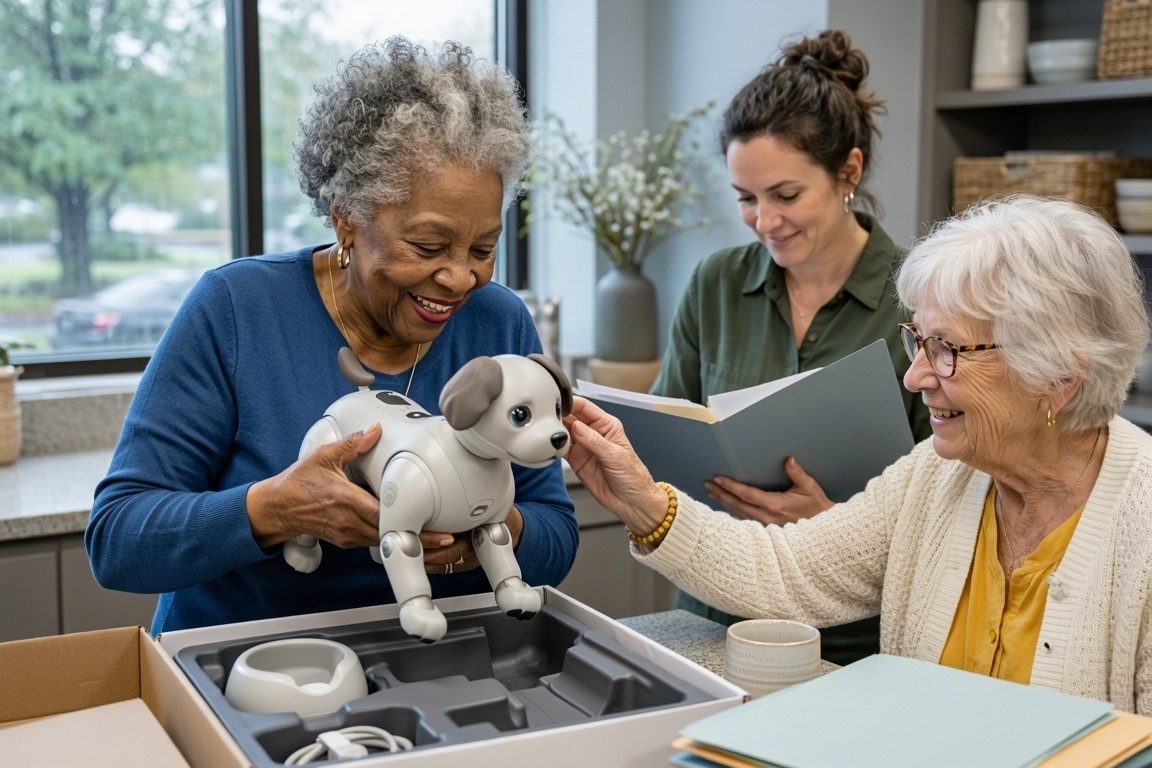
For someone with dementia, the world can feel confusing and isolating. A robotic pet offers something simple and safe: a soft, warm presence that responds to touch and sound without demanding anything in return. Research shows that older adults and their care partners respond positively to these robots, valuing them for companionship, interaction, and a sense of safety. The key is that the robot feels realistic and cuddly, people strongly prefer cute, lifelike animals over toy-like or creepy-looking ones. When the robot purrs or wags its tail in response to a stroke, it can trigger a comforting, familiar feeling, much like holding a real pet. This emotional alignment is powerful because it meets a deep need for connection without the risks of a live animal, such as falls from tripping over a pet or the stress of feeding and cleaning.
The Insurance Reality: Medicare and Medicaid
Here is the honest truth: Original Medicare (Part A and Part B) does not cover robotic companion pets. They are considered a 'comfort item' or 'recreational device,' not a piece of medical equipment like a walker or hospital bed. Medicare Part A covers hospice care, and while hospice teams sometimes use comfort items like stuffed animals, the cost of the robot itself is not reimbursed. Similarly, Medicaid coverage varies by state, but robotic pets are almost never listed as a covered benefit under state plans or managed care organizations. Some long-term care insurance policies may have a small 'durable medical equipment' allowance, but again, these devices rarely qualify. However, don't let this discourage you, there are practical ways to get one without breaking the bank, and the emotional benefits can be profound.
Practical tools
6
Joy for All Robotic Cat or Dog
The most well-known brand for dementia-friendly robotic pets. The cat purrs and meows when petted, the dog barks and wags its tail. Soft, realistic fur. Available on Amazon or directly from the manufacturer. Cost: around $100–$130. Not covered by insurance, but often worth the investment for the comfort it provides.
Low-Cost Stuffed Animal Alternative
If budget is a concern, a high-quality stuffed animal with realistic features (e.g., a plush cat or dog with soft fur and a gentle face) can work nearly as well. Look for one that is machine-washable and has no hard parts. Cost: under $20. Test this first before buying a robotic version.
Introducing the Robot: Script for Caregivers
Use these exact words when first showing the robot: 'I found this little friend who needs a home. She’s very gentle and loves to be petted. Would you like to hold her?' Then, as you pet the robot, say: 'See how she purrs? She likes you.' This gives your loved one a clear, positive frame for the interaction.
Redirecting with the Robot: A Quick Checklist
When your loved one is agitated: (1) Approach calmly. (2) Hold the robot in your hands. (3) Say, 'I need your help, this little dog is scared. Can you hold him?' (4) Place the robot gently in their lap. (5) If they accept, stay nearby and talk softly about the robot. This can shift their focus from anxiety to caregiving.
Cleaning and Maintenance Routine
Funding Options for Low-Income Families
If cost is a barrier, check with your local Area Agency on Aging or Alzheimer's Association chapter. Some have small grants or 'comfort item' funds for families. Also, consider asking family members to chip in for the robot as a gift. You can also look for used robotic pets on eBay or Facebook Marketplace, just ensure they are clean and functional.
Different situations
Late-stage dementia (bedridden or very low engagement)
Place the robot on the bed next to your loved one, within reach. Do not expect them to actively pet it, just having the soft fur and gentle sounds nearby can be soothing. You can also place the robot on their chest or stomach while you talk to them, as the warmth and weight can be calming.
Lewy body dementia (visual hallucinations or sensitivity to movement)
Be cautious. Some people with Lewy body dementia may find the robot's movements confusing or frightening. Start with a non-robotic stuffed animal first. If you try a robotic one, choose a model with very slow, gentle movements (like a cat that only purrs and does not move its head). Observe closely for any signs of distress.
Spouse caregiver vs. adult child caregiver
A spouse may feel that a robotic pet is 'silly' or 'not the same' as a real pet they once had. Acknowledge this feeling: 'I know it's not the same as your old cat, but maybe this little one can keep you company when I'm busy.' An adult child can frame it as a practical tool: 'Mom, this might help you feel less lonely when I'm at work.'
Living in a facility (assisted living or memory care)
Check with the facility first, some have rules about electronic devices or may already have a communal robotic pet. If allowed, label the robot with your loved one's name. Place it on their bed or a chair in their room. Staff can also use it to redirect during difficult moments. If the facility has a pet therapy program, ask if they can incorporate the robot.
Medicaid or low-income situation
Since Medicaid does not cover robotic pets, focus on low-cost alternatives. A stuffed animal is often just as effective. You can also ask your loved one's social worker or case manager if there are any 'comfort item' funds available through the state or local nonprofit organizations. Some hospice programs (covered by Medicare Part A) may provide a stuffed animal as part of their comfort care, but not a robotic one.
For the doctor
4
- Ask your loved one's doctor or neurologist: 'Is a robotic pet appropriate given my loved one's specific stage and type of dementia? Are there any risks, such as confusion or overstimulation, that I should watch for?'
- If your loved one has a history of seizures or is easily startled, ask: 'Could the robot's sounds or movements trigger a reaction? Should I choose a non-robotic stuffed animal instead?'
- For those on Medicaid, ask the case manager: 'Are there any state-funded programs or waivers that might cover the cost of a comfort item like a robotic pet? If not, can you recommend a low-cost alternative?'
- If your loved one is in hospice, ask the hospice team: 'Can you provide a stuffed animal or comfort item as part of the plan of care? Are there any resources for this?'