Step by step
What not to do
- Don't treat the robot as a replacement for human connection, it's a comfort companion, not a caregiver.
- Don't leave it unsupervised if the person mouths objects or is in later-stage dementia; fur, eyes, and small parts are choking or ingestion hazards.
- Don't keep pushing a robot that consistently causes fear, agitation, or distress, some people simply don't connect with them.
- Don't introduce the robot during confusion, sundowning, or agitation; wait for a calm, alert window so the first impression is reassuring.
Key points
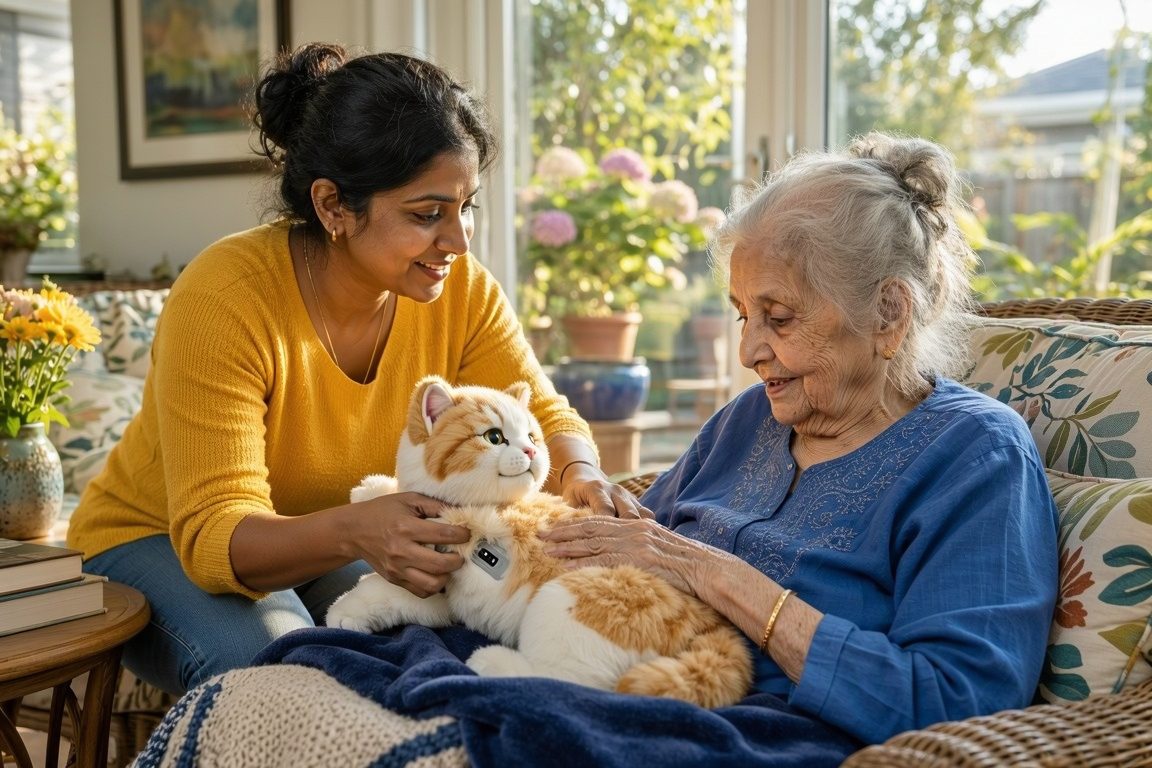
- People with dementia and their care partners prefer social robots that are realistic, cute, and cuddly, not artificial, creepy, or toy-like.
- The top uses for social robots are companionship, interaction, and safety.
- Introduce the robot slowly and in a calm setting; let the person approach it at their own pace.
- Pair the robot with other comforting items like a soft blanket to enhance its soothing effect.
- Avoid robots with loud or sudden noises; choose ones with gentle, predictable sounds.
- Always supervise use, especially in later stages of dementia, to ensure safety and comfort.
Videos
 What Is A Good Gift To Give For Someone With Dementia?This video discusses gift ideas that provide comfort, including mechanical cats and dogs, which are a type of social robot. It explains why these are well-received by people with dementia.
 Carrie Aalberts Founder & Creator of 'Dementia Darling'This video features a creator of dementia-specific products, which may include or relate to social robots or comfort items. It offers insight into what features are designed for this population.
 Christmas Presents For Dementia PatientsThis video suggests gifts that provide comfort and sensory stimulation, including robotic pets. It reinforces the idea that realistic, cuddly robots are a good choice.
 New Dementia Caregiver? Watch This!This video offers general advice for new caregivers, which can help frame how to introduce a social robot as part of a broader care routine.
2 more videos
 How to keep a dementia patient busyThis video provides activity ideas, and a social robot can be one of those activities. It helps caregivers think about how to integrate the robot into daily engagement.
 Enhancing Everyday Activities in Dementia CareThis video focuses on meaningful activities, and a social robot can be a tool for enhancing everyday life. It offers a framework for using the robot purposefully.
Background
Why Social Robots Can Help in Dementia Care
Persons living with dementia often experience fear, anxiety, and a sense of not feeling safe. This is especially true as their cognitive abilities decline and they may struggle to recognize familiar people or places. Social robots, especially those that look and feel like a real pet, can provide a soothing, non-judgmental presence. Research shows that most people with dementia respond positively to these robots, using them for companionship, interaction, and even as a source of comfort when they feel afraid. The key is that the robot must feel 'right' to the person: realistic, soft, and not creepy or toy-like.
What Care Partners and Persons with Dementia Actually Prefer
In studies involving older adults, care partners, and persons living with dementia, the highest-priority uses for social robots were companionship, interaction, and safety. People were drawn to robots that were cute, cuddly, and realistic, like a mechanical cat or dog that purrs or wags its tail. They disliked robots that looked artificial, creepy, or too much like a child's toy. The reasoning was very practical: if the robot didn't seem 'real' enough, it wouldn't be comforting or engaging. Care partners also valued robots that could help monitor safety, such as those that could alert someone if the person wandered.
The Emotional Alignment That Makes a Robot Work
A key finding from recent research is that social robots work best when they are 'emotionally aligned' with the person using them. This means the robot's responses, like purring when stroked, or making a sound when spoken to, should match the person's emotional state and needs. For example, a robot that offers a gentle purr when the person is anxious can help calm them. This emotional alignment is supported by a model called ACT (Attitude, Context, and Timing), which helps developers design robots that respond appropriately. For caregivers, this means choosing a robot that can offer simple, predictable, and comforting interactions rather than complex or unpredictable behaviors.
Practical tools
4
Joy for All Companion Pets
Robotic cat or dog with soft fur, natural-looking eyes, touch-responsive purrs/meows/barks, designed for older adults and people with dementia. $100–150 CAD.
High-contrast soft throw or fidget blanket
Pairs with the robot for comfort; choose red or high-contrast solid colors (avoid busy patterns) for easier visual recognition.
Picture-based daily routine chart
Includes 'robot time' after lunch or before bed using photos/icons. Predictability helps your loved one feel safe.
Familiar plush animal as backup
A gentle alternative if the robotic pet is too stimulating, rejected, or unaffordable; can later serve as a bridge to a responsive robot.
Different situations
Early-stage dementia (still living at home, independent)
In early stages, the person may enjoy a robot that can engage in simple conversation or respond to voice commands. Look for robots with interactive features like talking or playing games. However, ensure the robot does not feel too complex or frustrating. The focus should still be on companionship and comfort, not on cognitive challenge.
Late-stage dementia (non-verbal, bedridden, or in long-term care)
In later stages, choose a robot that is purely tactile and soothing, no complex interactions needed. A robotic cat or dog that purrs when stroked is ideal. Place it on the person's lap or beside them in bed. The robot's presence can reduce agitation and provide comfort even if the person cannot actively interact.
Lewy body dementia (visual hallucinations, fluctuating cognition)
Be cautious: some people with Lewy body dementia may misinterpret a realistic robot as a real animal or a hallucination. Introduce the robot very slowly and in good lighting. If the person seems confused or frightened, remove it immediately. Consider a robot that looks less realistic, like a cartoonish character, but still feels soft and cuddly.
Care partner is an adult child (vs. spouse)
Adult children may feel more comfortable introducing technology. They can research robots online and read reviews. They should also involve the person with dementia in the choice if possible, by showing pictures or videos. Adult children may need to reassure the person that the robot is a 'helper' not a replacement for their relationship.
In a facility (long-term care or assisted living)
Check with staff before bringing a robot. Some facilities have policies about electronics or may already have social robots available. If allowed, label the robot with the person's name and keep it in their room. Staff can help integrate the robot into daily routines, like during activities or before meals.
For the doctor
4
- Ask the doctor or occupational therapist: 'Is a social robot appropriate for my loved one's current stage of dementia? Are there any risks, such as confusion or agitation?'
- If the person has a history of hallucinations (especially in Lewy body dementia), ask: 'Could a realistic robot worsen hallucinations or cause distress? What features should I avoid?'
- If the person has difficulty swallowing or tends to put objects in their mouth, ask: 'Are there any choking hazards with this robot? Should I supervise use at all times?'
- If you are considering a robot with safety monitoring features (e.g., wandering alerts), ask: 'How reliable is this feature? Should I still use other safety measures like door alarms?'