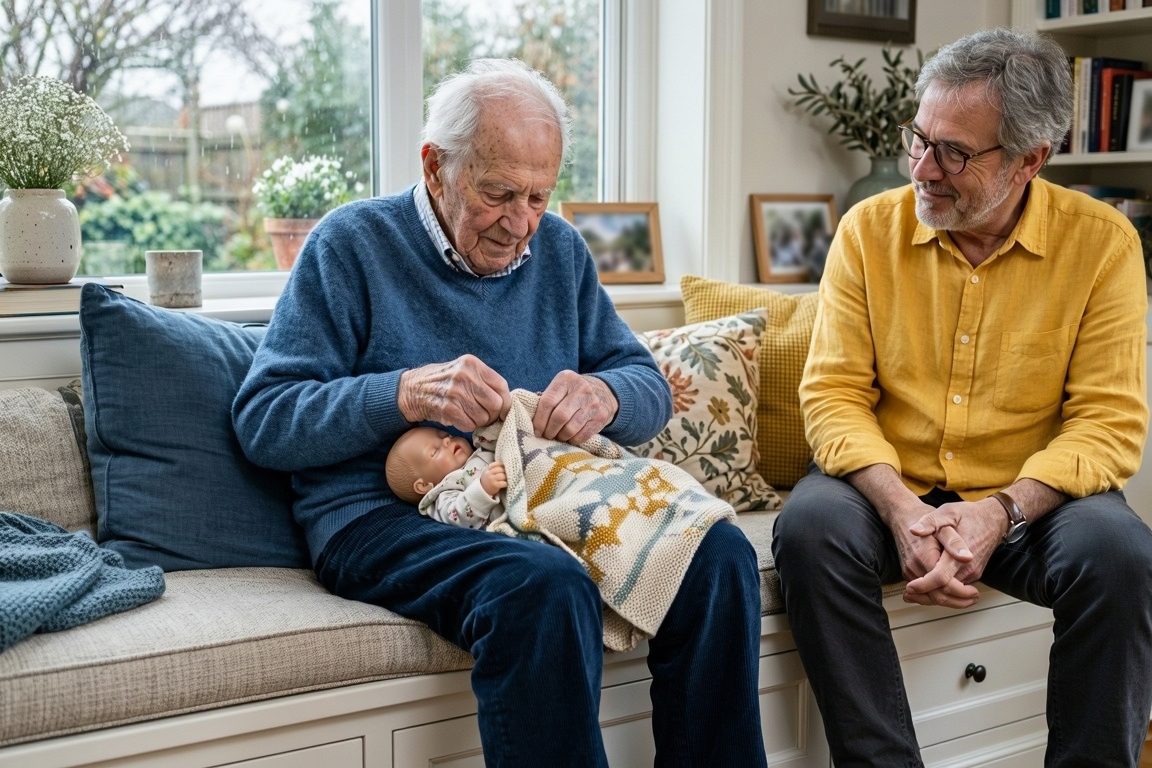
Step by step
What not to do
- Do not treat your loved one like a child, they are an adult with decades of life experience; this is a meaningful emotional activity, not a game or trick.
- Do not take the doll away abruptly during meals, bathing, or medical care; use a gentle transition like 'The baby is just napping in her basket' to avoid distress.
- Do not store the doll carelessly on the floor or in a toy box, keep it in a nice basket or special spot to honor the dignity of the activity.
Key points
- Doll therapy reduces agitation, wandering, and anxiety by tapping into deep nurturing instincts.
- Never tell your loved one the doll is not real, go along with their reality and use gentle, open-ended questions.
- Choose a quiet, realistic doll that weighs about five pounds and does not cry or make noise.
- Introduce the doll without pressure, let your loved one show interest on their own.
- Use the doll to create purposeful activities like folding clothes, feeding, or wrapping in a blanket.
- Pair doll therapy with calming sensory input like lavender lotion or a weighted blanket for deeper relaxation.
- If your loved one does not take to the doll, try a stuffed animal or a different calming activity.
- Doll therapy is most effective in later middle to late stages of dementia, but can be tried earlier with sensitivity.
Videos
 Does doll therapy for dementia really work?This video explains the research behind doll therapy and shows real-life examples of how it calms agitation and wandering.
 How To Use Baby Doll Therapy For Dementia And Alzheimer’sA step-by-step guide on introducing the doll, what to say, and how to handle common reactions from your loved one.
 How Does Doll Therapy Help Dementia?This video breaks down the emotional and neurological reasons why doll therapy works, including the role of purpose and touch.
 Baby Doll & Stuffed Animals ~TESTED, PROVEN Dementia Behavior FIXA practical demonstration of how to use both dolls and stuffed animals, with tips on choosing the right one and handling resistance.
2 more videos
 The Baffled Brain: Demystifying Dementia Episode 18 March 27 ,2021This episode discusses doll therapy as part of a broader approach to calming the baffled brain, including the use of therapeutic fibs.
 An Interview with Dr. Jennifer Stelter Co-Founder, CEO, & Creator of the Dementia Connection ModelDr. Stelter explains how doll therapy fits into the Dementia Connection Model, focusing on meeting emotional needs and reducing stress.
Background
What Is Baby Doll Therapy and Why Does It Work?
Baby doll therapy involves giving a person with dementia a lifelike baby doll to hold, care for, and interact with. This is not a game or a trick. It works because dementia often strips away a person's sense of purpose, control, and identity. The brain may lose recent memories, but deep emotional patterns, like the urge to nurture, to hold a baby, to feel needed, remain intact. When your loved one holds a doll, their brain may interpret it as a real infant, triggering feelings of warmth, responsibility, and calm. Research shows this can reduce agitation, wandering, and even the use of antipsychotic medications. It also lowers caregiver stress because it gives you a positive, shared activity that doesn't require arguing or correcting.
When to Introduce Doll Therapy and What to Expect
Doll therapy is most effective in the later middle stages or late stages of dementia, especially when your loved one is showing behaviors like anxiety, aggression, or restlessness. At this point, the person may already be searching for a baby or talking about a child they think needs care. You are not creating a false reality; you are meeting a real emotional need. The person may believe the doll is real, and that is okay. You do not need to correct them. In fact, telling them it is a doll can cause confusion and distress. Instead, go along with their reality. If they ask if it is real, you can say something like, 'Well, what do you think? What would you like to name her?' This approach, sometimes called a therapeutic fib, is not harmful, it is kind and supportive.
The Goal Is Comfort and Connection, Not Deception
The purpose of doll therapy is not to trick your loved one, but to offer a soothing, meaningful activity that reduces distress. When a person with dementia holds a doll, their brain releases calming chemicals. They may rock the doll, talk to it, or wrap it in a blanket. This can lower their heart rate and reduce feelings of loneliness or fear. For caregivers, it is a relief to see your loved one calm and engaged. You are not taking away their dignity, you are giving them a way to feel useful and loved. Many families report that doll therapy helps them reconnect with their loved one in a positive way, without the battles over memory or reality.
Practical tools
5
The Right Doll
A reborn-style or simple baby doll weighing about five pounds, with soft skin, closed eyes, and a peaceful expression; avoid hard plastic, open eyes, or any mechanical or noisy features. Medical supply stores and online reborn-doll sellers are good sources.
Doll Accessories Kit
A small basket holding
the repetitive motions of folding, wrapping, and sorting these items are deeply calming and give your loved one something purposeful to do with their hands.
Calming Phrases to Say
A small mental script: 'Look who needs a cuddle today' when presenting the doll, 'What would you like to name her?' if asked whether it is real, 'The baby was waiting for you' to redirect anxiety, and 'She is happy just being near you' if they set the doll down.
Lavender Lotion
A gentle, lavender-scented lotion rubbed softly on your loved one's hands or arms while they hold the doll; the scent is calming and the light massage adds soothing sensory input.
Light Weighted Blanket
A blanket weighing about 5 to 10 pounds draped across your loved one's lap while they hold the doll; the gentle, even pressure mimics a comforting hug and helps them settle and stay calm for longer stretches.
Different situations
Late stages of dementia / in a memory care facility
In late stages, your loved one may not be able to hold the doll for long or may forget it quickly. Place the doll in their line of sight or gently place it in their arms while they are seated. Use very simple language: 'Here is your baby. She loves you.' Staff in a facility should be trained to use the same doll and the same phrases to maintain consistency. The doll can also be used during personal care, for example, while bathing, you can say, 'Let's wash the baby's hands first, then yours.' This can reduce resistance to care.
Early or middle stages / at home with a spouse
In earlier stages, your loved one may be more aware and may feel embarrassed or confused by the doll. Introduce it slowly and with humor. You can say, 'I found this little one at the store, she looked like she needed a home. What do you think?' If they reject it, do not push. You can also use a stuffed animal instead, which may feel less 'baby-like' and more acceptable. The goal is still comfort, but you may need to be more subtle about the approach.
For a male person with dementia
Men may also respond to doll therapy, but they may prefer a stuffed animal or a pet-like doll. Some men enjoy holding a soft dog or cat that they can stroke and talk to. The same principles apply, call it by name, treat it with respect, and do not correct them if they think it is real. You can also focus on tasks like 'feeding' the animal or 'walking' it, which taps into nurturing instincts in a different way.
If your loved one has a history of trauma or loss related to babies
Be very cautious. If your loved one experienced a miscarriage, stillbirth, or the death of a child, doll therapy may trigger painful memories. In this case, it is best to avoid dolls altogether. Instead, try a stuffed animal or a different calming activity like folding towels or listening to music. Always observe their emotional response, if they seem distressed, stop immediately and try something else.
If you are a family caregiver feeling unsure or judged
You may worry that others will think doll therapy is silly or degrading. Remember that the research shows it reduces agitation and improves quality of life. You are not playing a game, you are meeting a real emotional need. If family members or friends question it, you can explain: 'This helps Mom feel calm and purposeful. It is a therapy, not a toy.' If you feel self-conscious, try it privately at first and see how it works before sharing with others.
Common questions
1
What are the proven benefits of doll therapy and how do I do it respectfully?
Doll therapy can reduce agitation, wandering, and anxiety by tapping into your loved one's natural nurturing instincts. To do it respectfully, never say the doll isn't real, simply go along with their reality, using gentle questions like, 'How is the baby feeling today?'
For the doctor
4
- If your loved one has a history of severe anxiety, paranoia, or hallucinations, discuss with their doctor whether doll therapy might trigger or worsen these symptoms.
- If your loved one is on antipsychotic medications, ask the doctor if doll therapy might help reduce the need for these drugs. Some studies show it can lower the use of antipsychotics for behavioral symptoms.
- If your loved one has a history of trauma related to babies or children, talk to a therapist or social worker before introducing doll therapy. They can help you find safer alternatives.
- If your loved one becomes overly attached to the doll and shows signs of distress when separated from it, discuss with the care team how to manage this in a way that is safe and respectful.