Step by step
What not to do
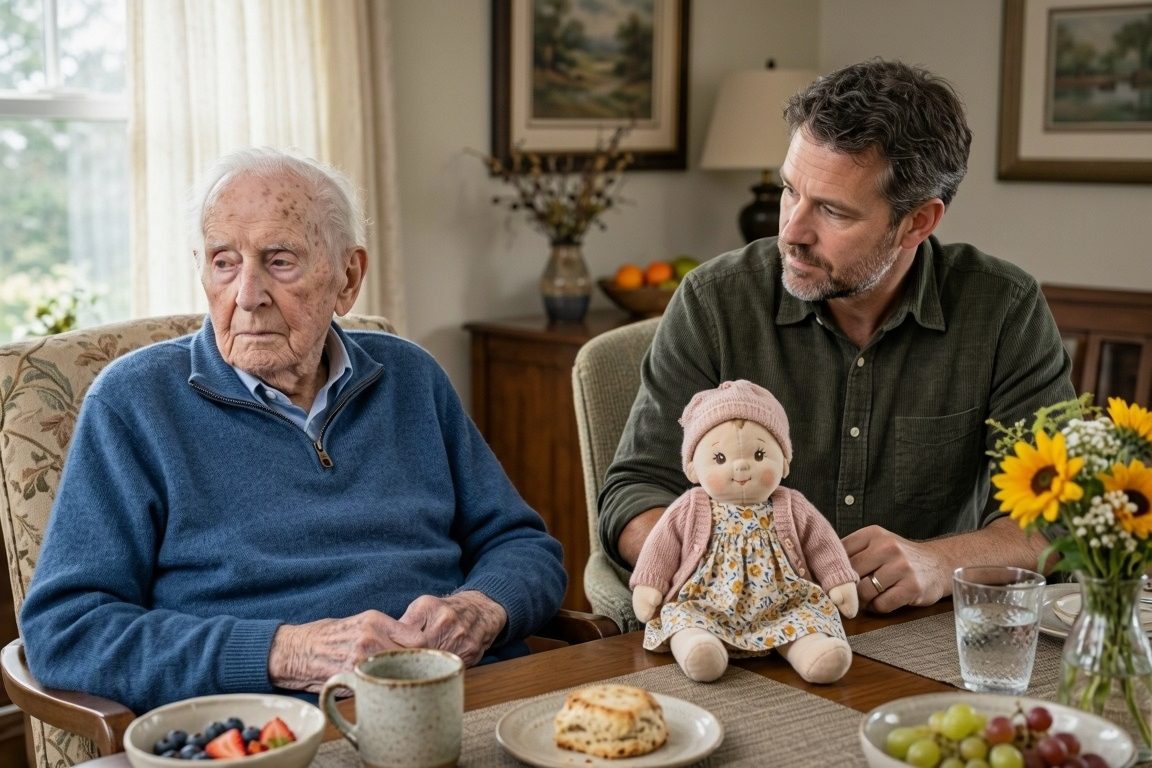
- Do not force the doll or pet on them if they show no interest or seem upset. Forcing can create fear or anger.Instead, simply put the object away and try again another day or try a different type of comfort item.
- Do not tell them the doll is not real if they believe it is. Correcting them can cause confusion, sadness, or even aggression.Instead, if they ask if it is real, say something like 'What do you think?' or 'What would you like to call her?' This keeps the interaction positive.
- Do not use a doll that cries, makes loud noises, or moves suddenly. These features can startle someone with dementia and increase anxiety. Choose a quiet, soft doll that does not have electronic sounds or sudden movements.
- Do not assume that because they liked a doll yesterday, they will like it today. Dementia symptoms fluctuate. Always check their mood and energy before offering the object again. If they seem tired or irritable, skip it and try later.
- Do not leave the doll or pet with them unsupervised if they have a history of aggression or confusion. They might try to 'rescue' the baby or pet and wander off, or they might become frustrated and throw the object. Stay nearby to gently guide them.
- Do not use a doll or pet as a substitute for a real pet they have lost without acknowledging the loss. If they are grieving a pet, talk about that pet first. Say something like 'I miss Chloe too. This little dog is different, but maybe she can keep you company.' This honors their grief rather than dismissing it.
Key points
- Always observe your loved one's past and present reactions before introducing a doll or pet. Their history matters.
- Introduce the object gently and without pressure. Let them decide if they want to engage.
- Never correct them if they believe the doll or pet is real. Go along with their reality to avoid distress.
- Watch for signs of grief or trauma, such as crying, pulling away, or saying things like 'I can't do this again.'
- Have a distraction plan ready in case the object causes upset. Redirect to a favorite song, snack, or activity.
- Keep a simple log of their reactions to help you and their care team decide what works best.
Videos
 How To Use Baby Doll Therapy For Dementia And Alzheimer’sThis video shows practical steps for introducing a doll and how to respond if the person seems upset or confused.
 How Does Doll Therapy Help Dementia?Explains the research behind doll therapy and how it can reduce anxiety, but also notes that it is not for everyone.
 The Baffled Brain: Demystifying Dementia Episode 18 March 27 ,2021Covers how dementia affects memory and emotion, helping caregivers understand why past trauma might surface.
 Does doll therapy for dementia really work?Reviews both benefits and risks, including stories of people who had negative reactions due to past loss.
2 more videos
 Curious Conversations about Brain Change.Discusses how brain changes in dementia can make old memories feel present, which is key to understanding trauma triggers.
 Ask Teepa Anything! Live on YouTubeTeepa Snow answers caregiver questions about using dolls and pets, including how to handle grief and resistance.
Background
Why Past Trauma Can Surface with Dolls or Pets
When a person with dementia is given a doll or stuffed animal, they may not see it as a toy. Instead, their brain can interpret it as a real baby or a beloved pet, especially in the later middle to late stages of the disease. This can trigger powerful emotions tied to their long-ago past, like the loss of a child, a miscarriage, the death of a pet, or even a difficult caregiving role they once held. The source passages remind us that people with dementia often connect most deeply with their long-past memories, and those memories may carry unresolved grief or trauma.
How Dementia Amplifies Emotional Responses
Dementia does not erase feelings; it can actually make them stronger and harder to manage. A person who has lost a baby or a beloved pet decades ago may suddenly feel that loss as if it just happened when they hold a doll or a stuffed animal. This is not a sign that the therapy is wrong, it is a sign that their brain is trying to make sense of the present through the lens of the past. The key is to observe whether the object brings comfort or distress, and to be ready to gently redirect if needed.
The Role of the Caregiver in Trauma-Informed Care
Experts now recommend moving from person-centered care to trauma-informed person-centered care. This means recognizing that your loved one may have hidden wounds that shape how they react to everyday things. Before offering a doll or pet, take time to learn about their life story: Did they lose a child? Did they have a pet that died tragically? Were they ever overwhelmed by caregiving? Understanding this context helps you choose whether to introduce a doll, a stuffed animal, or a different kind of comfort object.
Practical tools
6
Observation Checklist for Past Trauma
Before introducing a doll or pet, use this checklist:
Answering these questions helps you choose a safer object.
Gentle Introduction Script
When offering the object, say something like: 'I found this little one and thought of you. Would you like to hold her for a minute?' or 'Look at this soft puppy. Does he remind you of anyone?' Let them decide. If they seem unsure, say 'That's okay, we can just set her here and see.'
Distraction Redirect Kit
Have a small bag ready with items that can redirect if the doll or pet causes distress. Include:
If they become upset, gently say 'Let's look at these pictures instead' or 'I think the baby needs a nap now, let's have a snack.'
Realistic but Quiet Doll Recommendation
Look for a doll that weighs about 5 pounds and has a soft, weighted body. Avoid dolls with hard plastic faces or electronic sounds. Brands like 'Reborn' dolls are often too realistic and may be expensive, but a simple baby doll with a cloth body and a soft face works well. The goal is to feel like a real baby without triggering fear or confusion.
Pet Therapy Alternative for Grief
If your loved one is grieving a past pet, consider a robotic pet that moves and makes soft sounds but does not require care. Some robotic cats and dogs purr or wag their tails when touched. Test the sounds first, make sure they are soothing, not startling. If even a robotic pet seems too much, try a simple stuffed animal that looks like their old pet.
Emotion Tracking Log
Keep a simple log with columns for: Date, Object Used, Initial Reaction (smile, frown, reach, pull away), Words Said, Mood After 15 Minutes, and Notes. This helps you see if the object is helping or hurting over time. Share this log with their doctor or a dementia care specialist for guidance.
Different situations
Late-stage dementia (moderate to severe)
In later stages, the person may fully believe the doll or pet is real. This can be comforting but also risky if they try to 'rescue' it and wander. Stay close and use simple phrases like 'The baby is safe with you.' Avoid any mention of the object being a doll or toy. If they seem anxious, redirect to a familiar activity like folding baby clothes or petting a soft blanket.
Lewy body dementia
People with Lewy body dementia often have visual hallucinations and fluctuating alertness. A realistic doll or pet might blend into their hallucinations and cause confusion or fear. Start with a very simple, non-realistic stuffed animal, like a soft square-shaped toy. Avoid any object that moves or makes noise. Observe closely for signs of paranoia or agitation.
Spouse vs. adult child caregiver
A spouse may have deep, shared memories of raising children or caring for pets together. They might feel hurt if their partner seems to 'replace' them with a doll. Talk openly with the spouse about the purpose: 'This doll is not replacing me or our memories. It is a tool to help Mom feel calm and purposeful.' An adult child may need to reassure siblings or other family members who might object to the therapy.
In a facility (nursing home or assisted living)
In a facility, coordinate with staff before introducing a doll or pet. Some facilities have policies against 'baby doll therapy' due to infection control or safety concerns. Ask if they have a designated 'comfort cart' or a therapy animal program. If the person shares a room, make sure the roommate is not disturbed. Label the doll or pet with the person's name to avoid mix-ups.
History of animal hoarding or neglect
If your loved one has a history of animal hoarding or neglecting pets, a stuffed animal or robotic pet might trigger feelings of guilt or overwhelm. In this case, avoid pet-like objects entirely. Instead, try a doll that represents a baby or a simple comfort object like a weighted blanket or a soft scarf. Focus on activities that do not involve caring for another being.
For the doctor
4
- Ask your loved one's doctor or a dementia care specialist: 'Is doll or pet therapy appropriate given their history of trauma or grief? Are there any specific triggers I should watch for?'
- If your loved one has a known diagnosis of post-traumatic stress disorder (PTSD) from any cause, discuss whether a doll or pet might re-traumatize them. Ask for alternative comfort strategies.
- If your loved one becomes consistently agitated or tearful when offered a doll or pet, stop and consult a professional. They may need a different type of intervention, such as music therapy or reminiscence therapy.
- If you are considering a robotic pet, ask the doctor if there are any concerns about the person becoming overly attached or confused by the mechanical sounds and movements.