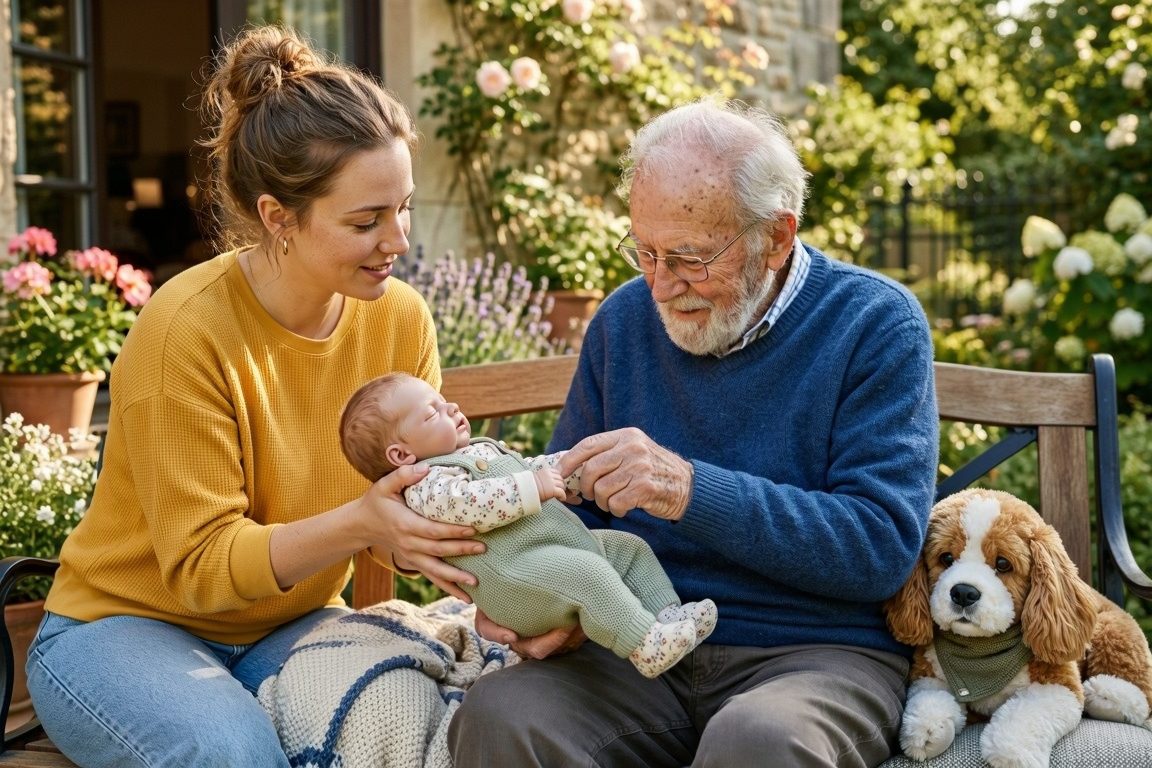
Step by step
What not to do
- Do not call it a doll or toy.Instead, use a name like 'baby' or 'puppy.' Calling it a doll can feel condescending and break the illusion that brings comfort.
- Do not force it. If they reject it, simply remove it and try again another day. Forcing can create resistance or distress.
- Do not correct them if they think it's real. Enter their reality. Saying 'It's just a doll' can cause confusion or sadness.Instead, say something like, 'She's sleeping peacefully.'
- Do not choose a doll that cries or makes loud noises. Sudden sounds can startle or agitate someone with dementia. Stick to silent or very soft, rhythmic sounds if any.
- Do not use a doll or animal that looks too 'toy-like' or cartoonish. A realistic appearance is more likely to be accepted and treated with care.
Key points
- Choose a realistic-looking doll or soft stuffed animal, avoid cartoonish or noisy options.
- Never call it a doll or toy; give it a name and treat it with respect.
- Introduce it casually; let your loved one decide if they want to engage.
- Do not correct them if they think it's real, enter their reality.
- Use the object as a tool for connection, not a distraction.
- Personalize the choice based on their life history (e.g., pet lover vs. parent).
Videos
 How Does Doll Therapy Help Dementia?Explains the therapeutic benefits and how to present a doll without causing distress.
 How To Use Baby Doll Therapy For Dementia And Alzheimer’sStep-by-step guide on introducing a doll, including what to say and what to avoid.
 Baby Doll & Stuffed Animals ~TESTED, PROVEN Dementia Behavior FIXReal-life examples of how dolls and stuffed animals reduced agitation and improved mood.
 Does doll therapy for dementia really work?Reviews research and caregiver experiences, including when it works best.
2 more videos
 The Baffled Brain: Demystifying Dementia Episode 18 March 27 ,2021Discusses the neuroscience behind why nurturing objects calm the brain in dementia.
 What are Dementia Friendly Gift ideas? Top 10 gift guide for someone with dementiaIncludes tips on choosing stuffed animals and dolls as gifts, plus other calming items.
Background
Why a Doll or Stuffed Animal Helps
In the middle to late stages of dementia, the brain may regress to earlier life patterns, including a desire to nurture. Many individuals, especially those who raised children or cared for others, may feel a strong urge to hold, rock, or care for something. This isn't a sign of childishness, it's a natural expression of their lifelong identity. When they cannot find a 'baby' or 'pet,' it can trigger anxiety, pacing, or agitation. A realistic doll or soft animal can fill that void, reducing distress and providing a calming focus. Research shows this can lower agitation, wandering, and even caregiver stress.
The Controversy and the Right Mindset
Some worry that giving a doll or stuffed animal is demeaning. But the key is how you frame it. You never call it a 'doll' or 'toy', you give it a name, like 'baby Ellie' or 'Mr. Whiskers.' If your loved one changes the name, go with it. This is a therapeutic tool, not a plaything. The goal is to soothe, not to infantilize. Most experts recommend introducing it in the later middle or late stages, when the person may already be searching for something to hold or care for. If they don't take to it, that's fine, simply remove it and try again another time.
Realistic vs. Stylized: What Matters Most
A doll that looks like a real infant, with soft skin, closed eyes, and a weighted body, is far more likely to be accepted than a cartoonish or plastic 'Cupid' doll. The same goes for stuffed animals: choose one that feels like a real pet, with soft fur, a gentle weight, and no loud or startling noises. Avoid dolls that cry or make sudden sounds, as these can confuse or frighten someone with dementia. The goal is a calming, predictable object that invites holding and stroking.
Practical tools
4
Realistic Weighted Baby Doll (e.g., 'Reborn' style or similar)
Look for a doll with a soft cloth body, weighted limbs, and closed eyes. Weight around 2-4 pounds. Avoid hard plastic. Many caregivers recommend dolls that look like a sleeping newborn. You can find them on Amazon or specialty sites. Washable clothing is a plus.
Soft, Lap-Sized Stuffed Animal (e.g., a plush cat or dog)
Choose an animal with very soft, short fur (easy to stroke) and a gentle weight. Avoid hard eyes or buttons. Size should be easy to hold in one arm. Some have a slight lavender scent for calming, check for allergies first.
A Small Blanket or Receiving Blanket
A soft, lightweight blanket (like a baby receiving blanket) can be used to wrap the doll or animal. This adds a nurturing ritual and can be comforting to hold. Choose a calming color like pastel blue or pink.
A Gentle, Repetitive Motion Rocking Chair or Glider
If your loved one enjoys rocking, a glider or rocking chair can enhance the calming effect of holding a doll or animal. The rhythmic motion can reduce anxiety. Ensure it's safe and stable.
Different situations
Lewy Body Dementia or Parkinson's Dementia
Be extra cautious with dolls that have small parts or hard eyes, as these individuals may have visual hallucinations or difficulty with fine motor control. Choose a very soft, simple stuffed animal without buttons. Avoid any object that could be mistaken for something alive if hallucinations are present.
Late Stage / Bedbound
Use a very lightweight doll or small stuffed animal that can rest on the chest or beside the head. Focus on tactile comfort, soft fur, a gentle weight. You can also use a 'fidget blanket' with textures sewn on, which can be held alongside the doll.
Spouse vs. Adult Child
A spouse may feel more comfortable introducing a stuffed animal that resembles a pet they once had. An adult child might find it easier to frame a doll as 'the grandbaby.' In both cases, use the person's own history: if they loved cats, a plush cat is ideal. If they raised many children, a doll may resonate more.
In a Facility vs. At Home
In a facility, label the doll or animal with the person's name and a note: 'This is Rosie. Please do not remove.' Staff should be trained to use the same name and not call it a toy. At home, you have more control over the environment and can keep it in a consistent spot.
Medicaid / Limited Budget
You don't need an expensive 'reborn' doll. A simple, soft-bodied baby doll from a thrift store or discount store works, just ensure it's clean and realistic-looking. For stuffed animals, a basic plush from a dollar store can be sufficient if it's soft and safe.
For the doctor
3
- If your loved one has a history of swallowing objects or putting things in their mouth, ask the doctor or occupational therapist about safe materials and supervision.
- If your loved one becomes overly attached or distressed when the object is removed, discuss with a dementia care specialist or therapist for strategies to manage attachment.
- If there are concerns about infection control (e.g., if the doll or animal gets soiled frequently), ask about washable or disposable options.