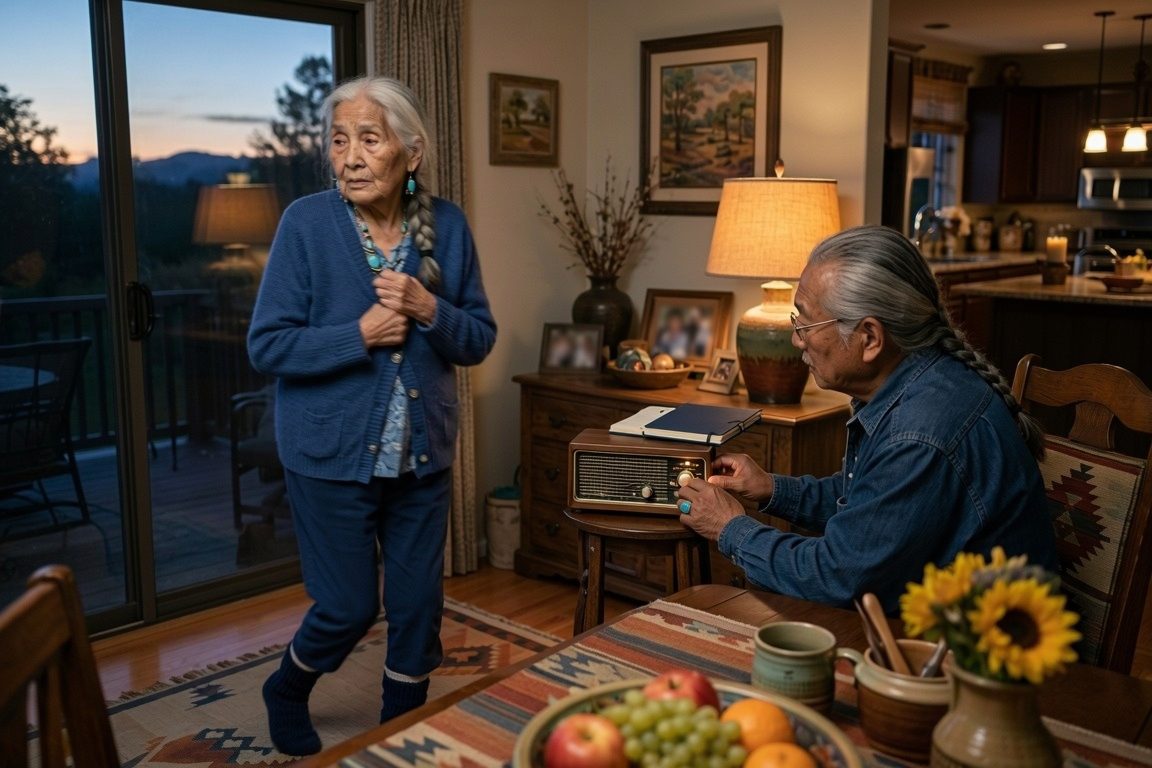
Step by step
What not to do
- Do not use music as constant background noise or a 'babysitter', choose it deliberately for the person's history and current mood and stay engaged during the session.
- Do not play music continuously all day; it causes sensory overload and loses its effect, silence and quiet are also important.
- Do not assume all music helps: unfamiliar, too-loud, complex, or negatively-associated songs can increase distress, stop or switch if the person looks upset.
- Do not use headphones without first confirming the person tolerates them.
- Do not force singing, clapping, or instrument play, let the person listen quietly if they prefer.
- Do not go it alone in complex situations (severe depression, aggression, trauma), consult an MT-BC.
- Do not neglect your own wellbeing, take 10–15 minutes with calming music to prevent burnout.
Key points
- Music therapy is evidence-based and can reduce depression, anxiety, and agitation in dementia, often within minutes, because music engages the whole brain and stays accessible even in late stages.
- The most effective music is personally meaningful, especially favorites from the person's young-adult years (ages 15–30).
- Match tempo to your goal: slow, steady music calms; upbeat, familiar music energizes a withdrawn person.
- Active participation boosts benefits, but passive listening is also valuable, never force engagement.
- Depression in dementia is common and easily missed; treat persistent mood change as a reason to see a clinician, using music as a supportive (not substitute) tool.
- Even without a music therapist, family and professional caregivers can follow evidence-based steps; research suggests music may reduce reliance on psychotropic medications, any change must be managed by a clinician.
- Music benefits caregivers too, use it for connection and self-care.
- Personalize by dementia type (e.g., Lewy body needs lower volume), stage (late-stage: passive listening), and setting (home vs. facility).
Videos
 How to keep a dementia patient busyOffers practical, low-cost activity ideas that can be combined with music, such as dancing or playing simple instruments, to keep the person engaged and reduce boredom-related agitation.
 Music and Alzheimer's DiseaseExplains the science behind why music triggers memories and emotions in Alzheimer's, reinforcing the importance of personalized playlists and active participation.
 Ep. 255: Using Music as a PrescriptionDiscusses how music can be used therapeutically, similar to a medication, with specific 'doses' and timing, useful for caregivers wanting to structure music sessions for maximum benefit.
 An Interview with Music Therapist Alexis Baker MT-BCProvides expert insight from a board-certified music therapist on how to implement music therapy safely and effectively, including tips for training staff and involving families.
6 more videos
 Top 5 Indoor Activities for Seniors with Dementia (For Free)Includes music-based activities like karaoke and dancing that are free and easy to set up at home or in a facility, with modifications for different ability levels.
 HOW TO REDUCE YOUR RISK OF DEMENTIA (and slow down dementia for your loved one)Highlights learning a musical instrument as a brain-healthy activity for both the caregiver and the person with dementia, offering a proactive approach to cognitive wellness.
 Dementia & The ArtsExplores how music and art can enrich the lives of people with dementia, with real-life examples of non-verbal individuals singing along to familiar songs.
 Using Reminiscence Therapy To Help Dementia PatientsShows how music can trigger memories and improve communication, mood, and quality of life, a perfect complement to music therapy.
 How to Use Music When You're Not A Music Therapist | Teepa's ClipsTeepa Snow provides practical, step-by-step guidance for caregivers who want to use music effectively without formal training.
 Depression and Dementia in Older AdultsAddresses the link between depression and dementia, and how music therapy can be a non-drug approach to improving mood.
Background
Understanding the situation
Music is processed across the entire brain at once, rhythm, melody, harmony, lyrics, and emotion each light up different neural networks, so a person who cannot recall breakfast can still sing every word of a song from their youth. Because these musical pathways are remarkably resistant to the damage of dementia, a familiar tune can unlock a memory, a smile, or movement even in moderate-to-severe stages, and it can shift the nervous system in the direction you choose: slow, steady music settles anxiety and agitation, while upbeat favorites can rouse someone who is withdrawn or lethargic. This matters because depression is common in dementia. It can stem from the disease's direct effects on mood-regulating regions of the brain, from a person's awareness of their own decline, from chronic pain, poor sleep, or loss of independence, and from shrinking social contact and meaningful activity. Depression in dementia is easy to miss because it may look like apathy, irritability, refusal to eat, or worsening confusion rather than obvious sadness, so any persistent mood change should be evaluated by a clinician, with music used as a supportive, non-drug tool alongside (never instead of) medical care.
Practical tools
6
Personalized Playlist Creation Checklist
(1) Ask the person or family about favorite music from ages 15–30; (2) include 10–20 songs mixing upbeat and calm tempos; (3) avoid loud, jarring, or complex arrangements; (4) test each song ~30 seconds and watch for a positive reaction (smile, relaxation, humming); (5) label the playlist clearly and keep it on a simple device, an MP3 player with large buttons or a single-app tablet, charged and ready.
Simple Instrument Kit for Engagement
Assemble a basket with a soft maraca or egg shaker, a small tambourine, rhythm sticks, a bell, and a lightweight scarf. Offer one item at a time and demonstrate use. For bedbound individuals, use a soft bell or scarf moved by hand only, never place instruments in the mouth if there is a swallowing risk.
Sample Phrases to Say During Music Sessions
Use warm, encouraging lines: 'Let's listen to a song you used to love.' 'Can you tap your foot with me?' 'I love how this song makes you smile.' 'Would you like to shake this tambourine?' Avoid testing memory with 'Do you remember this song?', instead try 'I wonder if this song feels familiar.' Spouses can say, 'Remember when we danced to this at our wedding?'; adult children can say, 'I found this in your old record collection: I love it.'
Sundowning Calming Music Routine & Script
About 30–60 minutes before the usual late-day agitation, dim the lights, reduce noise, and start slow, familiar, repetitive music at low volume. Sit close and use a calm, reassuring script: 'You're safe here with me. Let's just listen to this song together.' 'I'm right here, there's nothing you need to do right now.' 'This is one of your favorites; let's relax and enjoy it.' Keep your tone soft and unhurried, avoid questions or corrections, and do not switch to stimulating songs during this window.
Daily Mood & Session Response Log
Keep a one-page log per person tracking: date/time, songs played, the person's mood before and after (e.g., calm, anxious, tearful, withdrawn, content), observed responses (smile, humming, tapping, agitation, withdrawal), duration of engagement, and brief notes on what worked or didn't. Review weekly to spot patterns and the best times of day, to catch worsening depression early, and to share with the care team during any transition between settings.
Headphones vs. Speaker Trial Kit
Test both over-ear headphones and a small portable speaker to learn which the person prefers and tolerates. Choose the option that does not startle or isolate them; use headphones in shared rooms to avoid disturbing others, but discontinue if they seem frightened or agitated by them.
Different situations
Lewy Body Dementia (sensory sensitivity, hallucinations, Parkinsonism): Expect extreme sensitivity to stimulation. Start with gentle, instrumental music (no lyrics) at low volume, keep sessions short (5–10 minutes), and use a steady, slow beat (~60–80 bpm) to support movement and reduce rigidity. Watch for overstimulation (increased confusion, agitation, staring, worsening hallucinations) and stop immediately if it appears, moving to a quiet, dimly lit space.
Frontotemporal Dementia (behavioral variant): Music can re-engage someone apathetic or withdrawn; use upbeat young-adult favorites. Be aware that FTD can cause CHANGED MUSICAL TASTE, people may suddenly enjoy genres they once disliked, so follow their current preferences even if they seem odd. AVOID songs that may trigger obsessive or repetitive behaviors (e.g., wanting the same track on a loop for hours), and use music to redirect from repetitive questioning or pacing.
Late-Stage / Bedbound / Minimally Verbal: Focus on passive listening with very familiar, slow, repetitive songs from their youth; place a speaker near the bed (or use headphones in shared rooms) for short periods (10–15 minutes) to avoid fatigue. Look for subtle engagement: a change in breathing, a slight head turn, a softening of the face, a small hand movement. Hum softly while holding their hand. Avoid singing during meals if there is swallowing difficulty, and consider songs of spiritual or cultural meaning for comfort.
Spouse vs. Adult-Child Caregiver: Spouses often know the music intimately and may feel grief hearing 'their' songs; it is okay to cry together as a bonding moment, and okay to take a break or pick a different song if it's too much. Adult children may need to learn their parent's young-adult tastes from relatives, old records, or photo albums. For both, music is a tool for connection and the person's comfort, not a memory test.
In a Facility (memory care, assisted living, long-term care): Coordinate with the activity director and nursing staff to schedule consistent sessions (morning sing-along, afternoon calming, evening wind-down). Train ALL staff, not just activity leaders, to use music during care tasks, create a quiet 'music corner' with a comfortable chair and headphones, use widely familiar group songs ('You Are My Sunshine,' 'Amazing Grace,' 'Somewhere Over the Rainbow'), keep volume safe for hearing-aid users, avoid wall-to-wall music in common areas, and document each resident's responses in the care plan. Request an MT-BC consultation for individualized plans.
Medicaid-Funded or Low-Resource Setting: No expensive gear needed: use a smartphone/tablet with a free streaming service and a small speaker, or an old MP3 player and a family-contributed playlist. Make homemade shakers (rice in a sealed container) and train existing CNAs and nurses after a short session with a local music therapist (many offer pro bono or sliding-scale help). Consistency and personalization matter far more than cost.
Common questions
5
Music is often the very last ability to fade in dementia because it links a person back to specific moments in their life, use it to support identity and connection, not as a memory quiz.
Think of music like a 'dose': decide whether you want to calm or energize, then pick the tempo and song to match the goal.
Watch the person, not the playlist, their face, breathing, and body tell you instantly whether a song is helping or hurting.
Pair music with gentle touch (holding a hand, swaying together) for late-stage comfort.
Caring for yourself counts as part of the care plan, 10–15 minutes of your own calming music can prevent burnout.
For the doctor
1
- Always confirm any medical or medication decision with a qualified clinician, never adjust doses yourself. Ask the doctor or neurologist whether music therapy could be contraindicated given the person's dementia type or other conditions (hearing loss, seizure disorder, trauma history). If there is a history of seizures, ask whether very rhythmic or high-frequency music could be a trigger (music-induced epilepsy is rare but possible). If the person takes antipsychotic or antidepressant medications, ask whether consistent music therapy might allow a clinician-managed dose reduction. For swallowing difficulties (dysphagia), ask a speech-language pathologist whether humming or singing during sessions is safe or could raise choking risk. With hearing aids, ask the audiologist about music-specific settings to avoid feedback or discomfort. If the person has a PACEMAKER OR OTHER IMPLANTED DEVICE, ask whether headphones or earbuds could cause interference, generally keep speakers at a safe distance and avoid placing headphones directly over the device. For anyone in HOSPICE or with a terminal diagnosis, ask the palliative/hospice care team about using music for pain management and emotional comfort at end of life. In facilities, consult the medical director and nursing team before any program involving movement (dancing, instrument play) for residents with fall or mobility risks.