Step by step
What not to do
- Do not use strong or unfamiliar scents in large amounts; overwhelming doses can increase agitation.
- Do not apply undiluted essential oils to skin; always mix with a carrier oil or use a pre-diluted lotion to prevent burns or allergic reactions.
- Do not force a scent if your loved one pushes the diffuser away or turns their head; switch to a different oil, scented lotion, or gentler method.
- Do not rely on aromatherapy as your only tool for severe agitation; also check for unmet needs (hunger, thirst, pain, bathroom) and contact a doctor if behavior becomes dangerous.
- Do not use aromatherapy to replace medical treatment for depression, anxiety, or sleep disorders for yourself or your loved one; it is a complement, not a substitute.
- Do not diffuse oils around pets without checking safety first; tea tree, eucalyptus, and many citrus oils are toxic to cats and dogs.
Key points
- Start with one oil (lavender is best) and use it consistently at the same time each day, especially before sundowning.
- Even if your loved one cannot smell the oil, the molecules still affect the brain and can promote calm.
- Use a diffuser, personal diffuser dots, or scented lotion, choose the method that fits your situation best.
- Pair aromatherapy with other calming activities like gentle touch, music, or a simple snack for maximum benefit.
- Observe and adjust: keep a simple log to see what works and what does not, and stop any oil that causes irritation or agitation.
- Use aromatherapy for yourself, too, a few deep breaths of lavender can lower your own stress and help you be more patient.
Videos
 Part I: Four Tips for Caregivers and the Person living with Alzheimer’s DiseaseOffers practical, low-stress tips for daily care, including the idea of using sensory tools like scent to create calm moments.
 An Interview with Dr. Jennifer Stelter Co-Founder, CEO, & Creator of the Dementia Connection ModelExplains the concept of 'prescribing' sensory tools like aromatherapy at specific times of day to prevent agitation, similar to scheduling a medication.
 How To Manage Sundowning: Unconventional Caregiver Tips For Dementia. - Dementia Help HubProvides specific tips for using calming scents and gentle touch during the late afternoon to reduce sundowning behaviors.
 Caregiver Stress and Depression, Dr. Helen Lavretsky - UCLAMDChatEmphasizes the importance of caregiver self-care and joy, and how mind-body practices like aromatherapy can help reduce stress.
2 more videos
 How To Manage Caregiver Stress Effectively? - Dementia Help HubCovers practical stress management strategies, including the idea of taking a few minutes for yourself to reset, which pairs well with using a personal aromatherapy inhaler.
 What is Sundowning in Dementia?Explains the causes and patterns of sundowning, helping you understand why a proactive aromatherapy routine at a specific time can be so effective.
Background
How Aromatherapy Works in Dementia Care
Essential oils contain very small molecules that, when diffused into the air, are inhaled and directly affect the limbic system, the part of the brain that controls emotion, memory, and arousal. This happens regardless of whether the person can consciously smell the oil. Even if your loved one has lost some sense of smell (a common change in dementia), the molecules still work on a physiological level to promote calm or alertness. Lavender, for example, has been shown in studies to reduce agitation and improve sleep, while citrus scents like lemon or orange can be energizing in the morning. The key is that aromatherapy is a low-risk, well-accepted intervention with no known harmful effects, making it a gentle first step before considering medications.
Why It Helps Both Caregiver and Loved One
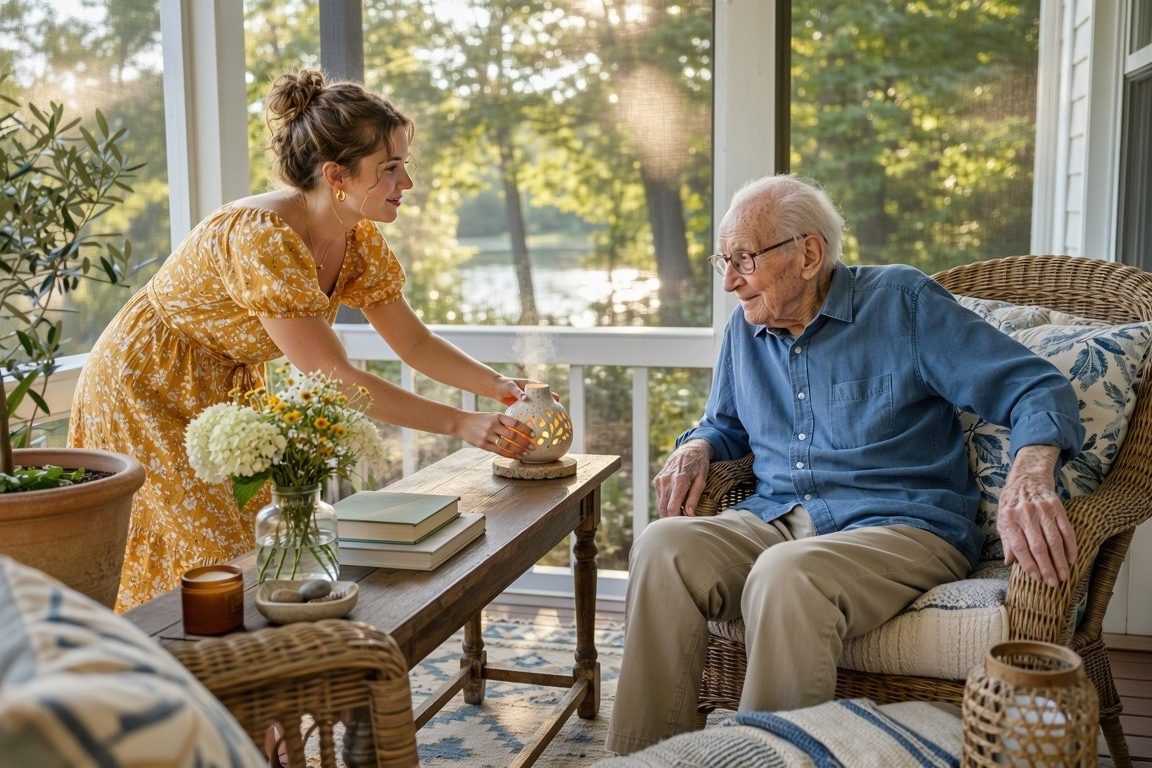
Caregiving is inherently stressful, and your own emotional state directly affects the person you care for. When you are tense, your loved one picks up on that stress and may become more agitated. Aromatherapy offers a way to calm yourself in the same moment you are calming them. Taking a few deep breaths of lavender while you set up a diffuser can lower your own heart rate and help you approach the situation with more patience. This shared sensory experience, the same scent filling the room , creates a subtle but powerful connection. It is a form of self-care that also benefits the person you care for, helping you both find a moment of peace in a demanding day.
Starting with a Simple Routine
The most effective way to use aromatherapy is to make it a predictable part of your daily schedule, not just a reaction to crisis. For example, you might diffuse lavender at 3:00 PM every day to proactively head off sundowning, rather than waiting for agitation to peak. This kind of 'prescribing' of a sensory tool, scheduling it like a medication but without the side effects , can be very powerful. Start with one oil, like lavender, and use it consistently for a week. Observe your loved one's behavior: do they seem calmer? Do they sleep better? Then you can experiment with adding or rotating other oils. Always use a well-ventilated space and a small amount of oil at first, because some people may have a negative reaction to a strong scent.
Practical tools
4
Ultrasonic Cool-Mist Diffuser
A small, quiet device that disperses 3–5 drops of essential oil mixed with water into a fine mist. Choose one with automatic shut-off and a 100–200 ml capacity; place on a stable surface out of reach.
Personal Inhaler or Diffuser Dot
A small adhesive pad or plastic tube that holds a drop or two of oil and clips to a collar or pocket, keeping scent close during outings. A plain cotton ball in a pocket is a low-cost alternative.
Calming Scented Dough
Unscented Play-Doh or homemade bread dough with a single drop of lavender kneaded in. Repetitive squeezing pairs with the scent during the late-afternoon sundowning window.
Carrier Oil (Fractionated Coconut, Jojoba, or Sweet Almond)
A neutral oil for diluting essential oils before skin contact, preventing irritation. A small dark glass bottle lets you safely prepare a custom hand or foot rub.
Different situations
Early-stage Alzheimer's (mild cognitive changes)
Your loved one can still participate in choosing scents. Ask them what smells they like, perhaps they remember a favorite flower or a kitchen scent like lemon. Let them help add drops to the diffuser. This gives them a sense of control and engagement. Use energizing citrus scents in the morning to help with alertness and motivation for daily tasks.
Middle-stage Alzheimer's (moderate cognitive decline, possible sundowning)
Consistency is key. Diffuse lavender at the same time every afternoon, about an hour before sundowning typically starts. Pair it with a calming activity like looking at a photo album or listening to soft music. If your loved one becomes restless, try a personal diffuser dot on their clothing. Avoid strong or unfamiliar scents that might confuse or startle them.
Late-stage Alzheimer's (severe cognitive decline, limited communication)
Focus on gentle, familiar scents like lavender or chamomile. Use a scented lotion for hand or foot rubs, as the combination of touch and scent can be very soothing. Be extra cautious with diffusers, place them out of reach and use only a few drops. Observe for any signs of distress, such as turning away or grimacing. If they seem uncomfortable, stop and try again later with a different scent or no scent at all.
For the caregiver (you) feeling stressed or overwhelmed
Use aromatherapy for yourself first. Keep a small bottle of lavender or peppermint oil in your pocket or bag. When you feel tension rising, put a drop on your wrist or a tissue and take three deep breaths. This can be done in a bathroom or another room for a quick reset. You can also use a personal inhaler throughout the day. Remember, caring for yourself is not selfish, it helps you be a better caregiver.
In a facility or with hired caregivers
Talk to the staff about using aromatherapy. Ask if they can diffuse lavender in your loved one's room at a set time, or if you can provide a personal diffuser dot. Write down the routine clearly: 'Please diffuse 3 drops of lavender in the diffuser at 3 PM every day.' If the facility has policies against diffusers, use a scented lotion or a personal inhaler instead. Be prepared to explain that it is a non-medical, low-risk intervention that has been shown to help with agitation.
For the doctor
6
- If your loved one has a history of allergies, asthma, or respiratory issues, ask the doctor if aromatherapy is safe for them.
- If you are considering using essential oils as a replacement for prescribed medications (e.g., for anxiety or sleep), discuss this with the doctor first. Aromatherapy can be complementary but should not replace medical treatment without guidance.
- If your loved one has a skin condition like eczema or very sensitive skin, ask about safe carrier oils and dilution ratios before applying any oil to the skin.
- If you are pregnant or breastfeeding, check with your own doctor before using essential oils, as some oils are not recommended during pregnancy.
- If your loved one has a history of seizures, ask the doctor about any oils that might be contraindicated (e.g., some sources suggest avoiding rosemary or eucalyptus in high doses).
- If you are feeling persistently depressed, anxious, or overwhelmed as a caregiver, talk to your own doctor or a mental health professional. Aromatherapy is a helpful tool, but it is not a substitute for professional support.