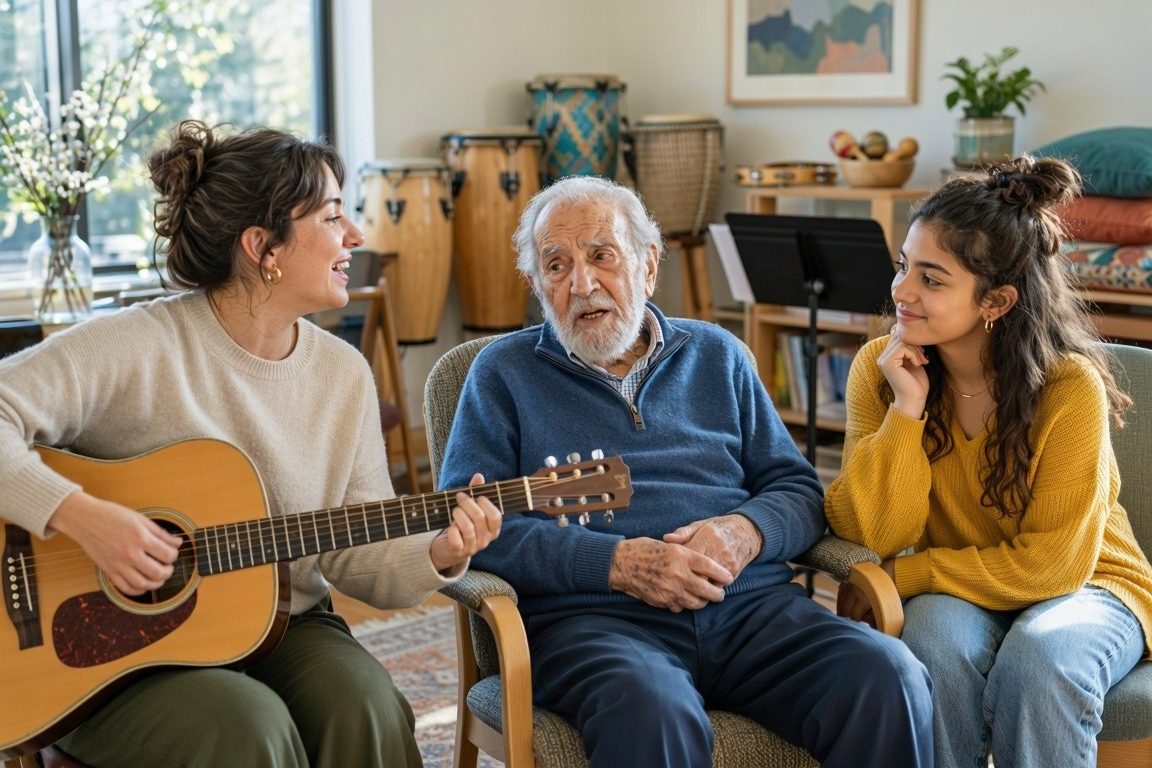
Step by step
What not to do
- Do not play unfamiliar music from a different generation, stick to known favorites from their youth.
- Do not play music at high volume or through headphones without checking, use speakers at moderate volume and confirm comfortable hearing.
- Do not force participation; if the person is not in the mood, play music in the background and let them choose to engage or not.
- Do not use music as a substitute for human connection, playing a CD and walking away is far less effective than sitting together, making eye contact, and sharing the experience.
- Do not expect immediate or dramatic cognitive improvement; celebrate small wins like a smile or a few sung words.
- Do not stop sessions if the person seems not to respond at first, try different songs and times, as the music may still be calming their nervous system.
Key points
- Music therapy can produce a small but measurable improvement in global cognition in dementia, but its strongest benefit is reducing depressive symptoms and improving quality of life.
- The most effective music is from the person's young adult years (ages 15-25), as these songs are most likely to trigger positive memories and engagement.
- Consistency matters: at least five sessions of 30 minutes each, three times per week, are needed to see benefits.
- Music therapy is not a substitute for medication or other treatments, but it can be a valuable complement and may help reduce the need for antipsychotic drugs.
- Always monitor the person's response and be ready to adjust volume, tempo, or song choice. If music causes agitation, stop and try a different approach.
- Music therapy works best when combined with human connection: sit with the person, sing along, make eye contact, and validate their feelings.
Videos
 An Interview with Music Therapist Alexis Baker MT-BCThis video features a professional music therapist explaining why people with dementia can remember songs from long ago but not recent events, and how to use music effectively in care.
 Music and Alzheimer's DiseaseProvides an overview of how music affects the brain in Alzheimer's, including research on brain imaging and functional connectivity.
 Dementia & The ArtsExplores the role of creative arts, including music, in improving quality of life for people with dementia, with practical examples.
 The Statistical Case for Music Therapy in DementiaBreaks down the research data on music therapy's effects on cognition and mood, including the forest plot from the 24-trial analysis.
2 more videos
 HOW TO REDUCE YOUR RISK OF DEMENTIA (and slow down dementia for your loved one)Includes discussion of lifestyle interventions, including music, that may help slow cognitive decline and support brain health.
 Tips for Coping With SundowningOffers specific strategies for using music to manage sundowning symptoms, including the 30-minute three-times-a-week protocol.
Background
How Music Affects the Brain in Dementia
Music is unique because it engages nearly every part of the brain at once. When you hear a song, your brain processes rhythm, melody, harmony, and, if there are lyrics, language. These elements trigger different brain regions simultaneously, including those involved in memory, emotion, and movement. For someone with dementia, this can mean that a familiar song from their youth can bring back a specific memory or feeling, even when other memories are hard to reach. Brain imaging studies have shown that listening to meaningful music increases functional connectivity in key networks like the visual, salience, and executive networks, which may help make symptoms more manageable and improve quality of life.
What the Research Actually Says About Cognition
A large analysis of 24 randomized controlled trials found that music therapy significantly improves global cognition in older adults with dementia, though the effect size is small. This means that while music therapy is not a powerful cognitive enhancer like a medication might be, it does produce a measurable benefit. The evidence is strongest for short-term improvements in mood and depression, which can indirectly support cognitive function because when someone feels less depressed, they may be more alert and engaged. A 2018 Cochrane review concluded that at least five sessions of music-based intervention probably reduces depressive symptoms but has little or no effect on agitation or aggression. The quality of evidence for long-term cognitive outcomes is very low, so we cannot say music therapy slows disease progression.
Why Music Can Reach People When Words Cannot
A puzzling but well-documented phenomenon is that someone with dementia who cannot remember what happened an hour ago may still sing every word of a song from their teenage years. This happens because musical memories are stored differently in the brain, often in regions less affected by dementia early on. Rhythm and melody are processed through ancient neural pathways that remain relatively intact even as other cognitive functions decline. This is why music can be a powerful tool for connection and communication, especially in middle and late stages. It can also help with sundowning: studies have found that just 30 minutes of music therapy three times a week can improve symptoms of agitation, aggression, and depression during the evening hours.
Practical tools
2
Life Soundtrack Playlist
A core playlist of 10–15 songs from the person's young adult years (ages 15–25), built with family input and including a mix of upbeat and calming songs. Label it clearly (e.g., 'Mom's Favorites – Calm') and keep it accessible on a streaming service or simple MP3 player.
Simple Percussion Instruments
A basket of easy-to-hold instruments like maracas, a small drum, tambourine, or shaker egg; these allow active participation, provide tactile stimulation, and support rhythm and coordination. Introduce one at a time during a session.
Different situations
Early-stage dementia (still living at home, independent with some support)
In early stages, the person can actively participate in choosing music and creating playlists. This can be a shared activity that promotes agency and connection. Encourage them to join a community choir or music group if they are interested. The focus should be on enjoyment and social connection, not cognitive testing. Monitor for frustration if they cannot remember song titles, offer to help search by humming or describing the tune.
Middle-stage dementia (needs more assistance, may be in a memory care facility)
At this stage, music sessions should be shorter (15-20 minutes) and more structured. Use the same songs each time to build familiarity. The person may not remember the session, but the emotional benefit remains. If they become agitated, switch to calming music immediately. In a facility, coordinate with staff to ensure music is played at consistent times, especially before meals or bathing, which can be stressful.
Late-stage dementia (nonverbal, bedridden, minimal response)
Focus on sensory and emotional comfort. Play calming music at low volume. Hold their hand, gently stroke their arm, or hum softly. Watch for subtle responses: a change in breathing, a slight smile, relaxation of muscles. Even if there is no visible reaction, the music may still be soothing. Avoid any sudden changes in volume or tempo. Use music during personal care routines (bathing, dressing) to reduce distress.
Lewy body dementia (fluctuating cognition, visual hallucinations, Parkinsonism)
Be cautious with music that is too stimulating, as people with Lewy body dementia can be sensitive to sensory overload. Start with very calm, familiar music and watch for signs of agitation or increased confusion. Avoid music with complex arrangements or sudden loud passages. Because cognition fluctuates, what works one day may not work the next, be flexible and ready to stop if the person seems distressed. Music may help with the Parkinsonian motor symptoms by providing a rhythmic cue for movement.
Frontotemporal dementia (behavioral variant, language difficulties)
People with frontotemporal dementia may have preserved musical abilities even as language and behavior decline. They may enjoy music that is repetitive or has a strong beat. However, they may also become fixated on a particular song and want to hear it over and over, this is okay and can be soothing. Avoid music with complex emotional content if it seems to trigger agitation. Focus on rhythm and movement rather than lyrics.
Common questions
1
How can art therapy help a person with dementia express their internal experience?
Art therapy offers a gentle, non-verbal way for a person with dementia to express feelings they can't put into words, like joy, frustration, or a distant memory. Set out simple materials like large paper and thick crayons, sit beside them, and simply describe what you see, 'I notice you used a lot of blue today', without asking 'what is that?' This can open a door to connection without the pressure of getting it right.
For the doctor
5
- If you are considering using music therapy to reduce the dose of antipsychotic or anti-anxiety medications, discuss this with the prescribing clinician first. Do not stop or change any medication without medical supervision.
- If the person with dementia has a history of seizures, ask the clinician if there are any types of music (e.g., very fast tempo or certain frequencies) that should be avoided.
- If the person has hearing aids or cochlear implants, ask the audiologist or clinician about the best way to deliver music (e.g., through speakers vs. headphones, optimal volume levels).
- If the person becomes consistently more agitated or distressed during or after music sessions, discuss this with the clinician to rule out other causes (e.g., pain, infection, medication side effects).
- If you are in a nursing home or memory care facility and want to implement a formal music therapy program, ask the medical director or administrator about consulting a board-certified music therapist (MT-BC) to design the program.