Step by step
What not to do
- Do not buy a tracker without discussing it first; this can feel like a betrayal. Show two options and ask which they prefer, using language like 'I want you to go outside safely, and this helps me know you are okay.'
- Do not rely solely on the tracker for safety, it's a tool, not a replacement for supervision or medical care. Continue using locks, alarms, and check-ins; a tracker cannot prevent falls or other emergencies.
- Do not choose a device that is uncomfortable or complicated. Test it first; for Lewy body dementia, avoid tiny buttons or screens that are hard to manage with visual hallucinations or tremors.
- Do not assume the tracker works everywhere. Check coverage maps; in rural areas with poor cellular signal, Project Lifesaver may be more reliable.
- Do not forget to update the device's software and your contact info. Set a monthly reminder to check the app, charge the battery, and update your phone number if it changes.
- Do not use the tracker to monitor every move obsessively, this increases your anxiety and makes them feel surveilled. Use it as a safety net, trusting geofence alerts and checking location only when concerned.
- Do not hide the tracker in a way that feels deceptive if discovered. Even if they cannot fully understand, a simple, honest explanation protects trust and avoids hurt feelings.
Key points
- Involve your loved one in the choice of device to preserve their dignity and autonomy.
- Choose a tracker that fits their lifestyle and stage of dementia, discreet, comfortable, and easy to use.
- Pair the tracker with a broader wandering safety plan: inform neighbors, keep a recent photo, and have a list of emergency contacts ready.
- Have a low-tech backup (like an ID bracelet) in case the GPS fails or the battery dies.
- Monitor changes in wandering patterns and share them with the care team to adjust the plan.
- Always consult health care professionals to choose the best safety options for your loved one's unique needs.
Videos
 How Do GPS Tracking Devices Improve Dementia Safety? - Dementia Help HubThis video explains how GPS trackers provide real-time location updates and help caregivers respond quickly to wandering, which is the core reason to use such a device.
 What Are Modern GPS Trackers For Dementia Safety? - Dementia Help HubThis video covers modern tracker features, subscription costs, and how to choose a device that fits the person's lifestyle, directly relevant to your decision-making.
 KNOW WHAT TO DO if your loved one wanders away: Make a dementia wandering safety planThis video walks you through creating a wandering safety plan, including informing neighbors and keeping an updated photo, which is essential even with a tracker.
 Who Treats Dementia Symptoms?This video helps you understand which professionals (neurologist, geriatrician, occupational therapist) to consult when choosing safety devices and managing wandering.
2 more videos
 “What Stage of Dementia Is This?” (And Why That Question Can Hurt More Than Help)This video explains why focusing on stages can be limiting and encourages tracking functional decline instead, a key principle when deciding when to introduce a tracker.
 Sleep and DementiaThis video addresses nighttime wandering and sleep disturbances, which are common triggers for needing a tracker, and offers strategies to reduce them.
Background
Why Wandering Happens and How Tracking Helps
Wandering is a common and often dangerous behavior in dementia, especially in middle and late stages. The person may become disoriented, lose their sense of direction, or feel a strong urge to 'go home' or 'go to work' even when they are already home. This is not defiance; it is the disease affecting their brain's ability to process familiar surroundings. GPS tracking devices work by providing real-time location updates, so you can see exactly where your loved one is at any moment. This immediate information is vital because people with dementia often cannot recognize familiar places or find their way back once they have wandered. The device does not replace supervision or medical care, but it is a practical tool that reduces risk and lets you respond faster if they leave a safe zone.
Balancing Safety with Dignity and Autonomy
It is essential to involve the person with dementia in the decision about tracking whenever possible. Even if they cannot fully understand the technology, explaining that it is a way to keep them safe and give them more freedom can help them accept it. Choose a device that respects their dignity and comfort, something that feels like a piece of jewelry, a watch, or a clip-on rather than a medical monitor. The goal is to support their independence, not to control them. Remember that tracking devices are part of a broader safety plan that includes home safety measures, regular check-ins, and informing neighbors and local police about your loved one's condition. Always consult health care professionals to choose the best options tailored to your individual needs and circumstances.
Practical tools
4
Two-Device Approach
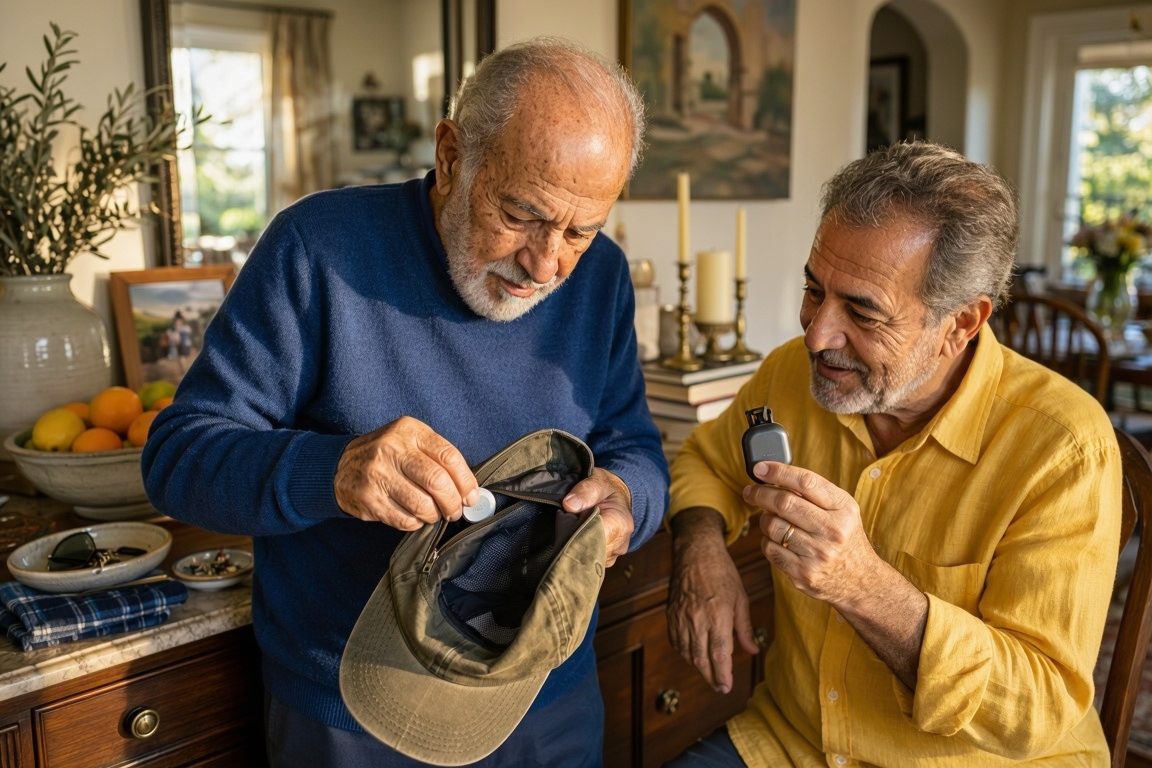
Keep one GPS tracker on your loved one (shoe insert or pendant) and a simpler Bluetooth tag on keys or a favorite jacket as backup. Explain: 'I have a little helper on your jacket so I can find you if you wander off. It's like hide-and-seek.'
Wandering Safety Plan Checklist
A one-page document with:
Keep a copy by the door and in your car.
Gentle Introduction Script
Say: 'I got this new watch/bracelet for myself because I worry about getting lost. I thought you might like one too so we can both stay safe. Let's try it on together.' If they resist: 'This is a special gift from your granddaughter. She wants you to wear it so she knows you are okay.' Use a neutral, positive tone.
First 15 Minutes Response Drill
When geofence alert goes off:
Different situations
Lewy body dementia (LBD) vs. Alzheimer's
In LBD, visual hallucinations and fluctuating cognition are common. Choose a tracker with no flashing lights or complex screens, as these can trigger hallucinations. A simple pendant or shoe insert is best. Also, people with LBD may have Parkinson-like tremors, so avoid devices with small buttons. Discuss with your clinician whether a tracker with a fall-detection feature is appropriate, as LBD increases fall risk.
Late stage dementia
In late stages, the person may not understand the device at all and may try to remove it. Use a tracker that is hidden, sewn into a coat lining, placed in a shoe sole, or attached to a belt loop. A low-tech ID bracelet is also essential. The wandering safety plan becomes even more critical: inform local police and neighbors, and consider a door alarm that alerts you when they leave the house. The tracker is for recovery, not prevention.
Spouse vs. adult child caregiver
A spouse may feel more comfortable introducing the device as a shared safety measure ('We both wear these now'). An adult child may need to approach the topic more gently to avoid seeming controlling. Say: 'Mom, I worry about you when I'm not here. This will let me know you are okay so I can relax.' In both cases, involve the person with dementia in the choice if possible.
Living in a facility vs. at home
If your loved one lives in a memory care facility, check if they already have a wandering prevention system (e.g., door alarms, staff monitoring). You may not need a separate GPS tracker. If you do use one, ensure the facility staff know about it and can help charge it. For home care, a tracker with a geofence is essential, and you should also have a backup plan for when you are asleep or away.
Medicaid or limited budget
Some GPS trackers require monthly subscriptions (around $20-40/month). If cost is a concern, look for devices with no subscription (like Apple AirTag paired with an iPhone) or check if your local Area Agency on Aging offers free or low-cost trackers. Project Lifesaver may be available through local law enforcement at no cost. Also, a simple ID bracelet is very affordable and can be a first step.
Common questions
10
What can I do instead of taking away an item the person with dementia is grabbing?
Try offering a safe replacement item, like a soft cloth or a familiar object they can hold, while gently redirecting their attention to another activity.
Should I make my loved one with dementia wear hearing aids?
Instead of insisting, try putting in one hearing aid at a time during a calm moment and watch for comfort; if they resist, consult their audiologist for a gentler start.
Can a medical alert device let me leave my loved one unsupervised?
No, a medical alert device only calls for help if they push a button; it does not prevent wandering or falls, so you still need to supervise or use a GPS tracker.
How can Zinnia TV help with daily activities like toileting and medication?
Zinnia TV plays engaging, calming videos that can distract your loved one during toileting or medication time, making these tasks feel less stressful for both of you.
How can AI monitor seniors' mental health?
AI can track changes in speech, sleep, or activity patterns through sensors or apps, and alert you or their doctor to potential mood shifts or confusion.
What care pathway can shorten time to a dementia diagnosis?
Ask your doctor for a referral to a memory clinic or a neurologist who specializes in dementia; a clear care pathway can reduce diagnosis delays by coordinating tests early.
How do I monitor the effects of a dementia medication once it's started?
Keep a simple daily log of their mood, energy, and memory, like good, fair, or bad, and review it with their doctor at each visit to see if the medication helps.
What are the limitations of medical alert devices for someone with dementia?
Medical alerts only work if your loved one remembers to press the button, which dementia often makes hard; they won't call for help if they fall or wander silently.
What is a dementia day clock and how does RecallCue work?
A dementia day clock shows simple phrases like 'Morning' or 'Bedtime' to reduce confusion, and RecallCue plays recorded voice reminders for tasks like eating or taking meds.
How can tracking symptoms help in getting a dementia diagnosis?
Tracking symptoms like repeated questions, getting lost, or mood swings gives your doctor concrete examples to spot dementia earlier and start the right support sooner.
For the doctor
5
- Ask your doctor: 'Given my loved one's specific type of dementia and stage, is a GPS tracker safe and appropriate? Are there any risks, such as skin irritation from the band or confusion from the device?'
- Discuss: 'My loved one has Lewy body dementia and visual hallucinations. Could a tracker with lights or sounds make their hallucinations worse? What alternatives do you recommend?'
- Ask: 'If my loved one wanders at night, should I consider a bed alarm or door alarm in addition to a tracker? Are there any medications that might reduce wandering?'
- Discuss: 'My loved one is in late-stage dementia and cannot communicate. How can I tell if they are in pain or discomfort that might trigger wandering? Should I use a pain assessment tool like the PAINAD scale?'
- Ask: 'Are there any local resources, like Project Lifesaver or a wandering response program, that you can refer me to?'