Step by step
What not to do
- Do not confront or scold if they try to leave; instead, approach calmly and ask open-ended questions to uncover the need.
- Do not assume wandering is only on foot; remove car keys from sight, consider disabling the car, and never leave them alone in a vehicle.
- Do not ignore sundowning; reduce stimulation, dim lights, and offer calming activities during late afternoon or evening when wandering peaks.
- Do not neglect your own self-care; join a support group, take breaks, and ask for help, as you cannot be vigilant 24/7.
Key points
- Wandering is driven by confusion, unmet needs, and triggers, not by willfulness. Understanding the 'why' helps you respond with compassion.
- Preparation is your best tool: make exits harder, use alarms, create safe wandering paths, and build a community network.
- Keep a wandering journal to spot patterns and address root causes like hunger, bathroom needs, or sundowning.
- Have a written emergency plan and a safety kit with a recent photo, medical info, and contact numbers ready at all times.
- Never leave a person with dementia alone in a car or in unfamiliar surroundings, even for a moment.
- You are not alone, reach out to neighbors, police, and support groups. Caregiver stress is real, and asking for help is a sign of strength.
Videos
 Alzheimer's and Wandering - Professional Caregiver WebinarThis webinar covers the basics of wandering prevention and what to do if it happens, with practical tips for home safety and community resources.
 Dementia Wandering: Prevention + What to Do If They Go Missing | Dr. Khushboo VermaDr. Verma explains the layers of prevention, making exits harder, using ID and GPS, identifying triggers, and having a routine. Very actionable.
 KNOW WHAT TO DO if your loved one wanders away: Make a dementia wandering safety planThis video walks you through creating a written wandering safety plan, including informing neighbors and police, and what to do in the moment.
 How to Travel with Someone who had Dementia [5 tips]Travel increases wandering risk. This video gives specific tips for packing, hotel safety, and preparing for medical needs during trips.

Background
Why Wandering Happens in Lewy Body Dementia
Wandering in Lewy body dementia is not random; it often stems from a mix of brain changes and unmet needs. The disease affects parts of the brain that handle visual-spatial orientation, impulse control, and memory. This means your loved one may not recognize familiar rooms, may feel lost even at home, or may act on a sudden urge to leave without thinking through the consequences. They might also be reliving an old memory, like needing to pick up a child from school, or feel distressed by a noisy or crowded environment. Sundowning, which is increased confusion and agitation in the late afternoon or evening, can also trigger exit-seeking behavior.
The Role of Triggers and Unmet Needs
Wandering often has a trigger. It could be something as simple as seeing a coat or purse by the door, which signals 'leaving.' It could be a physical need like needing to use the bathroom, feeling hungry, or being in pain. Sometimes it's emotional: boredom, anxiety, or a sense of being lost in a place that no longer feels like home. By keeping a journal of when and where wandering happens, you can start to see patterns, like after meals, during sundowning hours, or when the house is too quiet. Once you identify the trigger, you can address the root cause rather than just trying to block the door.
Why Preparation Matters Now
According to the Alzheimer's Association, everyone with dementia who is mobile is at risk for wandering, even if they haven't done it yet. It can happen on foot, in a wheelchair, or even in a vehicle. Being proactive rather than reactive is key. When you prepare ahead of time, you reduce panic and increase the chances of a safe outcome. This means making the home safer, having identification and tracking tools ready, and building a community network of neighbors and local authorities who know your loved one and can help quickly. Preparation also gives you peace of mind, which is essential for your own well-being as a caregiver.
Practical tools
6
Wandering Journal Template
A grid for date, time, preceding events, actions, and triggers, used over a week to identify pattern windows for preemptive distraction.
Door Camouflage Kit
Dark rug or large plant placed before the door, or painting the door the wall color, to reduce visual exit cues.
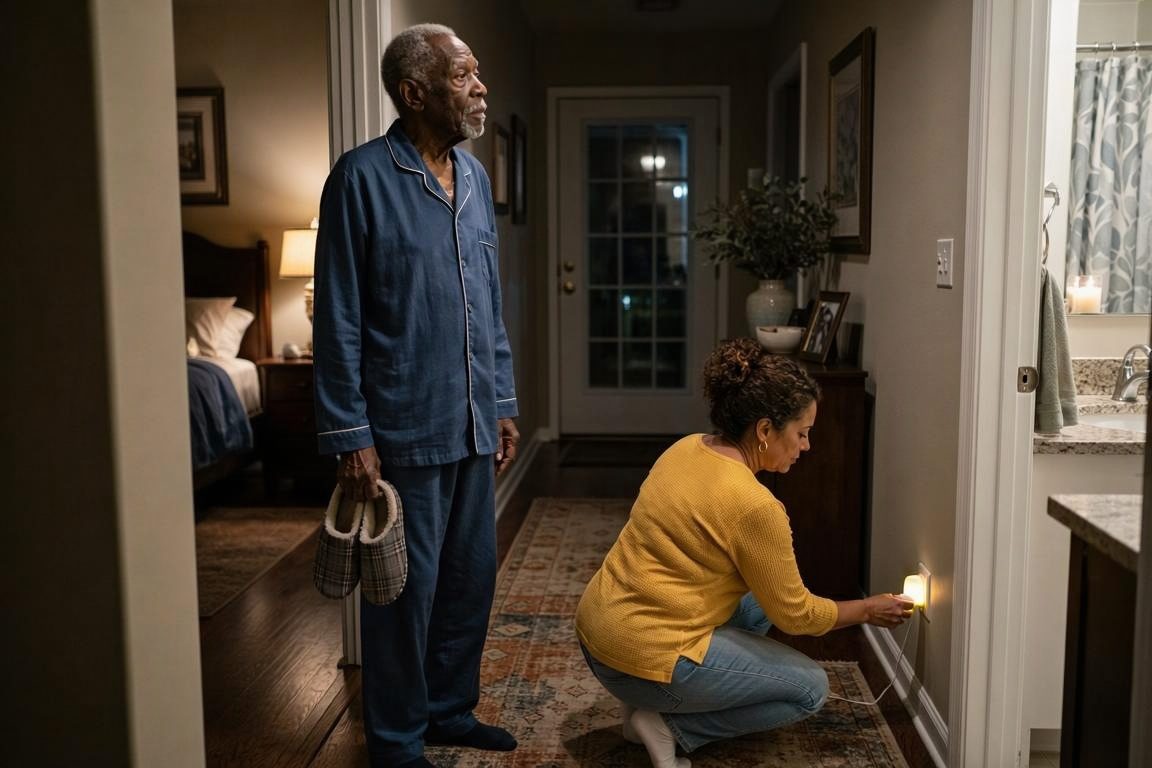
Nightlight Pathway
Rope lighting or plug-in nightlights along the baseboard from bed to bathroom, reducing disorientation and falls.
Door and Motion Alarms
to signal movement without intruding.
MedicAlert + Safe Return and GPS Tracker
ID jewelry with 24/7 hotline plus a GPS device (watch, insert, or pendant) for quick location if wandering occurs.
Wandering Safety Kit
Nearby folder with
Different situations
Lewy body dementia specifically
Lewy body dementia often involves visual hallucinations, fluctuating attention, and motor symptoms like stiffness or tremors. Visual hallucinations can make your loved one see things that aren't there, which may trigger fear or a desire to leave. Use calm, reassuring language and avoid arguing about what they see. Also, because motor symptoms can make walking unsteady, ensure pathways are clear of clutter and use non-slip rugs. The risk of falls is higher, so consider a gait belt or a walker if needed. Sundowning can be more pronounced in Lewy body, so plan for a quiet, low-stimulation evening routine.
Early stage vs. middle/late stage
In early stage, your loved one may still be able to participate in planning. You can talk together about safety measures and choose a GPS device they are comfortable with. In middle or late stage, you will need to take full responsibility for safety. Use more environmental barriers, like high locks and door alarms, and consider a wandering response registry. In late stage, if mobility is limited, wandering may become less of a risk, but you should still secure exits and use alarms.
Spouse vs. adult child caregiver
As a spouse, you may be more aware of subtle changes in your partner's behavior and can spot early signs of restlessness. You also share a history, so you can use familiar routines and objects to ground them. As an adult child, you may need to coordinate with siblings and possibly move your parent into your home. Make sure everyone is on the same page about the safety plan. You may also need to have difficult conversations about driving and keys earlier than you'd like.
Living at home vs. in a facility
At home, you have full control over the environment, you can install locks, alarms, and camouflage. In a facility, you still need to be proactive. Talk to the staff about their wandering prevention protocols. Ask if they have a locked unit or a secure outdoor area. Provide them with a photo and medical information. If your loved one is in a facility, you can still use a GPS device, but check with staff first. Also, visit at different times of day to see how they are supervised.
Medicaid or limited budget
Many safety measures are low-cost. You can use a simple door alarm from a hardware store for under $20. Rope lighting is inexpensive. A wandering journal is free. For GPS tracking, some programs offer subsidized devices for low-income families. Check with your local Area Agency on Aging or Alzheimer's Association chapter. You can also ask about free MedicAlert + Safe Return enrollment through some state programs.
Common questions
1
How do I mentally prepare for the possibility that travel may not go perfectly?
Acknowledge that plans may shift, and focus on your loved one's comfort and safety, not sticking to a schedule. Pack a 'distraction bag' with snacks, a familiar photo, and a favorite item to ease anxiety if a walk becomes too long or a car trip needs to turn back.
For the doctor
5
- Ask your doctor: 'Is a GPS tracking device safe and appropriate for my loved one, especially if they have skin sensitivities or may try to remove it?'
- Ask your doctor: 'Could any medications help reduce agitation or sundowning that triggers wandering? What are the risks and benefits?' Do not start or stop any medication without medical guidance.
- If your loved one has a history of falls, ask: 'Should we use a gait belt or walker to reduce fall risk during wandering episodes?'
- Ask: 'Can you refer me to an occupational therapist who can do a home safety assessment and recommend specific environmental modifications?'
- If your loved one is still driving, ask: 'How do we know when it is time to stop, and what is the safest way to approach that conversation?'