Step by step
What not to do
- Do not argue with them about where they are or why they want to leave. This will only increase their anxiety and make them more determined to 'escape.' Instead, validate the feeling and redirect.
- Do not physically restrain them or block the door aggressively. This can cause a fight-or-flight response and lead to injury.Instead, use gentle redirection and environmental barriers like a camouflaged door or a gate.
- Do not leave them alone in a car or at home, even for 'just two minutes.' They may forget your instruction and wander off immediately. Always have a plan for supervision.
- Do not assume that wandering will stop on its own. It is a recurring behavior for most people with dementia. Proactive planning is essential, not reactive crisis management.
- Do not use GPS tracking as a substitute for supervision. It is a safety net, not a prevention tool. You still need to address the underlying need that is causing the wandering.
Key points
- The GEMS model helps you predict wandering by matching behavior to a specific cognitive state.
- In early states (Sapphire), wandering is about disorientation; in middle states (Ruby/Amber), it is about purposeful goals; in late states (Pearl), it is about physical restlessness.
- Never argue or physically block; instead, validate the need and redirect.
- Use environmental cues like door alarms, pressure mats, and safe walking paths.
- Create a community safety net with neighbors and local police.
- GPS tracking is a safety net, not a substitute for supervision.
Videos
 Ep. 268: Where, or When, Am I?This video directly applies the GEMS model to wandering, showing how a person's sense of time and place changes and how to respond.
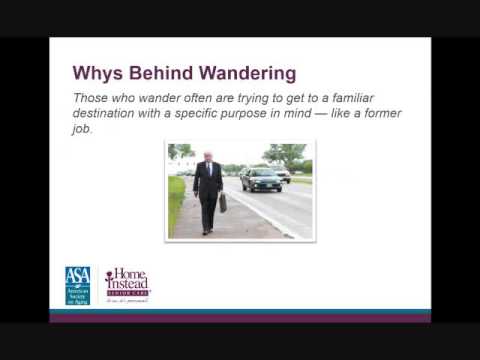 Alzheimer's and Wandering - Professional Caregiver WebinarA professional-level webinar that covers wandering prevention in depth, including the GEMS model and practical strategies for families.
 SUP! Incremental Changes and Early Results with PAC SkillsTeepa Snow demonstrates how small changes in approach (based on GEMS state) can prevent wandering and reduce caregiver stress.
 How Do You Keep Someone With Dementia Safe From Wandering? - Dementia Help HubA practical, step-by-step guide on using GPS tracking and environmental modifications to keep a person safe.
2 more videos
 HOW TO MANAGE Wandering, Pacing, Eloping ~ Smart Tricks When You Are DesperateOffers creative, low-cost solutions for managing wandering at home, including how to use the GEMS model to choose the right trick.
 Dementia Wandering: Prevention + What to Do If They Go Missing | Dr. Khushboo VermaA medical doctor explains the causes of wandering and gives a clear action plan for prevention and emergency response.
Practical tools
6
GEMS State Chart (Teepa Snow)
A visual chart that lists the five gem states with descriptions of behavior, communication style, and needs. Print it and keep it on your fridge. Use it to quickly identify which state your loved one is in today, and then follow the specific wandering prevention tips for that state.
The 'Go Home' Script
When your loved one says 'I want to go home,' use this script: 'Tell me about your home. What do you miss most about it?' Listen for 2-3 minutes. Then say, 'I know it's hard to be away from there. Let's sit down and look at some photos of it together. I have some tea.' This validates the need without arguing.
Door Alarm and Pressure Mat
A simple door alarm (like the 'Door Guardian' or a wireless chime) that alerts you when the door is opened. A pressure-sensitive mat placed in front of the bed or the door can also alert you when they get up. These are available at most hardware stores or online.
GPS Tracker in a Shoe or Locket
A small GPS device (like 'AngelSense' or 'Jiobit') that can be sewn into a shoe, placed in a locket, or attached to a belt. This gives you real-time location if they do wander off. For the Sapphire state, a simple Tile or AirTag in their wallet or pocket can also work.
Safe Walking Path Kit
This turns aimless pacing into a safe, contained activity.
Neighbor Notification Card
A pre-printed card with your loved one's photo, name, condition, and your contact info. Give it to neighbors, the local police, and the mail carrier. Ask them to call you immediately if they see your loved one alone. This creates a community safety net.
Different situations
Lewy Body Dementia (LBD) / Early Stage
In LBD, wandering can be triggered by visual hallucinations or sudden confusion. Use the GEMS model to check if they are in a 'Ruby' state where they might be reacting to something they see. Do not argue about the hallucination. Instead, say, 'I see you are worried about something. Let's move to the living room where it is calmer.' Also, LBD patients often have fluctuating cognition, so their GEMS state can change hour by hour. Check the chart frequently.
Late Stage (Pearl/Coral)
In late stages, wandering may become more about physical restlessness or discomfort. Use the GEMS model to see if they are in 'Pearl' state where they need total assistance. Instead of trying to prevent wandering, provide a safe, contained space like a hospital bed with side rails (with doctor approval) or a padded mat on the floor. Use a pressure-sensitive mat to alert you when they try to get up. Focus on comfort and pain management.
Adult Child vs. Spouse Caregiver
An adult child may have more authority to set boundaries and use technology (like GPS) without guilt. A spouse may feel more emotional about 'losing' their partner and may resist using alarms. For spouses, the GEMS model can help reframe wandering as a symptom, not a personal rejection. Use the model to explain to the spouse: 'Mom is in the Amber state right now. She is not trying to leave you; she is trying to go to her childhood home.' This can reduce guilt and increase cooperation.
In a Facility (Assisted Living or Nursing Home)
In a facility, wandering is often called 'elopement.' Use the GEMS model to communicate with staff. For example, if your loved one is in the 'Amber' state, tell the staff, 'She may try to leave to 'go home.' Please use the 'go home' script and redirect her to the garden.' Also, ask about the facility's wandering prevention system (like door alarms or a secured courtyard). You can also bring a familiar item from home to place near the exit to reduce the urge to leave.
Medicaid / Low-Income Settings
If you cannot afford expensive GPS devices, use low-cost alternatives: a simple door alarm from a dollar store, a bell on the doorknob, or a childproof knob cover. Use the GEMS chart (free online) and the neighbor notification card (print at home). Contact your local Alzheimer's Association chapter for free safety resources like a MedicAlert + Safe Return bracelet.
For the doctor
3
- Ask your doctor if a medication review might help reduce restlessness or anxiety that triggers wandering. Some medications can actually increase confusion and wandering.
- If your loved one is in the late stage and wandering is causing falls or injury, ask about a hospital bed with side rails or a floor mat to prevent injury. Do not use physical restraints without a doctor's order.
- If wandering is excessive (e.g., walking over 30 kilometers a day as in some case reports), discuss with a specialist whether a structured activity program or a change in environment might help.