Step by step
What not to do
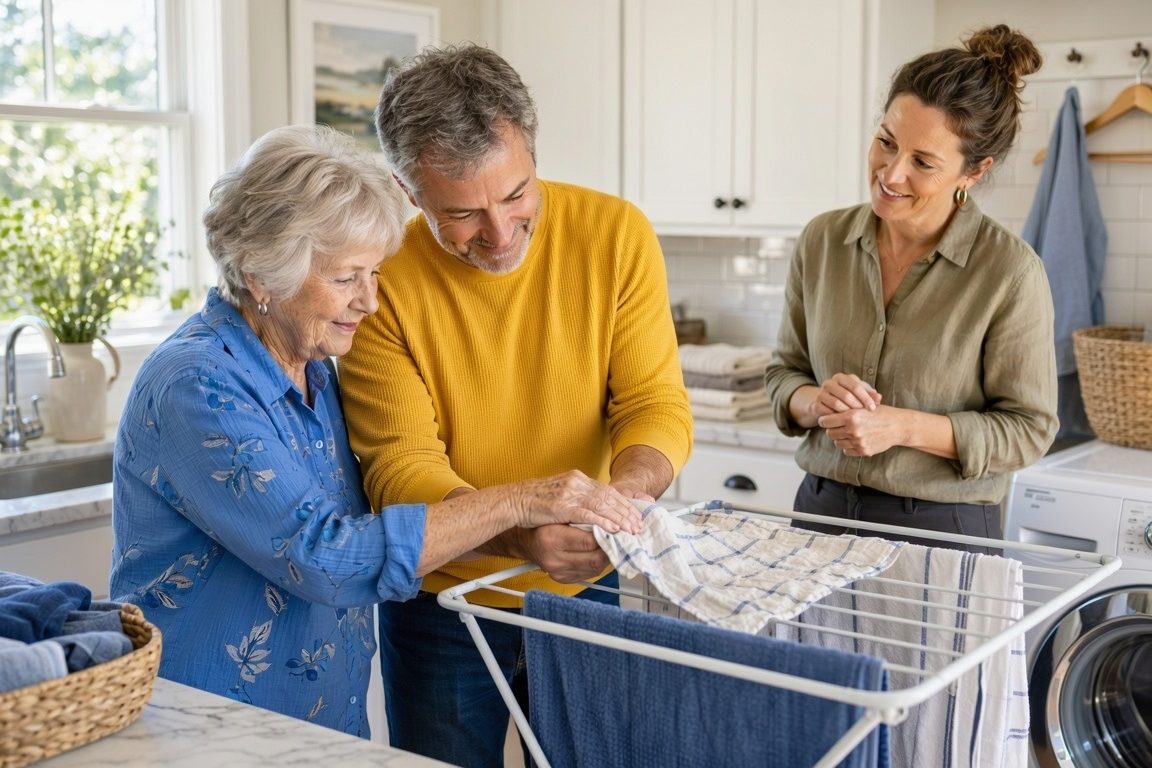
- Don't grab the person's hand from above, this feels controlling and can trigger a fight-or-flight response; instead, use Hand-Under-Hand: slide your hand under theirs, palm up.
- Don't correct or argue when the person says something inaccurate, this increases confusion and distress; instead, validate the feeling and redirect: 'You're worried. Let's look together.'
- Don't approach from behind or the side, this can startle and cause a defensive reaction; always approach from the front, at eye level, with a warm expression and slow pace.
- Don't use complex sentences or open-ended questions like 'What do you want for dinner?'; instead, offer two simple choices: 'Chicken or fish?' or hold up two items and let them point.
- Don't assume a person who cannot speak cannot understand, many still comprehend tone and emotion; speak with respect, avoid talking about them as if they're not there, and address them directly.
- Don't try to force a care task when the person is agitated, forcing escalates the situation and damages trust; instead, step back, take a break, and try later with a different approach (snack, walk, or favorite song).
Key points
- Positive Approach to Care (PAC) is a practical, skill-based philosophy created by Teepa Snow that focuses on adapting the caregiver's approach to match the person's current brain abilities.
- The Hand-Under-Hand technique is a simple but powerful way to provide physical support without triggering a defensive reaction, practice it until it becomes automatic.
- The GEMs model (Sapphire through Pearl) helps you understand your loved one's stage of brain change and tailor your care tasks and communication accordingly.
- PAC offers free resources including a YouTube channel, a podcast (Dementia Care Partners Podcast), downloadable guides, and a directory of PAC Designated Communities for facility care.
- Small daily practices, like the Five Appreciations and Five Dissatisfactions, build caregiver awareness and resilience over time.
- The PAC philosophy is not about being positive in a fake way; it's about being effective, compassionate, and realistic about what you can change: your own approach.
Videos
 An Interview with Dementia Expert and Educator Teepa SnowThis interview gives you a direct introduction to Teepa Snow herself, her background, and the heart behind PAC. It's a great starting point for understanding the philosophy in her own words.
 Time with Teepa - I Told You - Its Right There!This video addresses a common frustrating moment, when the person with dementia can't find something right in front of them. Teepa demonstrates how to respond with patience and redirection instead of correction.
 Ep. 169: Until There's a Cure, There's Care™This episode of the Dementia Care Partners Podcast explores the PAC motto and what it means to provide care that is compassionate and effective even when a cure isn't available. It's motivating and practical.
 Ep. 325: When Someone Living With Dementia Goes Missing, and What to Do Before It HappensWandering is a common and frightening issue. This video gives concrete steps to prevent and respond to elopement, using PAC principles of understanding the person's needs and creating a safe environment.
Background
What Is Positive Approach to Care?
Positive Approach to Care (PAC) is not about pretending everything is fine or ignoring the hard parts of dementia. Instead, it's a practical framework developed by Teepa Snow, a registered occupational therapist with decades of experience. The core idea is that brain change, whether from Alzheimer's, Lewy body, vascular dementia, or another condition, alters a person's abilities, perceptions, and behaviors. But the person themselves is still there, and the caregiver's job is to learn new ways to connect, communicate, and provide care that work with the brain's current state, not against it.
PAC teaches that most 'problem behaviors' are actually expressions of unmet needs, discomfort, or confusion. When a person with dementia becomes agitated, resists care, or repeats the same question, it's not intentional misbehavior, it's their brain trying to make sense of a world that no longer makes sense to them. The caregiver's approach, tone of voice, body language, pace, and the words we choose, can either escalate or calm the situation. PAC gives you specific tools to become a more effective, less stressed care partner.
The philosophy rests on small, everyday moments. As Teepa Snow says, each interaction is an opportunity to make a positive difference. PAC encourages caregivers to notice five things they appreciate and five things they find dissatisfying each week, not to dwell on the negative but to build awareness and intentionality. This practice helps caregivers stay grounded and focused on what they can change, their own approach.
Key Techniques: Hand-Under-Hand and GEMs
One of the most well-known PAC techniques is Hand-Under-Hand (HUH) care. Instead of grabbing a person's hand or arm from above (which can feel threatening or controlling), you slide your hand under theirs, palm up, and gently support their hand. This gives the person a sense of control and safety, they can pull away if they need to, and they feel your presence as support, not restraint. HUH is used for everything from guiding someone through a transfer to helping them hold a utensil or toothbrush. It works because it respects the person's autonomy while providing the physical cue they need to follow your lead.
Another foundational PAC concept is the GEMs (Gemstone) model, which categorizes brain change into different stages based on the person's remaining abilities. The stages are: Sapphire (very early, subtle changes), Diamond (still high-functioning but needing cues), Emerald (moderate, needs more hands-on help), Amber (significant cognitive loss, high emotional sensitivity), Ruby (very late stage, primarily sensory and comfort needs), and Pearl (end of life). Knowing where your loved one falls on this spectrum helps you tailor your communication, environment, and care tasks to their current abilities, reducing frustration for both of you.
PAC also emphasizes the importance of 'positive physical approach', approaching from the front, at eye level, with a warm smile and relaxed posture. You slow down, use simple language, and give the person time to process. These small adjustments can prevent a cascade of confusion and agitation before it starts.
Training and Resources Offered by PAC
Teepa Snow's Positive Approach to Care organization offers a wide range of training and support resources for family caregivers, professional caregivers, and care communities. Their website (teepasnow.com) is a hub for online courses, live webinars, and a library of free videos and podcasts. The 'Dementia Care Partners Podcast' is a weekly show where Teepa and her team answer real caregiver questions and explore specific situations. You can also find a YouTube channel with hundreds of short, practical videos demonstrating techniques like Hand-Under-Hand, how to handle bathing resistance, or what to do when someone repeats the same question.
For organizations, PAC offers a 'PAC Designated Community' program. This is a certification process for facilities and agencies that commit to embedding PAC principles into their daily care. If you're looking for a care home or home care agency, you can search for PAC Designated Communities on their website, these are places that have undergone training and are actively working to create a more positive, person-centered environment. For individual caregivers, there are also virtual support groups and one-on-one coaching sessions.
PAC also provides free downloadable resources, including cue cards with phrases to use, checklists for creating a dementia-friendly home, and guides to understanding the GEMs stages. The organization's mission is to make this knowledge accessible to everyone, because as Teepa says, 'Until there's a cure, there's care.'
Practical tools
5
Hand-Under-Hand & Positive Physical Approach Toolkit
For PPA: pause at their visual field edge, smile, say their name, move slowly to front at eye level, wait for acknowledgment, then speak in a calm low voice. For HUH: slide your hand under theirs, palm up, wrap fingers around their palm with thumb on top so their hand stays on top of yours; you can now guide motion (brushing, eating, walking) while they feel in control. Practice both with a friend first.
GEMs Stage Assessment Checklist
Download the free chart from teepasnow.com listing observable behaviors for each stage (Sapphire through Pearl). For each area
check what your loved one can still do. Reassess every 3–6 months as the disease progresses.
'I Wonder' Phrase Card
Keep a small card with phrases like 'I wonder if you're scared,' 'I wonder if you need a break,' 'I wonder if something hurts.' Reach for it when distress spikes, validates the experience without requiring an explanation, and phrases become automatic with practice.
PAC YouTube Channel & Dementia Care Partners Podcast Playlist
Search 'Teepa Snow Positive Approach to Care' on YouTube, build a 5–10 video playlist matched to your challenges (e.g., 'Hand-Under-Hand for Bathing,' 'How to Handle Repetitive Questions,' 'GEMs Overview'). Pair with the Dementia Care Partners Podcast for real-time guidance; listen to one short piece each morning before caregiving.
Care Task Cue Card Template
For any recurring care task: write the task name at the top, then 2–3 calm, short phrases to use (e.g., for bathing: 'Let's get you warm,' 'I'll help you rinse,' 'Almost done'). Tape the card in the bathroom, kitchen, or where needed as an in-the-moment reminder to slow down and stay regulated.
Different situations
For family caregivers of a person in the early stage (Sapphire or Diamond GEMs)
Focus on education and planning. Use the GEMs assessment to understand what your loved one can still do independently. Practice Hand-Under-Hand now, when they are more receptive, so it feels natural later. Attend a virtual PAC support group to connect with others in the same stage. Encourage your loved one to watch PAC videos with you, they may find the information empowering rather than frightening.
For family caregivers of a person in the middle stage (Emerald or Amber GEMs)
This is where PAC techniques are most critical. Your loved one may have significant memory loss, confusion, and emotional volatility. Use the Positive Physical Approach every single time you enter the room. Keep a 'cue card' in your pocket with simple phrases for each care task. If bathing is a struggle, watch PAC's specific video on bathing techniques. Consider hiring a PAC-trained home care aide for respite, ask the agency if they have staff trained in PAC.
For professional caregivers or care staff in a facility
Advocate for your organization to become a PAC Designated Community. This involves staff training, environmental changes (like reducing clutter and noise), and consistent use of PAC language and techniques. In the meantime, start a 'PAC champions' group among your coworkers, meet weekly to watch a video and practice a technique together. Use the GEMs model to communicate with each other about residents' abilities, and always use Hand-Under-Hand during transfers and personal care.
For caregivers of a person with Lewy body dementia or Parkinson's disease dementia
These conditions often involve visual hallucinations, fluctuating cognition, and extreme sensitivity to medications. PAC's emphasis on validation (not correction) is especially important, never argue about what they see. Use the 'I wonder' phrase: 'I wonder if you're seeing something that worries you.' The GEMs model still applies, but note that abilities can vary dramatically from hour to hour. Be flexible and ready to change your approach based on their current state. Discuss any medication changes with the clinician, as some antipsychotics can worsen symptoms.
For caregivers of a person in late stage (Ruby or Pearl GEMs)
Focus on comfort and sensory connection. Use Hand-Under-Hand for gentle touch and hand-over-hand assistance with eating, if possible. Speak in a soft, rhythmic tone, your loved one may not understand words but will respond to your emotional tone. Use the PAC principle of 'positive physical approach' to reduce startle. At this stage, the goal is not to teach new skills but to provide comfort, dignity, and connection. Consider hospice or palliative care consultation to manage pain and other symptoms.
For the doctor
4
- If your loved one is on medications that affect behavior (like antipsychotics or benzodiazepines), ask the doctor whether a PAC-based behavioral approach could reduce the need for these drugs. Some medications can actually increase confusion or agitation in people with dementia.
- If you notice sudden changes in behavior (like new aggression or withdrawal), discuss with the clinician whether there might be an underlying medical cause (infection, pain, medication side effect) before attributing it to dementia progression.
- For professional caregivers: if your facility is considering PAC training, ask the medical director or administrator about integrating PAC principles into the existing care plan and medication management protocols.
- If your loved one has a history of falls, ask the clinician or physical therapist how to adapt PAC techniques like Hand-Under-Hand for safe transfers and mobility assistance.