Step by step
What not to do
- Do not place devices in bathrooms or bedrooms without a clear safety need.
- Do not rely on audio monitoring alone; pair it with motion sensors, door alarms, or a wearable alert button.
- Do not set sensitivity so high that every small noise triggers an alert.
- Do not install the device without telling your loved one or in a hidden way.
- Do not skip regular testing, test weekly and after any home changes.
- Do not let audio monitoring replace your visits, phone calls, and time together.
Key points
- Audio monitoring helps you respond quickly to emergencies like falls or wandering, keeping your loved one safe at home longer.
- Involve your loved one in the decision and explain the purpose clearly to build trust and reduce resistance.
- Choose a system that fits your loved one's condition, your budget, and your care setting, simple smart speakers work for early stages, while advanced systems like StackCare suit complex needs.
- Combine audio monitoring with other safety measures like door sensors and emergency buttons for a comprehensive safety net.
- Test the system weekly and adjust settings as your loved one's condition changes.
- Always respect privacy and autonomy, monitoring is a tool for support, not surveillance.
Videos
 Nathalie de Vazeille, Co-Founder of StackCareThis video explains how StackCare uses audio and interaction data to create an aging in place score, helping care agencies tailor support. It shows how technology can combine with human care to keep seniors safe.
 The Care Advocates with Lance A. Slatton & Sharon's Son, George 'Caregiver Resources'This video shares real caregiver stories and practical resources, including how audio monitoring and other technologies helped one family keep their loved one at home longer.
 Teepa for Ten - Making sense of Sensi.AiTeepa Snow explains how Sensi.Ai uses data and insights from the home to help care agencies individualize care. It is a great example of high-tech meeting high-touch care.
 Creating a Dementia-Proof HomeThis video covers home modifications for dementia safety, including the use of visual cues and technology. It complements audio monitoring by addressing the physical environment.
2 more videos
 Alzheimer's Dementia No Cost Anti-Elopement Home ModificationThis video shows a low-cost hack to prevent elopement, which pairs well with audio monitoring for wandering. It demonstrates a simple, non-intrusive solution.
 The Baffled Brain: Demystifying Dementia Episode 22 April 24, 2021This episode discusses dementia behaviors and safety strategies, including the use of monitoring technology. It provides context for why audio monitoring can be effective.
Background
What Is Audio Monitoring and How Does It Work?
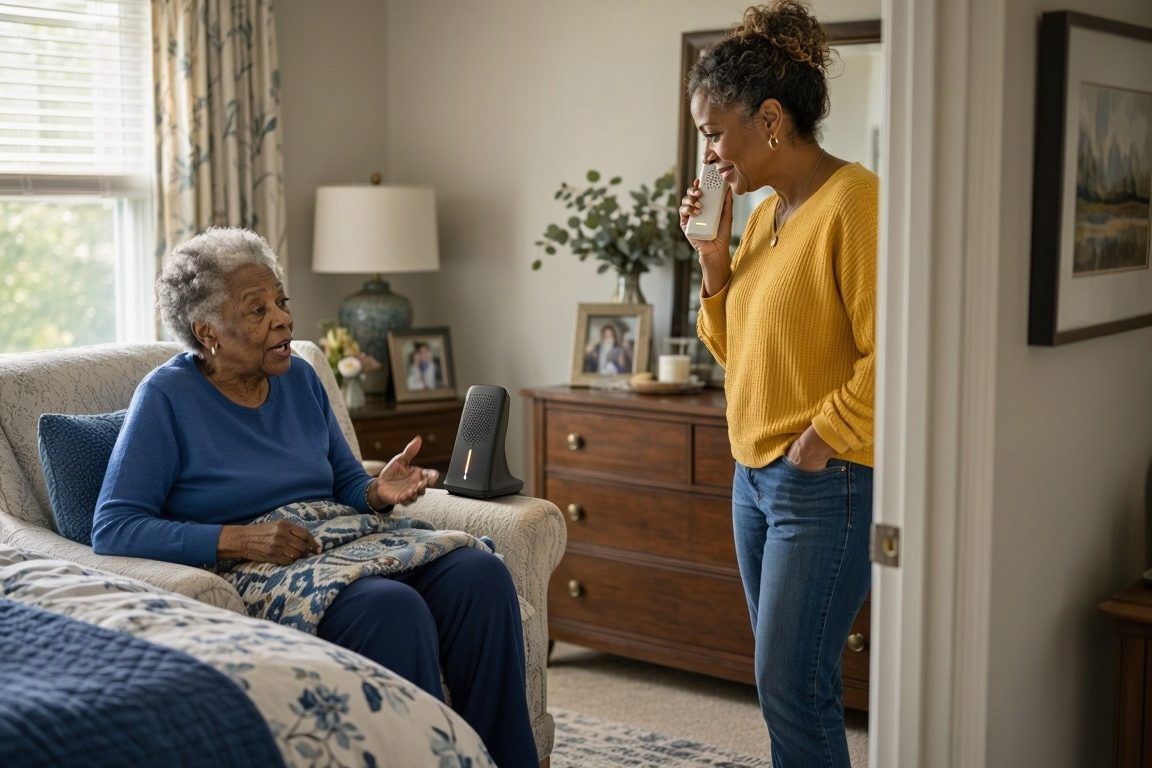
Audio monitoring uses small devices placed around the home to pick up sounds that might indicate a problem. These devices can be simple voice-activated recorders, smart speakers with listening features, or more advanced systems that analyze sound patterns and send alerts to your phone or a care agency. Unlike video cameras, audio monitors focus on what is heard, a call for help, a door opening at night, the sound of a fall, without capturing images, which many older adults find less invasive. The goal is to catch early signs of trouble so you can step in before a small issue becomes a crisis. For example, if your mother with early-stage Alzheimer's gets up in the night and you hear her moving around, you can check in gently without startling her.
Why Audio Monitoring Helps Seniors Stay Independent Longer
One of the biggest fears for families is that a loved one will have an emergency, like a fall or a wandering episode, and no one will know until it is too late. Audio monitoring bridges that gap. It allows you to be present even when you are not in the room. Research and caregiver stories show that early intervention, made possible by such monitoring, can keep people out of the hospital and delay the need for moving to assisted living or memory care. For instance, one caregiver shared that if their grandmother had been found earlier after a fall, she would have avoided a long, complicated hospital stay. By catching problems early, you provide treatment when it is most effective and reduce overall care costs. This is especially valuable for families managing a care budget or trying to keep a loved one at home as long as possible.
Balancing Safety with Privacy and Autonomy
It is natural to worry that audio monitoring might feel like spying or make your loved one uncomfortable. The key is to involve them in the decision and explain the purpose clearly. Use phrases like, 'This little device will help me know if you need me, so I don't have to keep checking on you and interrupting your day.' Many systems allow you to adjust sensitivity and choose which sounds trigger alerts, so you can focus on genuine concerns like a call for help rather than normal household noise. Remember, the goal is not to listen to every conversation but to create a safety net that supports independence. When used thoughtfully, audio monitoring can actually reduce anxiety for both you and your loved one, because you both know help is just a sound away.
Practical tools
4
Advanced audio analysis system (StackCare, Sensi.Ai)
Listens for sound patterns and sends alerts for changes in routine or falls; generates an 'aging in place score'. Discuss with a care agency or clinician for appropriateness and affordability.
Smart speaker with listening feature (Amazon Echo, Google Nest)
Listens for specific sounds like smoke alarms, breaking glass, or calls for help; can set voice reminders. Requires reliable Wi-Fi and may miss soft sounds like a slow fall. Test regularly and adjust sensitivity.
Simple voice-activated recorder
Affordable, no Wi-Fi needed; captures sound above a set threshold. Requires manual review of recordings rather than real-time alerts. Pair with another way to call for help.
Wearable emergency button
Worn as wristband or pendant; one press calls for help. Some connect to a monitoring service, others call family directly. Choose a comfortable, simple design usable when confused or frightened.
Different situations
Early-stage Alzheimer's or mild cognitive impairment
Focus on introducing the system as a tool for independence, not a safety net. Explain that it helps you avoid interrupting their day. Use a simple smart speaker for reminders and a door sensor for wandering. Avoid over-monitoring, as they may still be capable of managing many tasks. Revisit the conversation as their condition progresses.
Middle to late-stage dementia
Place audio monitors in more areas, including near the bed and bathroom, as falls become more likely. Use door sensors on all exterior doors and consider a wearable alert button. The system should be set to alert for any unusual sounds, like a fall or a call for help. Involve a care agency to monitor the data and adjust care plans accordingly. Privacy concerns may need to be balanced with safety needs.
Lewy body dementia or Parkinson's disease
These conditions often involve hallucinations, sleep disturbances, and sudden changes in mobility. Audio monitoring can help detect nighttime wandering or confusion. Place a device in the bedroom to listen for restless sleep or calls for help. Be aware that the person may become paranoid about the device; introduce it gradually and with clear explanations. Discuss with a clinician if the system might trigger anxiety.
Family caregiver vs. care agency staff
Family caregivers may prefer a simpler, less expensive system like a smart speaker or door sensor, and they can monitor alerts personally. Care agency staff need a more robust system that integrates with their care management software, like StackCare or Sensi.Ai, which provides data trends and alerts to multiple staff members. Agencies should also train staff on how to introduce the system to families and respect privacy.
Living in a facility (assisted living or memory care)
Audio monitoring may be limited by facility policies. Check with the facility first. Some facilities allow devices in private rooms but not common areas. Focus on door sensors to prevent elopement and a wearable alert button. Work with the facility staff to integrate the monitoring with their existing safety protocols. If the facility does not allow monitoring, consider alternative safety measures like frequent check-ins or a buddy system.
For the doctor
6
- Is audio monitoring appropriate for my loved one's specific condition and stage?
- Could the device cause anxiety or paranoia, especially in someone with Lewy body dementia or a history of hallucinations?
- Are there any medical or legal concerns about recording audio in the home, especially if the person is unable to consent?
- How do I balance the need for safety with my loved one's right to privacy and autonomy?
- Should I combine audio monitoring with other technologies like motion sensors or video cameras for better coverage?
- What are the signs that my loved one may need a higher level of care, even with monitoring in place?