Step by step
What not to do
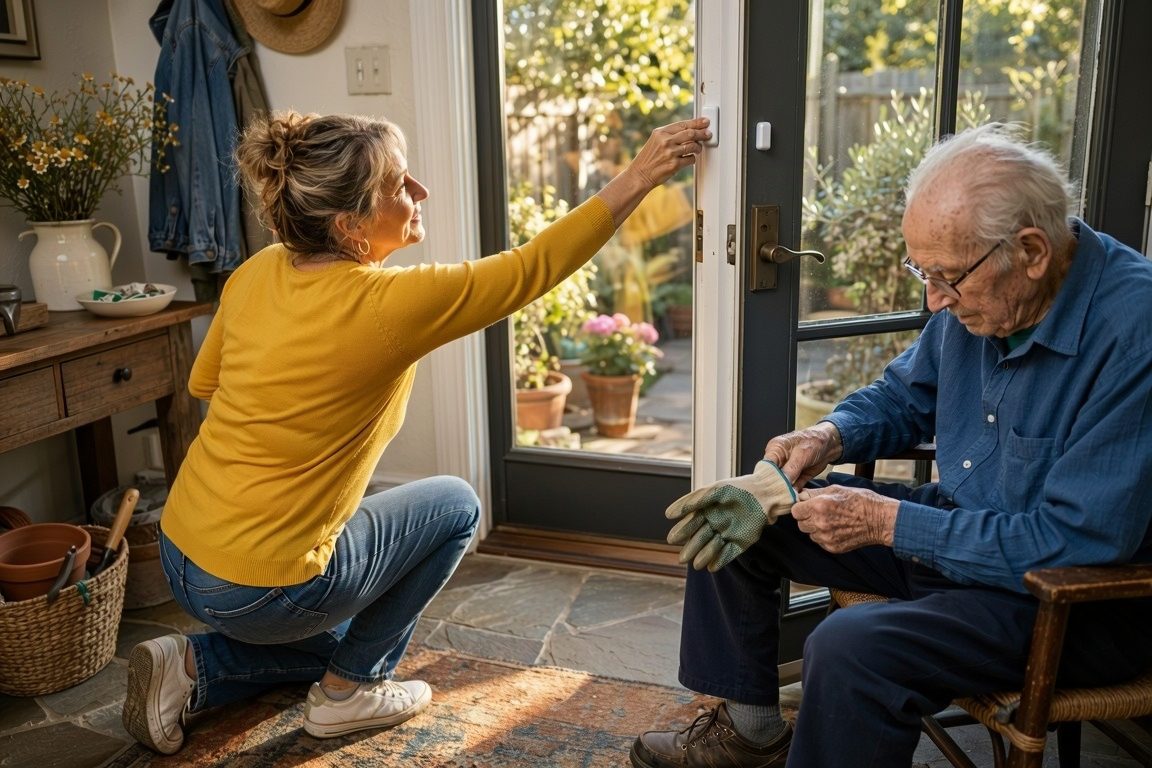
- Do not install sensors without telling your loved one. This can feel like a betrayal and increase anxiety or paranoia.Instead, involve them in the conversation: 'I want to help you stay here as long as possible. These little gadgets will help me know if you need anything.'
- Do not rely solely on sensors for fall detection. Passive sensors can miss a fall if the person doesn't move afterward. For fall risk, consider a wearable alert button or a floor-based pressure mat that detects a sudden impact. Discuss fall detection options with your clinician.
- Do not ignore alerts that seem minor. A pattern of small changes, like getting up one extra time at night for three nights in a row, can signal a urinary tract infection or medication side effect. Early intervention can prevent a hospital visit.
- Do not set too many alerts. If your phone buzzes constantly, you'll start ignoring them. Start with 3-5 critical alerts (e.g., front door open at night, no motion by 10 a.m.) and add more only if needed.
- Do not assume the system replaces human interaction. Sensors can't provide comfort, conversation, or a hug. Use them as a tool to free up your energy for quality time, not as a substitute for presence.
Key points
- Passive sensors detect motion and door openings without cameras or microphones, preserving privacy while keeping you informed.
- AI learns your loved one's daily patterns and alerts you only to meaningful deviations, reducing false alarms.
- Start with sensors in high-risk areas: front door, bedroom, bathroom, kitchen.
- Involve your loved one in the setup to build trust and reduce anxiety.
- Pair sensors with a response plan: know who to call and what to say for each type of alert.
- Review weekly activity reports to catch subtle changes early, and share them with the care team.
Videos
 Nathalie de Vazeille, Co-Founder of StackCareThis video explains how StackCare's passive monitoring system works, including its AI pattern learning and integration with remote patient monitoring. It's a real-world example of the technology described in this article.
 The Baffled Brain: Demystifying Dementia Episode 22 April 24, 2021This episode discusses passive vs. active technology for dementia care, including how to balance safety with privacy. It offers practical tips for choosing the right system for your situation.
 Dementia Care Partner Talkshow Podcast #45: How to Successfully Introduce Care Aides into Your HomeWhile focused on care aides, this podcast covers how to introduce new tools and people into the home without causing distress, a key skill when setting up sensors.
 Dementia Proofing Your HomeThis video shows how to use motion sensor lights, door alarms, and other low-tech devices to create a safer home environment, complementing the passive sensor approach.
2 more videos
 Can't visit your LOWD? 5 tips for staying connected during COVID-19 lockdownThis video offers tips for long-distance caregivers, including using technology to stay connected, relevant for those using passive sensors to monitor from afar.
 Your Voice Can Show If You Have Alzheimer's DiseaseThis video discusses AI voice analysis for early detection. While not about passive sensors, it shows another way AI can support dementia care without cameras.
Background
What Passive Sensors Do (and Don't Do)
Passive sensors are small, unobtrusive devices placed around the home that detect motion, temperature, or whether a door or cabinet is open or closed. Unlike cameras, they do not capture images or sounds, they simply note that movement happened or a door was opened. The AI behind them learns your loved one's typical daily patterns: when they usually get up, how often they visit the kitchen, what time they go to bed. If something deviates, like no motion for several hours during the day, or a door opening in the middle of the night, the system sends you an alert. This lets you check in by phone or ask a neighbor to look in, without needing to watch constantly.
Why This Approach Works for Dementia and Alzheimer's
People with dementia often experience sundowning, wandering, or confusion about time. A passive monitoring system can catch these episodes early. For example, if your loved one gets up repeatedly at night, the sensor pattern will show that, and you can adjust their routine or environment. If they open the front door and don't return within a few minutes, the system alerts you to a possible elopement. Because the system learns their baseline, it reduces false alarms and helps you focus on real risks. This is especially helpful for caregivers who live far away or who need to sleep through the night without worry.
The Role of AI in Making Sense of Sensor Data
The AI in these systems does more than just count steps. It analyzes patterns over days and weeks to detect subtle changes that might signal a decline, like a gradual decrease in movement, more time spent in bed, or a new habit of wandering at a certain hour. Some systems can integrate with remote patient monitoring (RPM) devices, like a blood pressure cuff or pulse oximeter, to give a fuller picture of health. The goal is to catch problems early, before they become emergencies, and to give you peace of mind without overwhelming you with data.
Practical tools
5
StackCare Passive Monitoring System
A system that uses motion sensors, door contact sensors, and AI to learn daily patterns. It alerts you to deviations like no activity or unexpected door openings. It can integrate with remote patient monitoring devices (blood pressure, pulse oximeter) for a fuller health picture. The app shows activity timelines and sends push notifications. Ideal for caregivers who want a non-video solution.
Pressure Mats for Bed and Doorway
Place a thin pressure mat under the rug beside the bed or in front of the front door. When stepped on, it triggers a chime or sends an alert to your phone. This is a simple, low-cost way to know when your loved one gets up at night or approaches an exit. Brands like 'Smart Caregiver' offer wireless mats that pair with a receiver.
Door Contact Sensors with Chime
A small sensor attached to the door frame and door. When the door opens, it plays a chime or sends an alert. This is especially useful for exterior doors. You can set it to only alert at night, or to always chime so your loved one also hears it and may be reminded not to go out. Many smart home systems (like Ring or Wyze) offer these as part of a security kit.
Weekly Activity Report Review
Most passive monitoring apps generate a weekly summary of activity patterns. Set a recurring calendar reminder to review this report every Sunday. Look for changes in sleep, movement, or bathroom visits. Use the report as a talking point with your loved one's doctor: 'I noticed Mom is getting up 3 times a night now instead of once. Could her medication be causing this?'
Script for Introducing Sensors to a Loved One
Say: 'I'm putting in a few little helpers around the house. They don't have cameras or microphones, they just let me know if you're moving around okay. It's like having a friendly neighbor who checks in without bothering you. If you ever feel like something's off, just tell me and we can adjust.' This reduces fear and frames it as teamwork.
Different situations
For someone with Lewy body dementia (who may have hallucinations or paranoia)
Avoid any sensor that makes noise or flashes lights, as this can trigger confusion or agitation. Use only silent, invisible sensors (like under-bed pressure mats or door contact sensors with no chime). Explain the system very simply: 'This helps me know you're safe. It's just a little button.' Monitor for increased anxiety and be ready to remove sensors if they cause distress.
For a late-stage patient who is mostly bedbound
Focus on a single motion sensor in the bedroom and a pressure mat under the mattress to detect when they get up. Consider a bed exit alarm that alerts you if they try to get up unassisted. The AI pattern learning is less useful here; instead, set simple alerts for any movement at all, as even a small change could signal discomfort or a need for repositioning.
For a spouse caregiver living in the same home
Use sensors to give yourself permission to sleep or take a break. Set the system to alert you only for high-risk events (like front door opening at night). This reduces the need to constantly check on your partner. Review the weekly report together if your partner is still able to understand, it can be a neutral way to discuss changes in routine.
For an adult child caregiver living far away
Prioritize door sensors and a motion sensor in the main living area. Set up a phone tree with neighbors or local family members who can respond to alerts. Use the system's activity timeline to call your loved one at times when they are usually awake and active, so you catch them at a good moment. Consider adding a non-video check-in feature (like a text-to-phone ping) to say 'Just checking in, everything okay?'
For someone on Medicaid or with limited budget
Look for low-cost options: a simple door alarm (under $20) and a motion-sensing nightlight that also chimes (under $30). Some Area Agencies on Aging offer free or low-cost sensor loaner programs. You can also use a smart plug with motion detection to turn on a lamp when movement is detected, which helps prevent falls at night without a full system.
For the doctor
4
- Ask your doctor if integrating a blood pressure or pulse oximeter with the passive monitoring system could help track changes that might indicate infection or dehydration.
- Discuss whether a bed exit alarm or pressure mat is appropriate if your loved one is at high risk for falls, especially if they take medications that cause dizziness.
- If the AI detects a pattern of increased nighttime activity, ask the clinician whether a medication review or a sleep study might be warranted.
- For a loved one with a history of elopement, ask the doctor about the best combination of passive sensors and GPS trackers (like a shoe insert or locket) to ensure safety without over-restricting freedom.