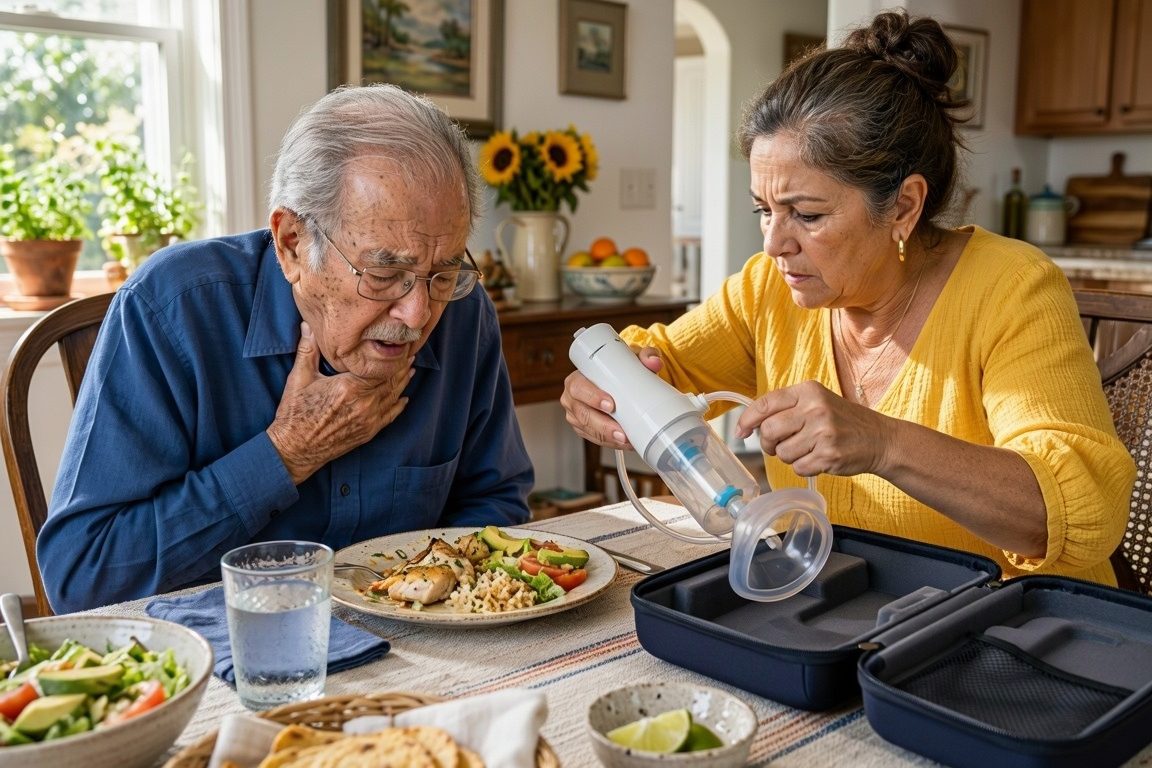
Step by step
What not to do
- Do not reach for the LifeVac first, always attempt back blows and abdominal thrusts first.
- Do not force the LifeVac mask onto a person who is fighting you; pause to calm them first.
- Do not perform blind finger sweeps, you may push the obstruction deeper.
- Do not offer food or drink after a choking episode, even if they seem fine.
- Do not leave the person alone after the episode; watch for coughing, fever, or breathing difficulty.
Key points
- The LifeVac is a backup device to use after back blows and abdominal thrusts have failed, not a first-line tool.
- Stay calm and use simple, reassuring words. Panic in the caregiver increases panic in the person with dementia.
- Practice assembling and using the LifeVac before an emergency so you are not fumbling in a crisis.
- Always call 911 for a choking emergency, even if you successfully remove the object. Complications can arise later.
- Personalize your approach based on the person's dementia stage, disease type, and physical abilities.
- Discuss choking risks and emergency plans with your loved one's entire care team, including doctors, nurses, and aides.
Videos
 Time with Teepa - Someone is choking, what should I do?Teepa Snow demonstrates how to approach a choking person with dementia using her Positive Approach to Care techniques. She emphasizes staying calm, using simple language, and adapting standard first aid for someone who may not understand what is happening.
 What are Delusions and Hallucinations?This video helps you understand why a person with dementia might misinterpret your rescue efforts as an attack. Knowing this can help you choose words and actions that reduce fear and resistance during a choking emergency.
 Secrets for How to BATHE A Person with Dementia Without a FIGHT! The ABC's of FAQ's for DementiaWhile about bathing, this video teaches the same calm, step-by-step approach and use of simple cues that are essential during a choking rescue. The principles of reducing fear and using gentle guidance apply directly.
 How to Help Support Someone Living with Dementia to Drink and SwallowThis video explains why swallowing becomes dangerous in dementia and offers practical tips for safer eating and drinking. Understanding these risks helps you prevent choking in the first place.

Practical tools
2
LifeVac Device
A portable, battery-free suction device with adult and pediatric masks. Keep one where the person usually eats. Practice assembly once before an emergency.
Penlight or Small Flashlight
A bright, focused light to clearly see an obstruction in the mouth before attempting a finger sweep, especially in dim lighting.
Different situations
Late-stage dementia (Stage 7 on the Global Deterioration Scale)
In late-stage dementia, the person may be bedridden, unable to sit up, or have a very weak cough. They may not be able to cooperate at all. In this case, skip back blows and abdominal thrusts if they are lying down, go directly to the LifeVac if you suspect a complete obstruction. Be very gentle when positioning them to avoid fractures. Also, discuss with the hospice team whether aggressive choking rescue is appropriate, as the person may have a 'do not resuscitate' (DNR) order that includes airway interventions.
Lewy body dementia or Parkinson's disease dementia
People with Lewy body dementia often have rigidity, tremors, and difficulty with voluntary movements. They may not be able to lean forward for back blows. Use chest thrusts instead of abdominal thrusts if they are rigid. The LifeVac mask may be harder to seal if the person has facial tremors, hold the mask firmly but gently. Also, be aware that hallucinations or delusions may cause them to believe you are attacking them. Use a soft, familiar voice and say your name: 'It's me, [your name]. I'm helping you.'
Spouse caregiver vs. adult child caregiver
A spouse may have known the person for decades and can often read their non-verbal cues better. Use that intuition to sense when the person is truly choking versus just coughing. An adult child may feel more anxious about causing injury. Remember that a rib fracture is better than death. Use the LifeVac with confidence, it is designed to be safe even for frail individuals. If you are an adult child caring for a parent, practice the steps with a friend or another family member so you feel more prepared.
Person with dementia lives in a facility or with a home health aide
If your loved one is in a memory care facility, ask the staff if they have a LifeVac and if they are trained to use it. Many facilities do not have one. You can purchase one and donate it to the facility, with clear instructions attached. If a home health aide is present during a choking event, they may not know how to use the device, train them in advance. Write the steps in the person's care plan.
Person is on a pureed or mechanical soft diet
Even with modified textures, choking can still happen, especially if the person tries to swallow too fast or takes too large a bite. The LifeVac is still effective for semi-solid foods like mashed potatoes or pureed meats. Keep the device nearby during all meals and snacks, not just during 'solid food' meals.
For the doctor
7
- Ask your loved one's doctor or speech-language pathologist: 'What is the safest food texture and liquid thickness for my loved one to reduce choking risk?' Do not change their diet without professional guidance.
- Discuss whether a 'do not resuscitate' (DNR) or 'do not intubate' (DNI) order applies to choking rescue with a device like LifeVac. Some advance directives may exclude any airway intervention. Clarify this with the doctor and document it clearly.
- If your loved one has had multiple choking episodes, ask about a referral to a swallowing specialist (speech-language pathologist) for a formal swallowing evaluation. They may recommend exercises or positioning strategies.
- Ask the doctor if any medications your loved one takes could cause dry mouth or drowsiness, both of which increase choking risk. Do not stop or change any medication without medical advice.
- If your loved one is on hospice, ask the hospice nurse: 'What is the protocol for choking? Should I use the LifeVac, or is comfort care the priority?' This conversation is essential to avoid conflicting actions during an emergency.
- Ask your doctor: 'Is the LifeVac device appropriate for my loved one given their specific health conditions and dementia stage?'
- Ask your doctor: 'What is the correct amount of force to use for back blows and abdominal thrusts on a frail person with dementia to minimize injury risk?'