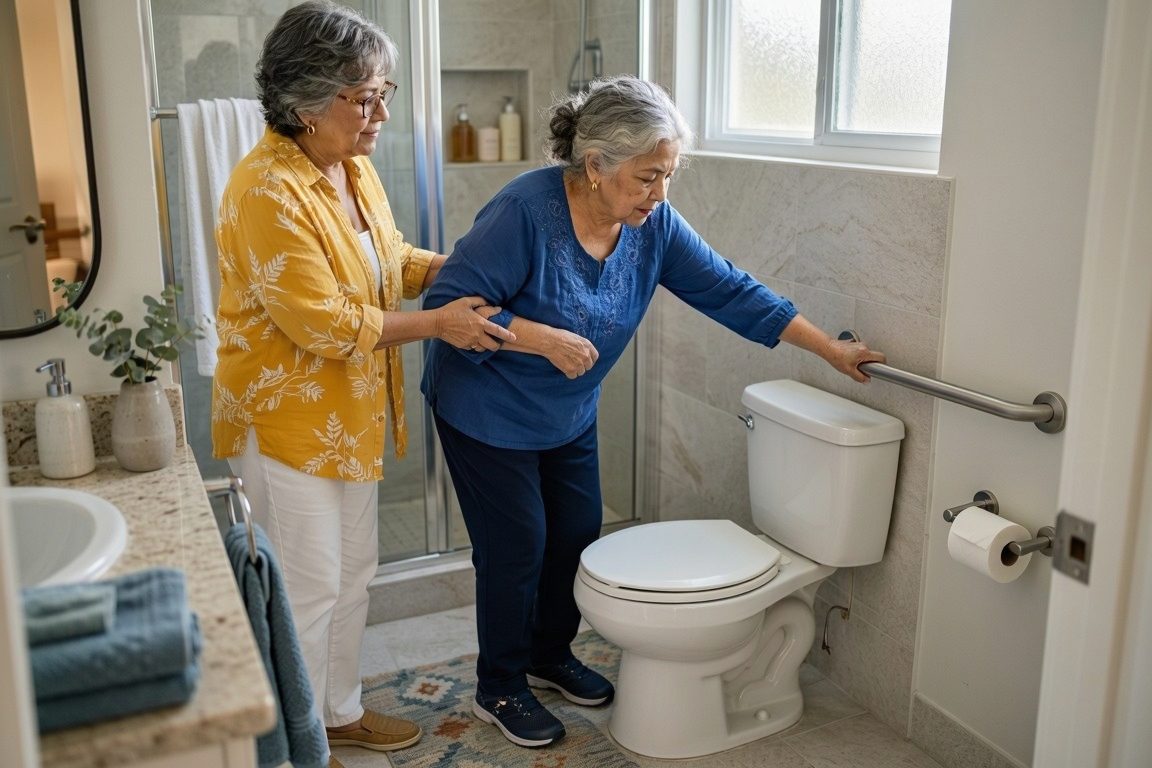
What not to do
- Do not scold or express frustration after an accident, as this increases shame and confusion.
- Do not argue with the person about why they need help, use redirection instead.
- Do not rush or force the person to sit on the toilet, which can cause resistance or injury.
- Do not assume they can find or recognize the bathroom, guide them directly.
Key points
- Use a proactive schedule (every 2 hours, after meals, before bed) rather than waiting for them to ask.
- Never ask 'Do you need to go?', instead, say 'Let’s go to the bathroom now.'
- Break instructions into one-step commands: 'Walk here. Pull down pants. Sit.'
- Make the bathroom easy to find and safe: open door, sign, grab bars, raised seat, nightlight.
- Use easy-on clothing (elastic waistbands) and moist wipes or a bidet for hygiene.
- Stay calm and praise cooperation; never scold after an accident.
Videos
 How to manage incontinence in dementia patientsThis video offers practical strategies for managing incontinence, including scheduling and product recommendations.
 Dementia Toileting problemsDirectly addresses common toileting challenges and provides step-by-step solutions for caregivers.
 Dementia Bathroom Tips: How to stop your loved one from having toileting accidentsFocuses on preventing accidents through environmental changes and routine adjustments.
 Go Live on TikTok: Tips for Toileting, Getting Up from the Floor, Common Unhelpful Phrases, and MoreCovers real-time caregiver questions about toileting, safety, and communication mistakes to avoid.
2 more videos


Background
Why Toileting Becomes Difficult in Dementia
In early and middle-stage dementia, the brain’s ability to sense the need to urinate or have a bowel movement, and then act on that signal, becomes impaired. Your loved one may not feel the urge until it’s too late, or they may not recognize the sensation as needing the toilet. They might also forget where the bathroom is, or how to undress in time. This is not stubbornness, it’s the disease affecting the parts of the brain that control timing, memory, and physical coordination. As dementia progresses, the muscles that control the bladder and bowels can also weaken, making accidents more likely even with good planning.
The Emotional Side: Shame, Confusion, and Resistance
Using the toilet is a deeply private act. When your loved one has an accident or needs help, they may feel embarrassed, angry, or confused. They might refuse to go with you because they don’t understand why they need help, or they may feel you are invading their privacy. This can lead to resistance, agitation, or even combativeness. Remember: their reaction is not about you, it’s about the fear and confusion caused by dementia. Your calm, matter-of-fact approach can help them feel safe. Avoid scolding or showing frustration; instead, use gentle redirection and praise for any cooperation.
The Physical Challenges: Mobility, Vision, and Environment
Many people with dementia also have arthritis, balance problems, or vision changes that make getting to and using the toilet harder. A low toilet seat can be painful to sit on or stand up from. Poor lighting or a bathroom that looks the same (white toilet, white floor, white walls) can make it hard for them to see where they need to go. They may also have trouble with buttons, zippers, or belts. These physical barriers can turn a simple trip to the bathroom into a frightening or impossible task. By adapting the environment and clothing, you can reduce these obstacles significantly.
Practical tools
4
Raised toilet seat
Adds height by 2–5 inches to reduce pain and effort when sitting and standing.
Grab bars
Mounted next to or in front of the toilet to provide support during transitions.
Commode chair
Portable bedside option for emergencies or when the bathroom is far away.
Disposable waterproof pads
Protect bedding and seating quickly without requiring full bedding changes.
Different situations
Early stage dementia
In early stages, your loved one may only need a reminder and a schedule. They can still manage most of the process themselves. Focus on setting a routine and using visual cues (sign on door, open door). Avoid going into the bathroom with them unless they ask. Praise their independence. If they resist the schedule, try linking it to an activity: 'After breakfast, we always go to the bathroom.'
Middle stage dementia
Now they will need more hands-on help. You may need to go into the bathroom with them for safety and assistance with clothing, wiping, and standing. Use one-step commands. Expect more accidents, have cleanup supplies ready. Consider a raised toilet seat and grab bars if you haven’t already. A bedside commode may become necessary at night. Be patient and matter-of-fact; your calm presence is key.
Lewy body dementia or Parkinson’s dementia
These types often involve movement problems, stiffness, and balance issues. Your loved one may have trouble turning, sitting down, or standing up. Use a raised toilet seat with armrests. Install grab bars. Consider a shower chair or commode that can be wheeled over the toilet. They may also have visual hallucinations, keep the bathroom well-lit and free of shadows. Speak slowly and give extra time for each step.
Spouse vs. adult child caregiver
A spouse may feel more comfortable providing intimate care, but may also feel more emotional strain. An adult child may feel awkward or embarrassed. If you are an adult child, it’s okay to say, 'Dad, I’m going to help you like a nurse would.' Use gloves if it helps you feel more comfortable. Either way, remember: this is medical care, not a violation of privacy. You are helping them maintain dignity.
If your loved one is in a facility or receiving home health
Coordinate with staff. Share the schedule and cues that work at home. Ask them to use the same routine. If your loved one is in a facility, you can still visit during toileting times to provide comfort. If they are receiving home health, the aide can follow your lead. Consistency across caregivers reduces confusion.
Common questions
7
What should I say instead of 'Do you need to go to the bathroom?'
Instead of asking 'Do you need to go?', simply say 'Let's go to the bathroom now' and gently guide them there.
How can I respond to toileting accidents in a way that reduces stress for both me and my loved one?
Stay calm, clean up without scolding, and say something reassuring like 'That's okay, these things happen, let's get you fresh clothes.'
How should I respond to a toileting accident and reduce the person's shame?
Reduce shame by speaking softly and matter-of-factly: 'Don't worry, it happens. Let's clean up together so you feel comfortable again.'
How can I modify the bathroom environment to support toileting?
Add a raised toilet seat, grab bars, a nightlight, and keep the door open with a visible sign to make the bathroom safe and inviting.
How can I make the bathroom easier to find and use for a person with dementia?
Place a clear picture or word sign on the door, leave the door open, and keep a nightlight on so the bathroom is easy to spot day or night.
What cues work when the person can't follow verbal toileting instructions?
Use gentle hand-over-hand guidance: take their hand and lead them to the bathroom, then point to the toilet and say 'Sit here.'
How do I implement timed toileting for a person with dementia?
Set a timer for every 2 hours, plus after meals and before bed, and calmly say 'Time to use the bathroom now' rather than waiting for them to ask.
For the doctor
6
- Ask the doctor if a medication review is needed, some drugs can worsen incontinence or cause constipation.
- If your loved one has frequent urinary tract infections (UTIs), ask about testing and prevention. UTIs can cause sudden confusion and incontinence.
- If they have severe constipation or bowel impaction, discuss a bowel regimen with their doctor or a gastroenterologist.
- If they are falling frequently in the bathroom, ask for a physical therapy evaluation for mobility aids and balance training.
- If they have skin breakdown or rashes from incontinence, ask about barrier creams, adult briefs, or a referral to a wound care nurse.
- If they resist all toileting help and become aggressive, discuss behavioral strategies with a dementia specialist or geriatric psychiatrist.