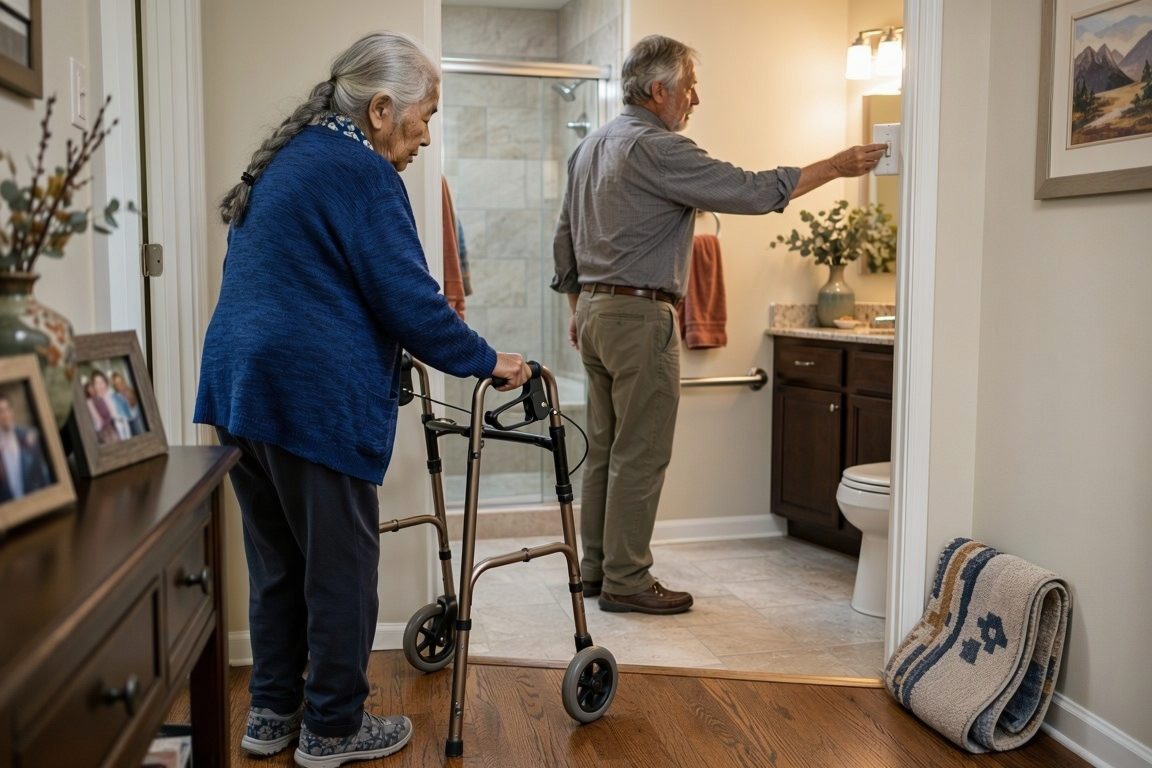
Step by step
What not to do
- Do not scold or shame your loved one after an accident. This will only increase their fear and confusion, making future accidents more likely.Instead, say calmly, ‘It is okay, accidents happen. Let’s get you cleaned up.’ Your reaction sets the tone for their emotional safety.
- Do not wait for them to ask to go to the bathroom. In dementia, the ability to recognize and communicate the need is often lost. By the time they say something, it is usually too late. Proactive scheduling is far more effective than reactive cleanup.
- Do not assume that a strategy that failed once will never work. Dementia is progressive, and a person’s abilities and fears change over time. A technique that was met with resistance three months ago might be accepted today. Revisit approaches like using a raised toilet seat or a different type of prompt.
- Do not restrict fluids to reduce accidents. This can lead to dehydration, urinary tract infections, and constipation, all of which worsen incontinence.Instead, offer small amounts of fluid throughout the day and schedule bathroom visits accordingly. Limit caffeine and alcohol, which can irritate the bladder.
- Do not ignore signs of a urinary tract infection (UTI). A sudden increase in accidents, confusion, agitation, or a change in the smell or color of urine can indicate a UTI. This is a medical issue that requires a doctor’s attention. UTIs can cause a rapid decline in dementia symptoms and are treatable.
- Do not make the bathroom feel like a clinical or scary space. Avoid harsh lighting, cold surfaces, or loud noises. If your loved one is afraid of the toilet, consider using a portable commode in a familiar room, or even a bedpan for a short time, to reduce anxiety and maintain dignity.
Key points
- Toileting accidents are not intentional; they stem from the brain’s inability to recognize or act on the need to go.
- A proactive toileting schedule (every 2-3 hours) is far more effective than waiting for your loved one to ask.
- Visual cues like signs, open doors, and contrasting toilet seats help guide them to the bathroom.
- Physical barriers like fear of falling, poor depth perception, and pain can be addressed with raised toilet seats and grab bars.
- Never scold or shame after an accident; stay calm and focus on cleanup and comfort.
- Revisit strategies that failed in the past, dementia changes, and what did not work before may work now.
Videos
 How to manage incontinence in dementia patientsThis video provides a comprehensive overview of incontinence management, including the importance of a toileting schedule and how to handle resistance.
 Dementia Bathroom Tips: How to stop your loved one from having toileting accidentsOffers practical, step-by-step tips specifically focused on preventing accidents, including using visual cues and adjusting the bathroom environment.
 Dementia Toileting problemsExplores common toileting challenges like refusal to sit on the toilet and provides strategies to address fear and confusion.
 What Causes Bathroom Problems In DementiaHelps you understand the underlying neurological and physical causes of bathroom problems, which is key to choosing the right approach.
2 more videos
 How Do You Ensure Home Safety For Dementia Patients? - Dementia Help HubCovers home safety modifications like grab bars, non-slip mats, and lighting that are essential for preventing falls during bathroom trips.
 Steady Steps: Practical Strategies for Managing Falls in DementiaFocuses on fall prevention, which is a critical part of toileting safety, especially when using raised toilet seats and grab bars.
Background
Why Toileting Accidents Happen in Dementia
Toileting accidents in dementia are rarely about laziness or intentional behavior. As dementia progresses, the brain’s ability to recognize and respond to the body’s signals for a full bladder or bowel becomes impaired. Your loved one may not feel the urge to go until it is too late, or they may misinterpret the sensation as something else entirely. This is not a choice; it is a neurological change. Additionally, the physical act of getting to the bathroom can be overwhelming. They may wait too long because they are engrossed in an activity, or they may walk too slowly to reach the toilet in time. The result is an accident that leaves everyone feeling upset and embarrassed.
The Role of Fear, Confusion, and Physical Challenges
Many people with dementia develop a reluctance to use the toilet, especially to sit on it. This can stem from a fear of falling, poor depth perception that makes the toilet look far away or the seat look small, or physical discomfort from arthritis or hip pain. Some individuals, particularly those with frontotemporal dementia, may become rigid and refuse to change their routine. The bathroom itself can be confusing, the white toilet against a white floor may be hard to see, or the person may not recognize the room’s purpose. Understanding these underlying reasons helps you approach the situation with compassion rather than frustration. You are not dealing with defiance; you are dealing with a brain that is struggling to make sense of the world.
The Impact on Caregivers and the Importance of Proactive Strategies
Toileting issues are the number one reason families consider nursing home placement, according to dementia care experts. The constant cycle of accidents, cleanup, and laundry can feel exhausting and isolating. However, by taking a proactive approach, rather than reacting to accidents, you can dramatically reduce their frequency and preserve your loved one’s dignity. The goal is not perfection but progress. Even small improvements, like one fewer accident per day, can relieve stress and give you back precious time. Remember that dementia is progressive, so strategies that did not work a few months ago may suddenly become effective. Stay flexible and keep trying.
Practical tools
6
Toileting Schedule Template
Create a simple chart with times (e.g., 7 AM, 9 AM, 11 AM, 1 PM, 3 PM, 5 PM, 7 PM, bedtime) and checkboxes. Place it on the bathroom door or in the kitchen. Each time you take your loved one, check the box. This provides a visual reminder for you and a sense of routine for them. Use a dry-erase board for easy updates.
Visual Cue Kit
Use a large, simple sign with a picture of a toilet and the word ‘TOILET’ in bold black letters on a white background. Place it at eye level on the bathroom door. Also, place a contrasting-colored mat (e.g., dark blue) on the floor in front of the toilet to help with depth perception. Leave the bathroom door slightly ajar during the day.
Raised Toilet Seat with Grab Bars
A raised toilet seat adds 3-6 inches of height, making it easier to sit and stand. Look for one with handles or that fits over the existing seat. Install grab bars on the wall next to the toilet (not the toilet paper holder) for added stability. These are available at medical supply stores or online. Discuss with an occupational therapist for proper placement.
Portable Commode Chair
A lightweight, foldable commode chair can be placed in the bedroom or living room for times when the bathroom feels too far or intimidating. Use a clean, disposable liner for easy cleanup. This can be a temporary solution during illness or when sundowning makes bathroom trips difficult.
Incontinence Products (Briefs and Pads)
Choose high-absorbency products that fit well and are comfortable. Brands like Depend, TENA, or Prevail offer various styles. Use them as a backup during the toileting schedule, not as a replacement. Change every 2-3 hours to prevent skin breakdown. Consider using a waterproof mattress pad and washable bed pads for nighttime.
Nightlight and Motion Sensor Light
Place a nightlight in the hallway and bathroom to guide your loved one during nighttime trips. A motion-sensor light that turns on automatically when they get out of bed can reduce falls and help them find the bathroom. This is especially helpful for those who wander or have sundowning.
Different situations
Early-stage dementia
In early stages, your loved one may only need gentle reminders and visual cues. Use a sign on the bathroom door and a simple verbal prompt like, ‘Let’s take a bathroom break before we watch TV.’ They may still be able to manage hygiene independently with moist wipes. Focus on maintaining their routine and dignity.
Middle-stage dementia (e.g., Alzheimer’s)
This is when toileting schedules become essential. Expect more resistance and confusion. Use the raised toilet seat and grab bars. If they refuse to sit, try a standing position for men or a commode chair. Be prepared for accidents and have cleanup supplies ready. Consider using adult briefs as a backup, but continue the schedule to preserve continence as long as possible.
Late-stage dementia
In late stages, your loved one may be bedridden or have very limited mobility. Use a bedpan or waterproof pads. Focus on comfort and skin care. Change incontinence products immediately to prevent pressure sores. The goal shifts from preventing accidents to maintaining dignity and preventing infections. Discuss with a hospice or palliative care team for specialized support.
Frontotemporal dementia (FTD)
Individuals with FTD may have rigidity and refuse to change routines. They may also have difficulty with impulse control, leading to accidents. Use a very consistent schedule and avoid power struggles. If they refuse to sit, allow them to stand if possible. Use simple, direct commands like, ‘Time to go to the bathroom now.’ Be patient and avoid arguing.
Lewy body dementia
People with Lewy body dementia often have visual hallucinations and movement problems (parkinsonism). The bathroom may appear frightening or distorted. Use a nightlight and keep the bathroom clutter-free. A raised toilet seat and grab bars are critical for safety. Be aware that they may have sudden changes in alertness, so schedule bathroom visits during their clearer moments.
For the doctor
5
- If your loved one has a sudden increase in accidents, confusion, or agitation, ask the doctor: ‘Could this be a urinary tract infection (UTI)?’ UTIs can cause rapid cognitive decline and are treatable.
- If they have difficulty sitting or standing from the toilet, ask: ‘Would a raised toilet seat or grab bars be safe and appropriate for their specific mobility needs?’ An occupational therapist can provide a home assessment.
- If they are experiencing pain when urinating or have blood in their urine, ask: ‘Could this be a bladder infection or kidney issue that needs treatment?’
- If constipation is a recurring problem, ask: ‘Are there safe stool softeners or dietary changes that could help regulate bowel movements and reduce accidents?’
- If your loved one is on medications that affect bladder control (e.g., diuretics, sedatives), ask: ‘Can we adjust the timing or dosage to reduce the risk of accidents?’ Never change medications without a doctor’s guidance.