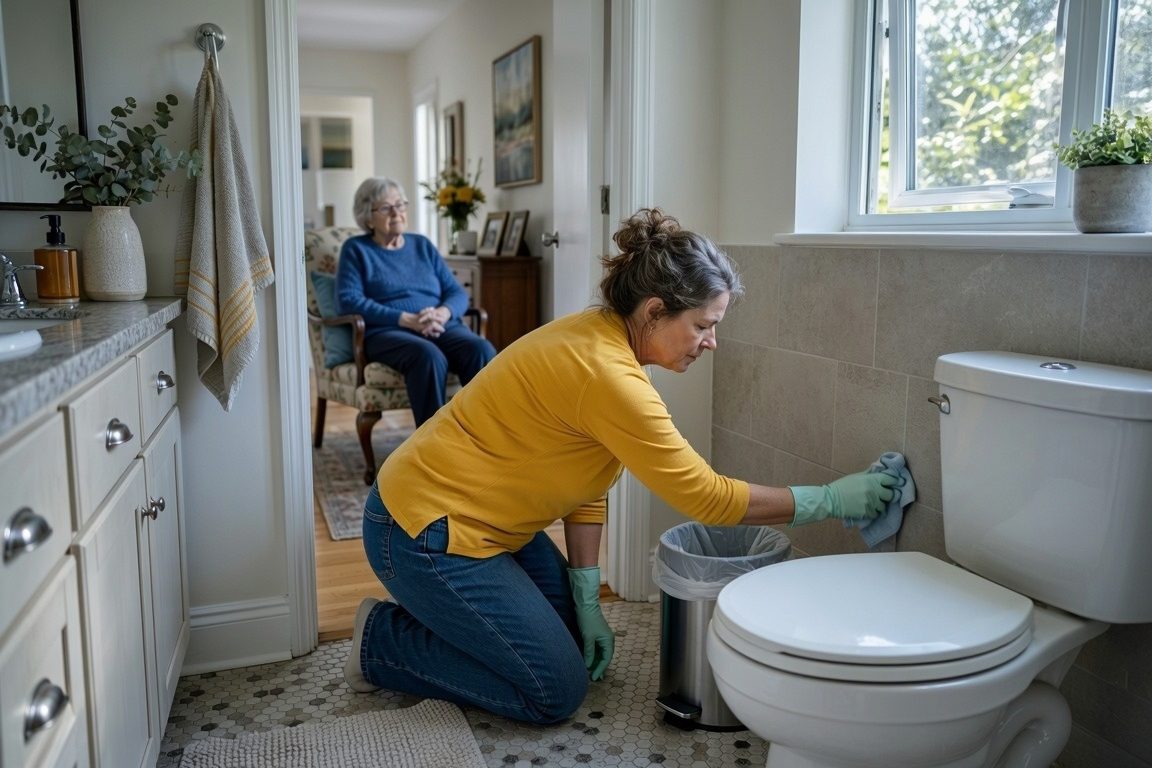
Step by step
What not to do
- Do not limit fluids to reduce accidents. This can lead to dehydration, which makes urine more concentrated and smelly, and increases the risk of urinary tract infections and constipation.Instead, offer fluids regularly and encourage bathroom visits every two hours.
- Do not scold or say 'You wet yourself.' This increases shame and can make your loved one hide accidents or become resistant to help.Instead, say 'Anyone can have an accident' and focus on the solution, not the problem.
- Do not use scented sprays or candles to mask odor without cleaning first. These only cover the smell temporarily and can irritate sensitive skin or lungs. Always clean thoroughly first, then use a gentle air freshener if needed.
- Do not leave soiled clothing or linens sitting in a hamper without sealing them. This allows odor to spread through the room. Place soiled items directly into a sealed plastic bag or a lidded, washable hamper until laundry time.
- Do not assume your loved one can clean themselves independently if they are in the middle or late stage. They may have difficulty reaching, may not wipe effectively, or may not realize they are not clean. Offer help gently, or use a bidet and wipes to assist.
- Do not ignore signs of constipation or pain. If your loved one is straining, has hard stools, or seems uncomfortable, talk to their doctor. Constipation can make accidents more frequent and cleanup more difficult.
Key points
- Do not limit fluids; dehydration makes odor worse and increases infection risk.
- Use a bidet and moist wipes to reduce odor and simplify cleanup.
- Disable the toilet flush if inappropriate items are being flushed.
- Keep a portable commode or urinal in the bedroom for late-stage dementia.
- Use enzymatic cleaners to eliminate odors at the source.
- Respond with kindness and matter-of-fact language to preserve dignity.
Videos
 How to manage incontinence in dementia patientsThis video provides a broad overview of incontinence management, including practical tips for odor control and cleanup that align with the strategies in this article.
 Dementia Toileting problemsFocuses specifically on the challenges of toileting in dementia, offering real-life solutions for reducing mess and odor.
 What Helps Dementia Patients With Toileting?Covers helpful tools and techniques, including the use of bidets and wipes, which are central to this sub-article.
 Comprehensive Guide to Managing Toileting and Incontinence in Dementia CareA thorough guide that includes advice on scheduling, products, and cleanup methods that complement the steps here.
2 more videos
 Simple Approach to Difficult Dementia BehaviorsHelps caregivers understand the emotional and behavioral aspects of toileting accidents, which is key to reducing resistance and stress.
 What Stage Of Dementia Is Incontinence?Explains when incontinence typically occurs and why, helping caregivers set realistic expectations and plan accordingly.
Background
Why Odor Happens and Why It Feels So Overwhelming
When a person with dementia has a toileting accident, the odor can be intense, especially with bowel movements. This is partly because the body’s natural processes create strong smells, and partly because the person may not realize they have had an accident right away, allowing the odor to linger. The smell can trigger feelings of embarrassment for your loved one and frustration for you, but understanding that this is a normal part of the disease can help you approach it with patience. The brain changes in middle and late-stage dementia affect the ability to sense the need to use the toilet, to recognize the sensation of a full bladder or bowel, and to know what to do about it. This is not a choice or a sign of laziness; it is a symptom of the disease.
The Link Between Hydration, Constipation, and Odor
Dehydration can make urine more concentrated and acidic, which increases both odor and the risk of bladder irritation and urgency. Similarly, constipation often occurs in dementia due to medications, reduced mobility, and changes in diet. When the bowel is backed up, it can press on the bladder, making accidents more likely and the resulting cleanup more difficult. Ensuring your loved one stays well-hydrated (without limiting fluids, as this can cause urinary tract infections) and managing constipation with a doctor’s guidance can reduce both the frequency of accidents and the intensity of odors. A regular toileting schedule, such as every two hours, can also help prevent accidents before they happen.
The Emotional Side: Dignity and Shame
Your loved one may feel deep shame or embarrassment after an accident, which can lead them to hide soiled clothing or deny what happened. They might say 'I'm fine' or try to clean up themselves in ways that make the mess worse. It is important to respond with kindness, not scolding. Using matter-of-fact language like 'Anyone can have an accident' instead of 'You wet yourself' preserves their dignity. If they are resistant to help, consider that pain or modesty might be at play. Sometimes hiring a certified nursing assistant for personal care can ease the tension, as it may be less embarrassing for them to accept help from a stranger than from a family member.
Practical tools
6
Bidet Attachment
A bidet that attaches to your existing toilet (costs around $100–$200) provides a gentle water spray for cleaning. This reduces the need for wiping, cuts down on odor, and helps prevent skin irritation. It is especially helpful for people who have difficulty reaching to clean themselves.
Fragrance-Free Moist Wipes
Keep a container of fragrance-free, flushable (or disposal) moist wipes near the toilet. They clean more thoroughly than dry toilet paper and reduce residue that causes odor. For caregivers, they are also useful for quick cleanup of the toilet seat or floor.
Enzymatic Cleaner
Use an enzymatic cleaner (often sold for pet stains) to clean floors, toilet seats, and other surfaces after an accident. These cleaners break down the proteins in urine and feces, eliminating odor at the source rather than just covering it up.
Portable Commode or Urinal
A portable commode (a chair with a removable bucket) or a male urinal can be placed in the bedroom for late-stage dementia. This reduces the distance to the bathroom and lowers the chance of accidents. Use a nightlight so it is visible at night.
Sealed Laundry Hamper
Use a lidded, washable hamper or a plastic bag that can be tied shut for soiled clothing and linens. This contains odors until laundry time. You can also add a dryer sheet or baking soda inside the hamper to absorb smells.
Calming Phrases to Say
When an accident happens, say things like: 'It's okay, these things happen. Let's get you cleaned up.' or 'Anyone can have an accident. I'm here to help.' Avoid asking 'Do you need to go?' because they will likely say no. Instead, say 'Let's go to the bathroom now.'
Different situations
Lewy body dementia or Parkinson's disease dementia
These conditions often involve more movement difficulties (rigidity, tremors) and may also cause visual hallucinations. Ensure the bathroom is very well-lit and free of shadows that could be misinterpreted. Use a raised toilet seat and grab bars for safety. The person may also have more trouble with constipation, so work with their doctor on bowel management.
Late-stage dementia (bedridden or very limited mobility)
Focus on bed protection: use waterproof mattress covers, fitted rubber sheets, and washable bed pads. Keep a portable commode or urinal within arm's reach if they can still sit up. For cleanup, use a basin of warm water and washcloths rather than trying to move them to a bathroom. Consider using adult briefs that are changed on a schedule (every 2–3 hours) to prevent accidents.
Spouse vs. adult child caregiver
A spouse may feel more comfortable with intimate care, but the person with dementia may be more resistant to a spouse's help due to embarrassment or a desire to maintain their role. An adult child may feel awkward. If modesty is an issue, consider hiring a certified nursing assistant for toileting tasks, even if only once a week, to reduce stress for both of you.
In a facility or with paid caregivers
If you are not the primary caregiver, communicate the strategies that work: the preferred phrases, the bidet, the flush-disabling trick, and the importance of not limiting fluids. Provide a written list of these tips to ensure consistency. Also, ask the facility to use the same products (wipes, briefs) that you use at home to avoid confusion.
Medicaid or limited budget
Many of these tools are inexpensive. A bidet attachment costs around $100–$200 and can save money on wipes and cleaning supplies. Incontinence supplies (briefs, pads) may be partially covered by Medicaid or through local programs. Check with your local Area Agency on Aging for free or low-cost supplies. A portable commode can often be found secondhand or through a medical equipment loan program.
For the doctor
4
- Ask the doctor about managing constipation if your loved one is having frequent bowel accidents or straining. They may recommend a stool softener or dietary changes.
- If your loved one has a urinary tract infection (UTI), symptoms can include increased confusion, strong-smelling urine, and more frequent accidents. Discuss UTI testing with the doctor if you notice these signs.
- Talk to the doctor about any skin irritation or breakdown from incontinence. They can recommend barrier creams or treatments to prevent infection.
- If your loved one is resistant to all toileting help, discuss whether a medication adjustment or a referral to a dementia specialist might be appropriate.