Step by step
What not to do
- Don't take their lack of recognition personally, it is the disease, not a choice they are making.
- Don't force physical touch or crowd their space if they flinch, pull away, or seem startled.
- Don't carry your grief in silence, reach out to a support group, counselor, or trusted friend.
- Don't sacrifice your own sleep, health, or respite time; take breaks, delegate chores, and accept help.
- Don't talk about your loved one in their presence as if they aren't there, include them and speak to them directly.
Key points
- Your loved one's lack of recognition is a symptom of Alzheimer's, not a personal rejection. Their brain has traveled back in time.
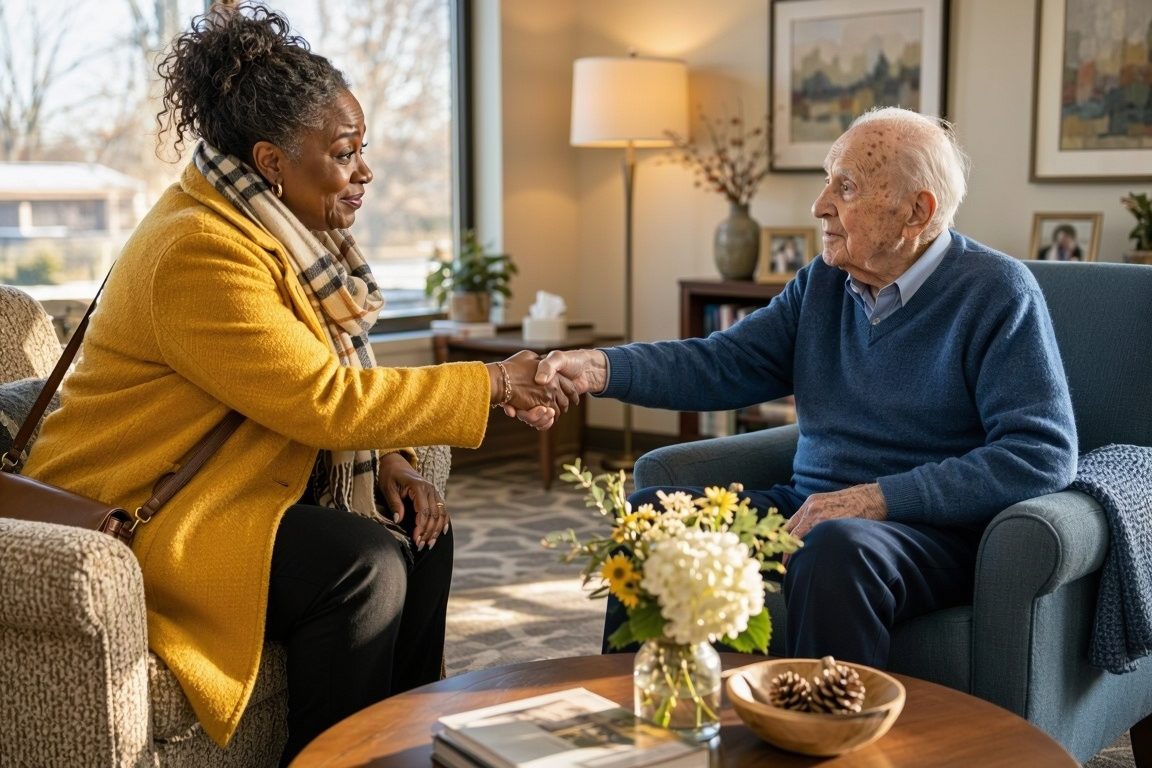
- Always approach from the front, make eye contact, and introduce yourself by name, not by relationship.
- Do not correct or quiz them. Join their reality and redirect to a calm, neutral topic.
- Use a photo book from their past to spark comfort, not memory. Focus on the present moment together.
- Your grief is real and valid. Acknowledge it, share it, and seek support. You are not alone.
- Take breaks, delegate tasks, and use respite care. You cannot care for them if you are burned out.
Videos
 How to cope when someone with dementia forgets who you areThis video directly addresses the emotional impact of not being recognized and offers practical strategies for coping.
 Dementia Careblazer Interview: How the 5 senses can impact behaviorExplains how sensory changes (hearing, vision) affect recognition and behavior, and how to adjust your approach.
 The Question Every Dementia Caregiver Should AskHelps you reflect on the kind of caregiver you want to be and how to maintain human connection despite memory loss.
 New Dementia Caregiver? Watch This!Covers the four essentials for new caregivers, including how to stop correcting and start supporting the changing brain.
2 more videos
 How to Care for a Loved One with DementiaOffers practical advice on communication, patience, and self-care for caregivers.
 When You Want to Walk Away From Dementia Caregiving (But Can’t)Addresses the emotional exhaustion and guilt caregivers feel, and gives permission to seek help and set boundaries.
Background
What Is Happening to Their Brain
When your loved one no longer recognizes you, it is not because they have stopped loving you or because you have done something wrong. Their brain has been damaged by Alzheimer's disease, and it has essentially gone back in time, 10, 20, 30, or even 40 years. They remember you from that earlier point in your life together, if they remember you at all. If you were to show them a photo book with pictures from decades ago, you might find that they respond and remember more, because that is the time period their brain is living in. This is a neurological change, not a choice.
The Role of the Senses and Environment
Dementia affects all the senses, not just memory. Your loved one may have poor hearing or vision, making it hard for them to see or hear you approach. If you walk into their room without them noticing, you can startle them, and they may not remember who you are even if they know you. This is why it is so important to approach them slowly, make sure they can see you, and speak calmly before touching them. The environment in a memory care facility can also be overstimulating or unfamiliar, adding to their confusion.
Your Grief Is Real and Valid
You are experiencing what experts call 'ambiguous loss', the person you love is still physically present, but the person they were is fading. This is a long, ongoing grief that can feel confusing and lonely. You may feel sadness, anger, denial, or even guilt for wishing things were different. These feelings are normal. You are mourning the loss of the relationship you once had, and it is important to acknowledge that grief so you can move through it. You are not a bad caregiver for feeling this way.
Practical tools
5
The 'Hello, It's Me' Introduction Script
A simple, rehearsed opener: 'Hello, it's Sarah. I came to visit you today. I brought some photos to look at together.' Practicing ahead of time keeps your voice gentle and removes the pressure of 'Do you know who I am?'
A Photo Book from Their Distant Past
A small album with pictures from 30–40 years ago, their wedding, childhood home, favorite vacation. Sit beside them and let them turn the pages and comment, rather than testing their memory.
A Familiar Music Playlist
Songs from their teens through their 30s loaded onto a small speaker. Music often reaches people when words can't, soothing agitation and sometimes sparking comfort or quiet singing.
A Caregiver's Pocket Notebook
A small notebook to record one sentence after each visit, what felt okay, what worked, and to keep key phone numbers (support group, counselor, respite coordinator) all in one place.
A Familiar Comfort Object
A soft blanket, a scarf that smells of home, or a hand cream with a scent they love. Tactile and olfactory cues can calm distress and offer connection when recognition and language are no longer available.
Different situations
Late-stage Alzheimer's / memory care facility
In late-stage Alzheimer's, your loved one may not recognize you at all, even with photos. Focus on sensory comfort: hold their hand, play soft music from their youth, or use a familiar lotion scent. Do not expect verbal recognition. Your presence is still meaningful, even if they cannot show it. The goal is calm and connection, not memory.
Middle-stage Alzheimer's / memory care facility
In middle-stage Alzheimer's, recognition may come and go. One day they know you, the next they do not. Do not take the good days as a sign of recovery or the bad days as a step backward. Use the photo book and the 'Hello, It's Me' script each time. Be flexible, if they are agitated, try a different activity like looking out the window or listening to music.
Spouse vs. adult child
If you are the spouse, the loss of recognition can feel like a betrayal or the end of your marriage. You may feel invisible grief that others do not see. It is important to name this loss and seek support from a counselor or a spousal caregiver group. If you are an adult child, you may feel like you have lost your parent twice, once to the disease and once to the memory loss. You can still find moments of connection by focusing on the present, not the past.
If your loved one becomes aggressive or scared
If your loved one does not recognize you and becomes aggressive (e.g., yelling, pushing, or trying to hit), do not take it personally. Their brain is in a fight-or-flight mode. Step away immediately and call for staff. Do not argue or try to reason. After the incident, talk to the facility staff about triggers and consider a care plan adjustment. Your safety and their safety come first.
Common questions
1
What do informal carers say about how caregiving roles are recognized and valued?
Approach from the front, make eye contact, and say, 'Hi, I’m [your name]. I’m here to spend time with you today.' This gently steps into their reality without forcing them to remember your relationship.
For the doctor
3
- Ask the facility's doctor or nurse: 'Is there any medication or non-drug approach that might help reduce agitation during visits when my loved one does not recognize me?'
- Ask a social worker or counselor: 'Can you recommend a support group for family members dealing with the grief of a loved one who no longer recognizes them?'
- Ask the memory care staff: 'What are the best times of day for me to visit when my loved one is most calm and alert?'